


Daddy’s Little Girl
There are homes we live in, and then there are homes that continue to live within us. Our house in Kashmir was the latter.
Freshly painted in a pale sea green that seemed to borrow its calm from the mountains, it stood with a quiet, unassuming pride. Along its fences bloomed tall white hydrangeas, Dastaar posh as we called them, stretching lazily into the sunlight as if they knew they belonged. The lawns were always tended, always manicured, but never in a way that felt imposed. Gardening was my father's greatest passion, and even more so now in his retirement, his chosen indulgence, his quiet extravagance. Everything was allowed to find its own shape, including us.

I remember that house not in fragments, but as a continuous reel. Every corner, every scent, every slant of light feels like something I could still walk into if I closed my eyes long enough.
In a house where emotions were often practical and restrained, that painting stood as my father's quiet contradiction.
Inside, in the lounge, hung a painting of Sohni Mahiwal, my father's most prized possession. For a man who measured his words, who rarely entertained sentiment in the open, this quiet ode to doomed love felt almost out of character. Yet there she was: Sohni, crossing a river each night with only a clay pitcher to keep her afloat, moving towards a love the world had forbidden; and Mahiwal, waiting on the far bank, willing to lose everything to sustain it.

We could not take it with us when we left. I often return to that thought: how we packed what we could into suitcases and school bags but left behind things too rooted to carry. That painting was one of them.
My father is not an easy man to define. Perhaps fathers rarely are.
From him, I inherited a curious mix of things: his travel anxiety that turns every journey into a careful inventory of “what ifs,” his temper that rises quickly and disappears just as fast, and, unfortunately, his migraines. There are smaller inheritances too — a certain restlessness, a need to get things just right, even in the most ordinary details.
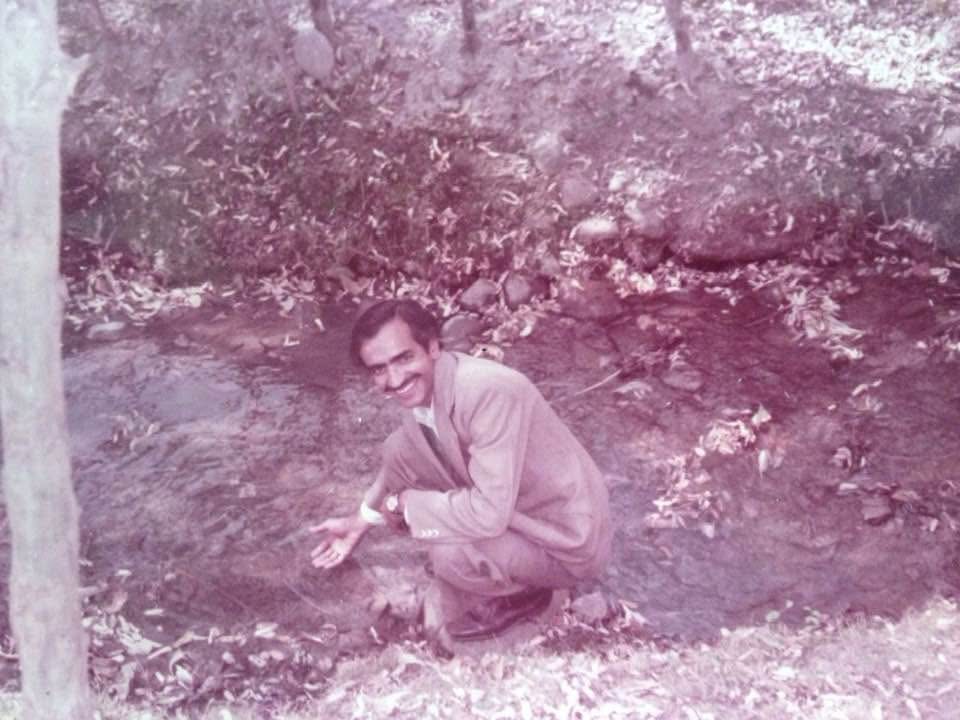
And then there is his love for taking pictures. In his younger days, it was with a camera often borrowed; now, it is with his phone. He takes endless photographs, most of which never travel beyond his own screen, where he returns to them again and again: his children, his grandchildren, his small, private archive of continuity.
He gave us everything he could afford, and often more. But what endures is something less tangible: the freedom to think for ourselves, to imagine lives larger than the ones we knew, and the assurance that we could leave without ever truly losing where we came from.
Perhaps that is why, no matter how far life takes me from that pale green house, from those dastaar posh, from the painting we could not carry, something in me remains gently tethered: to him, to that home, to all that was quietly given and never once asked to be returned.

Sheetal Raina
Dr. Sheetal Raina is the founder and editor of ISBUND, an immersive platform dedicated to preserving and celebrating Kashmiri culture. Deeply connected to the heritage and traditions of Kashmir, she brings a distinctive voice to cultural discourse - blending academic insight with heartfelt commitment to her roots.
5 Comments
-
-
Shanoo Razdan
Loved it, felt as if I am reading about my own father. Very well written ❤
-
-
Minesh Khashu
Lovely sentiments, well articulated Sheetal (as usual).
Wishing you and all the community
HAPPY FATHER’S DAY.Some would have lost a father in a physical sense but in reality you never lose one as he is always running in your veins and blessing you with each breath you take.
🙏
-
Shiv
So beautifully articulated. The reader can visualise and even smell the blooms (in your home, which it will always be, in memories – and now also etched in your words).
-
Sudha koul
Beautifully written, Sheetal. A touching tribute to a father whose love is reflected not in grand gestures but in the quiet gifts of freedom, belonging, and cherished memories. Truly heartfelt.


POST COMMENT
Related Posts

Rajma Gojj, Baramulla, 1988
For most North Indian families, rajma chawal sits at the very top of t

From Playgrounds to Pixels
Childhood has shifted from unstructured outdoor play to screen-centere

Building Connections: Orkut and Beyond
When strangers in a Reading living room recognised each other through

The Weight of a Post: Reflections from the Guggenheim
In The Weight of a Post, Sheetal Raina invites readers into the contem

Musical Voices of Kashmir: Lal Ded and Beyond
Kashmir’s timeless musical tradition weaves together mystic poetry,

Geeta
Lovely sheetal