




Sheetal Raina
Dr. Sheetal Raina is the founder and editor of ISBUND, an immersive platform dedicated to preserving and celebrating Kashmiri culture. Deeply connected to the heritage and traditions of Kashmir, she brings a distinctive voice to cultural discourse - blending academic insight with heartfelt commitment to her roots.
24 Comments
-
-
Sheetal Raina
Thank you Subhashji for your kind words.
-
-
Rajender Koul
You were forced to leave Kashmir on 27th February 1990 — blending emotional acknowledgement, personal connection, and respect for the sensitivity of that moment while being so Empathetic & Reflective.
“Your words bring back the piercing cold of that winter, but even colder was the silence of departure. February 1990 was not just a month—it was a wound in our shared history.
Thank you for capturing the ache so truthfully.
Reading this, I could almost hear the crunch of snow under hurried footsteps and the unspoken goodbyes between neighbours.
I too left in that month but on the night of 28th February 1990 in a truck with my brother and my office colleage following a militants death warning a declaration note received in our Mohalla .
Your story feels like a mirror held up to my own.This is not just your story Sheetal Ji—this is the story of thousands.
But the way you have told it, with every sensory detail intact, ensures that history will not be reduced to numbers or dates, but will remain alive in memory.”
February 1990 froze time for us.
You have thawed a corner of that frozen moment with your words, letting the pain and humanity flow back into view.
“Thank you, Sheetal, for telling what so many still cannot bring themselves to speak of.
Your courage in revisiting those days is also a comfort to those of us who lived them in silence.
When you describe leaving, I can smell the kahwa that went cold on the table and see the window that was shut but never locked. Your memory keeps the Kashmir we knew alive.
Thanx for sharing and keeping us all alive with the pain of this mysterious pain of lost Homeland ,our Mother Kashir.
Happy Independence Day and Greetings to you.-
Sheetal Raina
Thank you, Rajender ji, for your deeply heartfelt words. It means more than I can say that my memories resonated with yours, though the pain we share is one neither of us ever wished to carry. It was very hard to write this piece.
The 27th of February 1990 remains etched in me, a cold that seeps into the soul. Reading about your own departure that very next night brought it all back — the hush, the crunch of hurried footsteps, the unspoken goodbyes.I still see that cat hiding in our chini peet in my dreams, as if teasing me to come home. Your words about kahwa gone cold and windows shut but never locked are so true — each small detail stays forever.
Like you said, this is not just my story, but that of thousands. Perhaps by telling it, we keep our lost Kashir alive.
Warm greetings to you too on this Independence Day.
-
-
Manju Vali
Painful,it made me travel to the nostalgic corridors…where pain…separation filled the air as well as our heart
This inititave by you Dr Sheetal is connecting our community and the fragrance of isbund gives us a message …be a hope, and change for good -
-
Dr Sundeep Kaul
my dear Sheetal, your words went straight to my heart. You’ve poured so much love, truth, and courage into this piece that I felt myself walking beside you on that cold February morning. Every detail — the hush, the crunch of footsteps, the quiet ache — brought back a Kashmir we still carry in our bones. Thank you for telling our story with such tenderness. You’ve kept our homeland alive not just in memory, but in spirit.
-
Sheetal Raina
Thank you Sunny Bhaiya
-
-
Neetu
Great write up ! I walked with you with every word you wrote . You my friend were always destined to do great things and with that super kind face and deep compassion u made your place in many hearts ! So the road does end up in some hearts 💕
-
Sheetal Raina
Ah Neetu, thats such a sweet and kind comment. I will forever remain your adorable junior!
-
-
Geeta
My Dear Sheetal
I was part of this journey — just a 10-year-old then, not knowing I would never see my home in Kashmir again. I still remember how our mother packed only two schoolbags from all our belongings, filling them not with valuables but with what she felt mattered most. She has always been proud of that choice, and I understand why — she carried our past and our future in those bags.-
Sheetal Raina
Your words bring back so many memories, both tender and bittersweet. You were not even nine! Being part of that journey with you, even though we couldn’t grasp its magnitude at the time, truly shaped who we are today. We carry all of that with us, always.
-
-
Suneel Khar
Ditto : 28th Feb 1990. Rest every detail remains the same.
From time to time, we should reopen this old wound so that we remember “why” of it. Your piece does that exactly and clinically too.
Thank you 🙏!
-
Sheetal Raina
Thank you, Suneel ji, for sharing your own date and for affirming how these memories mirror your own experience. It’s true: the wounds of displacement and loss remain and revisiting them can remind us not only of the “why,” but also of the resilience and dignity with which so many have faced their histories.
-
-
Ashok Bhan
What a heart chilling hard truth to recall and remember?
I was in Delhi since 1980 but my brother Pupu ji & his wife Kiran ji escaped death near Kani kadal, in late 1989. Bhabi & Babu ji were with me. It was horror around when my younger sister and her entire family left during early 1990 from their recently constructed home at Rawalpura. It was rebuilding everything from scratch though we had a reasonable settled living in Delhi. Extraordinary spine chilling pain criss cross my mind while I recall the horror killing of the innoncent Pandits.
You have been an example of courage, inspiration and path finder for many through your deeds and doings. All of us are proud of you. Stay blessed-
Sheetal Raina
Thank you Sabaji for sharing your deeply personal reflections and the anguish your family endured. Your words echo the pain and trauma that so many in our community have carried.Thank you for your kind words and blessings.
-
-
Leena Patil-Thakoor
Hi Sheetal,
You have narrated it so beautifully.
One can truly feel the pain of the original citizens of Kashmir who were forced to leave their homes just to save their lives. At that time, the rest of India was hardly aware of the severity of the situation.
Even during our college days, at that young age, we couldn’t fully understand what Kashmiri girls around us must have been going through emotionally and mentally.
Your journey is filled with immense life experiences, and it is a matter of pride to see all the success you have achieved today. Stay blessed always.
-
Sheetal Raina
Thank you so much, Leena, for your heartfelt words and thank you for acknowledging the pain and upheaval faced by so many Kashmiri hindu families. You are absolutely right, much of what we lived through remained invisible to the rest of the country and even among friends. It was often too difficult to fully articulate or for others to comprehend at the time.
Looking back, I realise that those unspoken struggles shaped not just my journey, but the journeys of so many who were displaced. The empathy and kindness so many people like you have offered over the years has made a real difference. Thank you for seeing not just the pain, but the resilience and growth that followed. Your support and blessings mean a great deal to me.
-
-
Kamlesh Kumar
Your date and my date are just a year apart. On 26th February 1991, Kuwait was liberated from the Iraqi invasion — not Kashmir. My evacuation was on 27th September 1990.
If I compare, your story carries more pain than mine. Mine felt almost like a “luxurious” evacuation in comparison. In Kashmir, militants brought real life-threatening fear into daily life. But for us in Kuwait, the Iraqi soldiers were mostly just teenagers with guns, sent by their leaders. They would even play football with us sometimes. Since we were expats and not citizens, we were relatively safer. The real suffering was borne by the Kuwaiti people, whose situation was much closer to what Kashmiris faced.
My map went Kuwait → India → Kuwait → USA. I was in high school at the time, not in 6th grade like you. Facing that kind of trauma as a young child is a different weight altogether.
Before Kuwait, I honestly didn’t know what Kashmir was going through. News there was heavily censored since Kuwait is an Islamic country. It was only when we got admission in school midway through the session in India that I learned about it. I discovered a new word — “Kashmiri refugee.” Until then, I thought the word refugee applied only to international travelers. Later, in Delhi, I saw peaceful protests at Jantar Mantar about the Kashmir issue. Back then, who even reads the news at a high school level? But that was the first time I really understood what Kashmiris were facing.
Years later, around 9/11, I got married. Some of my guests couldn’t attend the wedding because flights were diverted. Instead of flying over Afghanistan, they were rerouted through Kuwait and Gujarat airspace to Delhi.
Looking back, I feel like my story — with its safer evacuation and less direct danger — almost inspired me to reflect more deeply when I heard yours.
Looks like my story inspired you too write also.-
Sheetal Raina
Thank you, Kamlesh, for sharing your story. Even though our experiences were different, I relate deeply to that feeling of being uprooted and facing the unknown at a young age. Your honesty about not realising what was happening in Kashmir until later rings true for so many of us shaped by sudden change.
It helps to hear from someone whose journey crossed some of the same world events and emotions. Stories like yours remind me that the pain of leaving is real for all of us. Yet the courage to start again connects us, wherever our maps take us.
-
-
Vanessa Waithe - Golland
I’m silenced by the picture your words created in my mind! You are truly awesome Sheetal!
I am deeply pleased to know you! 🩷🩷
-
Minesh Khashu
Dear Sheetal,
I must have missed it the first time round.
Powerful words and imagery! Well done.
Is there a longer version written somewhere?
If not, I know there is a unwritten longer version in your head. Do pen it down.
Stay blessed.
Minesh
-
Sheetal Raina
Thank you Minesh ji, I am thinking of writing a book (which may never hit the shelves), slowly it will get there.
-
-
Reema
This was such a powerful read.
It’s hard to imagine what it must have been like to leave Kashmir as a child during such terrifying times. The resilience, courage, and grace reflected in your story are extraordinary.
Beautifully written and impossible to read without emotion.


POST COMMENT
Related Posts

Making Room for Absence: How We Get On, Somehow
Grief announces itself quietly, showing up in empty chairs and message

Skylines And Second Chances
New Year at 30,000 feet, the world below shrinks into calm ridges and
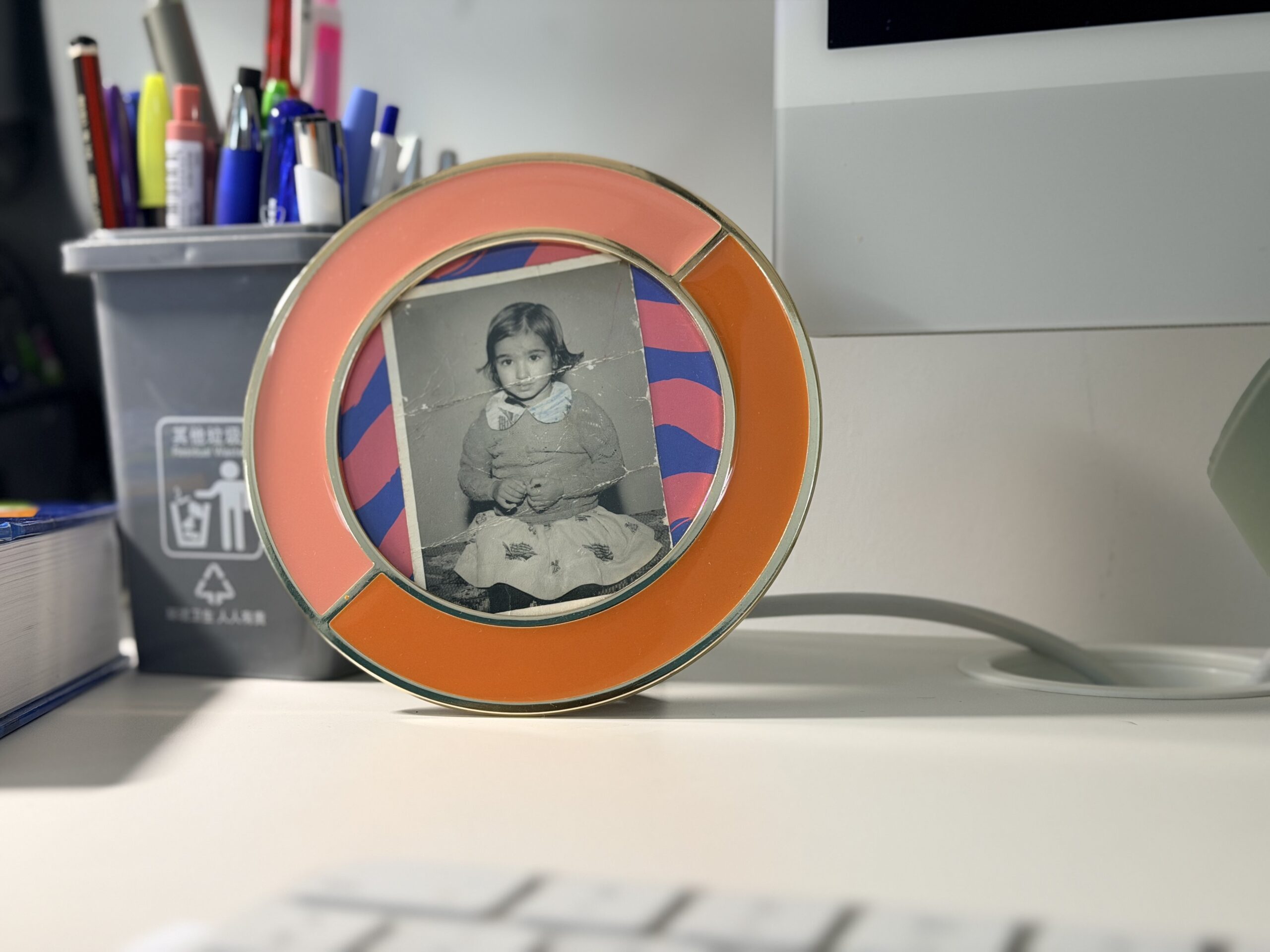
She Gave My Childhood a Home
A photograph on her daughter's desk stops her mid-tidy. It is the only

Thank You for the Light (And the Wishes)
Born on India’s Republic Day, I grew up in Kashmir with curfews, bla

Ties That Bind: The Unbroken Chain of Tradition
In a cosy London home, Pratiksha’s Kashmiri traditions—warm spices

How Small Habits Shape a Healthier Mind
Small, daily choices, not dramatic overhauls hold the key to a healthi
Subhash Kak
A powerful evocative essay.