




Satish Sumbly
Satish Sumbly, originally from Habba Kadal, Srinagar, is a retired healthcare professional. Now in retirement, he often visits his daughter in New Zealand, where the serene landscapes and flowing rivers stir memories of his beloved Kashmir. Through writing, Satish revisits the sights, sounds and spirit of a childhood left behind—but never forgotten. His reflections are a heartfelt attempt to preserve the heritage, humanity and home that continue to shape his identity.
25 Comments
-
Ravinder Raina
Thank you for taking us down our memories from childhood till migration every thing came back as a flashback film.You have given detailed description of landmarks of Drabiyar mohalla.
I am Ravinder Raina (Razgaroo)our house was between Drabus and Muthoos near Temple. Any way a lot has changed from the past only memories will remain for ever. Thank you for writing a beautiful post.
Regards Ravinder Raina-
Satish Sumbly
Dear Ravinder ji,
Your words echo the very heart of what I hoped this piece would evoke. Thank you for reading with such feeling. These silent tears that you speak of, may they also hold within them the healing strength of memory and belonging. We may be far from the streets of Habba Kadal, but as long as we share these stories, we are not alone.
With gratitude,
Satish
-
-
T K Sumbly
Thank you Satish for this beautifully written, nostalgic piece. It brought back a flood of memories and I’d like to add a few more from my own recollections.
There was a shopkeeper, Ram Chand Rose, whose shop almost seemed like a miniature department store, stocked with just about everything needed for daily life, especially for students. Cigarettes too were available. I vividly remember buying Kores ink tablets from him for school use.
What made his shop unique was its ambience, completely dark inside, with the only light coming from the front entrance. To locate specific items for customers, Sh. Ram Chand Rose would light a candle, using its flickering flame to hunt for the chosen good. That flickering candle somehow made the shop feel magical and occasionally mischievous, as the darkness also provided the cover for an odd bit of shoplifting, sadly, by some miscreants.
Also worth remembering were two iconic masala shops. One belonged to Mr. Prasad (as you mentioned), famous across the locality for his fragrant Kashmiri masalas. Just next to his was the shop of Mr. Radha Krishan Kak, who also offered similar spices. Yet, there was a strange melancholy to his store, hardly any customers came to him and his shelves often stood in quiet contrast to the bustle next door.
Thank you again for writing this piece and taking us back to our days in Drabiyar.
-
Satish Sumbly
Dear Bairaj,
Your additions are like hidden jewels rediscovered. Thank you for painting Ram Chand Rose’s shop so evocatively. The image of a flickering candle inside his dark shop is unforgettable. It feels as if you’ve handed me a lantern and added a deeper glow to our collective memories. How can I forget those Kores ink tablets! And your mentioning of Radha Krishan Kak’s quietly dignified store adds a layer of melancholy beauty. Two spice merchants with contrasting destinies. Thank you for bringing these nuances to light.
Warmest regards,
Satish
-
-
Rakesh Koul
I am indeed thankful to you for sharing this wonderful piece with us.
Only the memories are there now with silent tears in our eyes.-
Satish Sumbly
Dear Rakesh ji,
Thank you so much for your kind words. I deeply resonate with your line—“only the memories are there now with silent tears in our eyes.” That silence you speak of carries such depth. It speaks volumes of what we lost, yet, perhaps more importantly, what we still carry within us. I’m grateful that these recollections have touched hearts like yours and I hope they continue to keep our shared roots gently alive.
With heartfelt regards,
Satish
-
-
Satish Sumbly
Thank you, Sheetal, for the amazing roadmap for the article! 🌟 Even though you’re young and have spent little time in Kashmir, your love for it is truly heartwarming. ❤️ It shows how generous you are, even when you are in a different country.
-
Sheetal
Thank you again for agreeing to write this. I could literally taste the curd from Son Gur in my sleep. Memories of Mom and I sitting on the windowsill watching people go by came rushing back! That aerial view from the house we used to rent; how it gave us a front-row seat to the heartbeats of the street below. I remember walking those lanes and by-lanes with Babi, her coins tightly knotted at the corner of her saree pallu, only untying it when I pointed out something I wanted. Every step was a ritual, every glance a story. Thank you for reigniting it all with such tenderness.
-
Reeta Kaul Tiku
I too spent my childhood in Drabiyar. We left in 1990 but I went back again in 1994 with my husband. As we approached Drabiyar, I simply couldn’t recognise the place. Karihaloo House, Saraaf House and so many other houses in that area had vanished completely, without even a trace of their existence.
It was my husband’s first visit there and I still remember telling him, “We must have come to the wrong place… this cannot be Drabiyar.” We then asked a passerby and he confirmed that we were indeed in Drabiyar. I was so shocked that I just stood there numb, unable to move.
I did go back again after a few years but every visit only brought more disappointment. I still visit Kashmir but I have stopped going to Drabiyar because I want to preserve the Drabiyar of my childhood in my heart — the one filled with warmth, happiness, and countless memories.
-
-
-
Suman Mattoo
Thanks Satish ji for this nostalgic masterpiece. So well written….. took me back to my roots. I’m basically from Drabiyar,(Aima’s)
Guru ji Dina Nath was our Guru ji. He used to do all poojas at our place.
I have also enjoyed Nadur moonj of Muna Halwai.
Gulam Daen used to sit on Anand mozas shop.
You really took all of us down the memory lane.
I have written a book on Terrorism in the State of Jammu & Kashmir ( An empirical study)
You can go through it.Regards,
Suman Aima Mattoo-
Satish
“Thank you for your kind words about my article! It whisked us back to childhood and revived some cherished memories. I truly appreciate your thoughtful acknowledgment. I’m excited to dive into your book on terrorism and discover your insights. Thanks again for reaching out!”
-
-
Rinzen R Kaul
Very well-written! This touched my heart. Thank you for sharing something so personal.
-
Satish Sumbly
My dearest Rida,
Thank you for taking the time to read and respond. I’m truly touched to know it resonated with your heart. That’s the greatest reward a writer can ask for—knowing a memory shared brought warmth to someone else. May we all continue to carry a piece of our past gently within us.
Sincerely,
Satish
-
-
Moksha
Born in Habba Kadal but never had the chance to grow up there. Reading this piece felt like walking its lanes through your eyes—so vivid, warm, and full of life. The way you’ve brought back the sounds, smells, and soul of the place is truly moving. Thank you Mamu for letting those of us who never got to live it still feel connected through your words.
-
Satish Sumbly
Dear Moksha,
Your message moved me deeply. For those who are part of a place by ancestry but never had the chance to live its stories firsthand, I can only hope my words served as a bridge, one built with love and remembrance. I’m so glad you felt connected through these memories. It means everything to me.
With love,
Satish Mamu
-
-
Nancy Goja
So picturesque!
Travelled to Kashmir and its lanes, places and people with whom we spend maximum time of our lives .
Lost but regained today by reading this article:Where the pigeon still wait…and our longing..
-
Satish Sumbly
Dear Nancy ji,
Your beautiful phrase “Lost but regained today” mirrors exactly what I felt while writing this piece. Sometimes it takes only a whispered memory or the glint of morning light through an old alley to bring back an entire world. Thank you for letting me share the journey with you.
Warm regards,
Satish
-
-
Urmila Dhar Zutshi
My Matamaal was in Chinkral Mohalla, and our visits to meet my Nani, Tara, are etched in my memory. Your book brought back the Maay-Mohabbat, that was the tradition of our Kashmiri Pandit culture. Thank you from my heart for your tribute to our Motherland. I can taste the Nadurmonjas and Mithai from Munahalvoi, on our way back from Ganpatyar… So many memories. That’s all we have now😢
-
Satish Sumbly
Dear Urmila ji,
Reading your memories of Chinkral Mohalla and Matamaal in Ganpatyar made me misty-eyed. The way you describe Maay-Mohabbat is pure poetry—it’s what always set our culture apart: love expressed quietly, insistently, in each shared meal, each returned visit. Thank you for reminding us of that grace and for walking these memory lanes alongside me.
With heartfelt respect,
Satish
-
-
Chand Bhat
Your Article Whispers of Habbaksdal brought the fond memories of the place I was born like showreel of the era, the people and the places.
Very nostalgic.
I am the editor of a community magazine, Milchar, published by Kashmiri Pandits’ Association, Mumbai and seek your consent for allowing me to print in in Milchar.
Warm regards,
Chand Bhat-
Satish Sumbly
Dear Chand ji,
Thank you so much for your heartfelt words. I’m truly touched that Whispers of Habba Kadal brought back those cherished memories for you—as you so beautifully put it, like a showreel of an era past. It means the world to me that this piece resonated with someone who shares such a deep connection to the place we once called home.
I feel honoured by your request to include the article in Milchar. I will ask Sheetal Raina to get in touch with you soon to discuss permission and details for sharing it in your esteemed magazine.
With warm regards and gratitude,
Satish Sumbly
-
-
Rajender Koul
Nostalgia for one’s homeland evokes a deep sense of belonging and cherished memories.
It’s a powerful and emotional nostalgia that connects individuals to their roots, offering comfort, inspiration, and a sense of identity. This feeling can be triggered by various sensory experiences, such as sights, sounds, tastes, and smells associated with a particular place.
A Sense of Belonging, Nostalgia for one’s homeland fosters a strong sense of belonging and connection to a place, its culture, and its people.
The Comfort and Security Memories of a familiar place can offer comfort and a sense of security, especially during times of change or uncertainty.
Nostalgia can be a source of inspiration and motivation, prompting individuals to revisit their roots or pursue meaningful connections to their heritage.
Memories of home play a crucial role in shaping individual and collective identities, preserving cultural heritage and traditions. One more breath taking line is the Emotional Resonance where Nostalgicmemories can evoke a wide range of emotions, from joy and warmth to a sense of loss and longing, highlighting the depth and complexity of human connection to place.
Your piece is definitely bringing in this Creative Expression where lasting Nostalgia can be a powerful muse for creative expression, inspiring artists, writers, and musicians to capture the essence of their homeland in their work.
Then comes the vivid Social Connection, through Shared nostalgic experiences can strengthen social bonds, as people reminisce about common places, events, and cultural practices.
A well written article expressed nicely as a sojourn to your composite memory lanes of Habba Kadal and Porshayar.
I have also written some individual stories emanating from the vicinity of serene jogged rumblings of echoed Habba Kadal whispers though I lived in the Nai Sadak Near to Badiyar Ganpatyar. You have exhibited a live testimony of a lived piece and the done a great job in this post. I really appreciate . God Bless You and your Pen. Thanx -
Rajender Koul
Nostalgia for one’s homeland evokes a deep sense of belonging and cherished memories.
It’s a powerful and emotional nostalgia that connects individuals to their roots, offering comfort, inspiration, and a sense of identity. This feeling can be triggered by various sensory experiences, such as sights, sounds, tastes, and smells associated with a particular place.
A Sense of Belonging, Nostalgia for one’s homeland fosters a strong sense of belonging and connection to a place, its culture, and its people.
The Comfort and Security Memories of a familiar place can offer comfort and a sense of security, especially during times of change or uncertainty.
Nostalgia can be a source of inspiration and motivation, prompting individuals to revisit their roots or pursue meaningful connections to their heritage.
Memories of home play a crucial role in shaping individual and collective identities, preserving cultural heritage and traditions. One more breath taking line is the Emotional Resonance where Nostalgicmemories can evoke a wide range of emotions, from joy and warmth to a sense of loss and longing, highlighting the depth and complexity of human connection to place.
Your piece is definitely bringing in this Creative Expression where lasting Nostalgia can be a powerful muse for creative expression, inspiring artists, writers, and musicians to capture the essence of their homeland in their work.
Then comes the vivid Social Connection, through Shared nostalgic experiences can strengthen social bonds, as people reminisce about common places, events, and cultural practices.
A well written article expressed nicely as a sojourn to your composite memory lanes of Habba Kadal and Porshayar.
I have also written some individual stories emanating from the vicinity of serene jogged rumblings of echoed Habba Kadal whispers though I lived in the Nai Sadak Near to Badiyar Ganpatyar. You have exhibited a live testimony of a lived piece and the done a great job in this post. I really appreciate . God Bless You and your Pen. Thanx -
Kamlesh Kumar
Reading this brought back memories of a world that many of us know only through stories, photographs, and family conversations. The line, “No need to close your eyes anymore,” is especially powerful. After 36 years, the longing remains, but so does the hope. Thank you for expressing emotions that are difficult for many to put into words.


POST COMMENT
Related Posts
New Beginnings
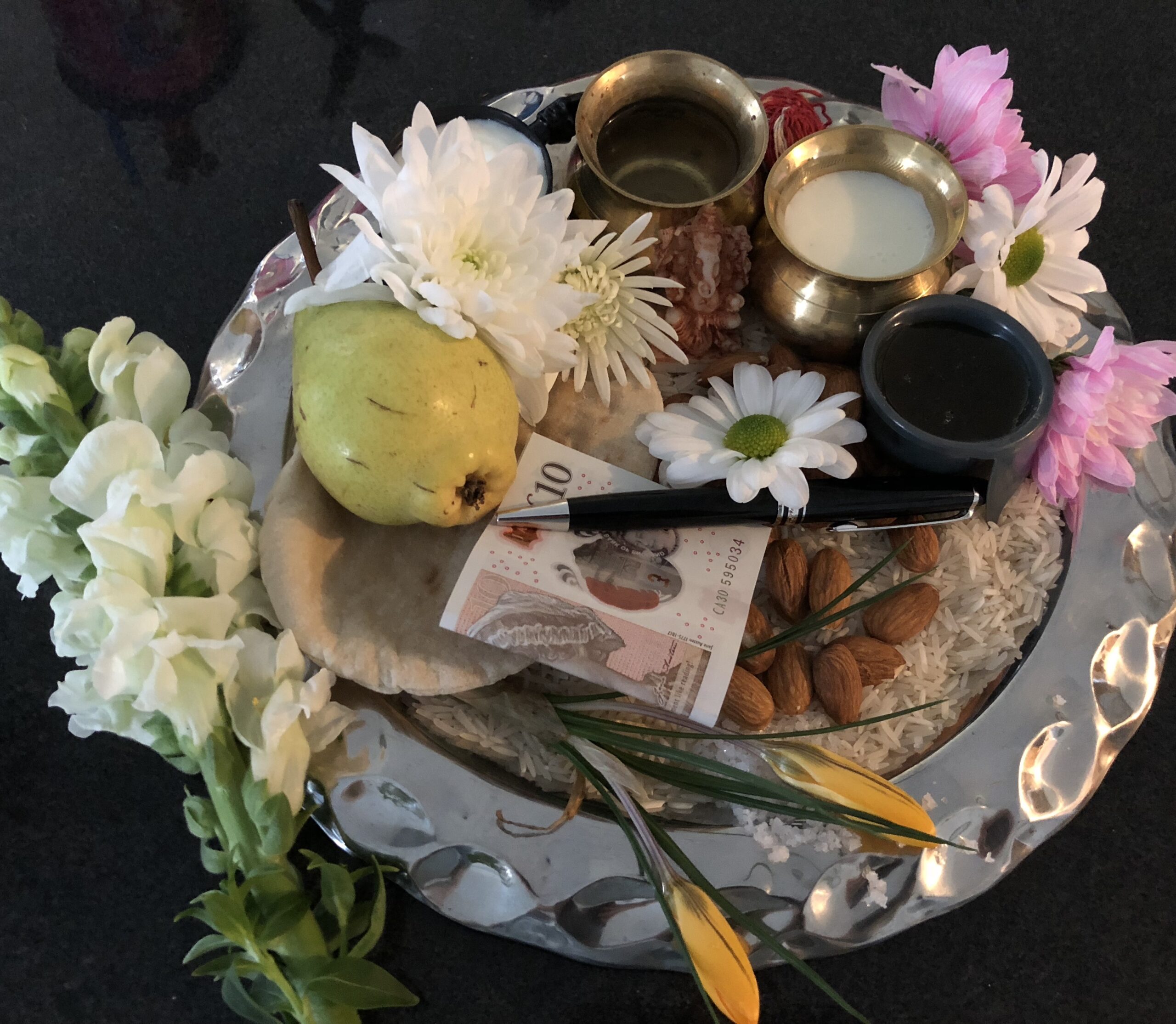
Navreh or the Kashmiri new year is upon us and I want to start out by

Memories Reveal Realities
A Kashmiri Pandit family’s story unfolds across four generations, re

The Second Bloom: A Hidden Throb
When the quiet routine of Sandeep Ji’s solitary life in Delhi is une
Shiuli in Pennsylvania: A Woman at the Altar
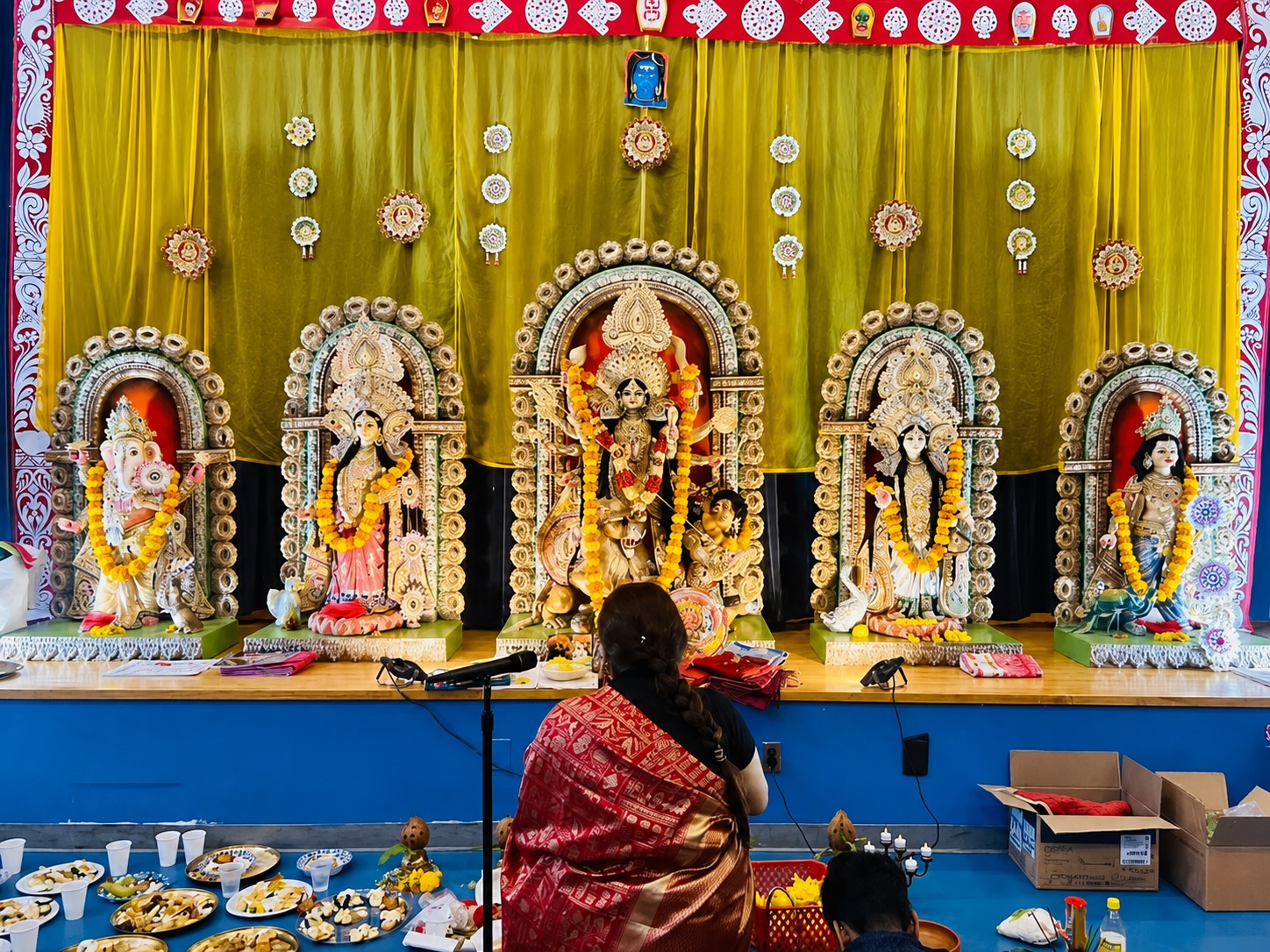
At a Durga Puja in Philadelphia, a woman steps to the altar where trad

Dowry: The Social Menace
The dowry system, deeply rooted in many cultures, is a social menace t
Navreh
Phoola Kaul Our gorgeous Phoola aunty sent us some beautiful words for
Sheetal
Thank you Satish Mamu for taking me back to my own childhood, so many memories, wrapped up tenderly in words. Thank you 🙏