Coordinates: Lat. 33 degrees 86 minutes, Long. 74 degrees 80 minutes
Murran, nestled within Pulwama District, lies approximately two kilometers west of Pulwama town. Initially known as Panwangam, Pulwama comprised four patties: Malikpora, Dangeropra, Chatpora, and Dulipora. Over time, Pulwangam evolved into Pulgam and eventually into its current name, Pulwama. To the east lies Matrigam, birthplace of the patriotic poet Pirzada Ghulam Ahmad ‘Mahjoor’. Nearby, the hamlet of Haarpur marks the final resting place of the ascetic Nidhan Saab. Murran’s natural beauty captivates with its picturesque landscapes…lush green pastures, untamed meadows, verdant trees and shrubs, and sprawling paddy fields collectively paint a quintessential rural tableau. This charming village exudes a serene ambiance, enveloping visitors in the tranquility of its idyllic surroundings.
Located in the northwest of the village within Mohalla Brarimaejpur, the temple of Brari Maej holds a revered position. The term “Brari” finds its origins in “Bhattarika,” signifying the venerated Mother. In Sanskrit, “Bhattarika” carries connotations of reverence and veneration, aligning with the significance of Brari Maej as the Divine Mother Uma. The temple’s inception traces back to 1775 when the Bhat dynasty migrated from Sumbal to this village, establishing this sacred sanctuary as a focal point of devotion and spiritual reverence.
Sumbal, a picturesque village nestled in North Kashmir, holds a significant place in the annals of history as the ancestral birthplace of the illustrious Bhat dynasty. Despite its beauty, Sumbal faced the recurrent challenge of submersion during the rainy season. It was amidst this backdrop that Pandit Bhawani Bhat, known for his piety and orthodox beliefs, experienced a divine revelation on Magh Ashtami. In a celestial dream, the Divine Mother graced Pandit Bhawani Bhat’s humble abode, filling the room with divine effulgence. With affectionate gaze, she beckoned him closer and spoke words of guidance, acknowledging his unwavering devotion and acknowledging the hardships faced during the rainy season. She directed him to follow a divine sign…a cat that would appear in his compound the following morning. Pandit Bhawani Bhat was instructed to pack his belongings and follow the cat, settling in the location where she led him, signaling their next place of habitation. The Divine Mother bestowed a prophecy, assuring dignity and honor for seven generations at the new settlement while foretelling the end of their lineage’s residence in Murran by the eighth generation. With the revelation imparted, the Divine Mother vanished, leaving Pandit Bhawani Bhat with a divine mission and a profound sense of purpose.
As dawn broke, the promised divine cat materialised in the compound of Pandit Bhawani Bhat, confirming the prophetic vision. Promptly, Pandit Bhawani Bhat, having already prepared his scant belongings, embarked on a journey following the feline guide. With steadfast determination, he trailed the cat until they arrived at a village, whereupon the divine cat signalled a particular spot by gracefully waving the tip of her tail before vanishing into the ether. In the wake of her disappearance, a miraculous spring emerged from the very spot, a testament to the divine guidance bestowed upon Pandit Bhawani Bhat. This spring, later expanded and initially marked by the laying of a single piece of stone (Pather Kein), later became the focal point for the construction of a temple. Known as Brari Maej (Cat Mother), the temple was established to commemorate the divine intervention of the cat. In the year 1875, Shri Loket Bhat (1801-1876) honored the sacred site by installing an icon of the Divine Mother, perpetuating the legacy of divine guidance and spiritual reverence.
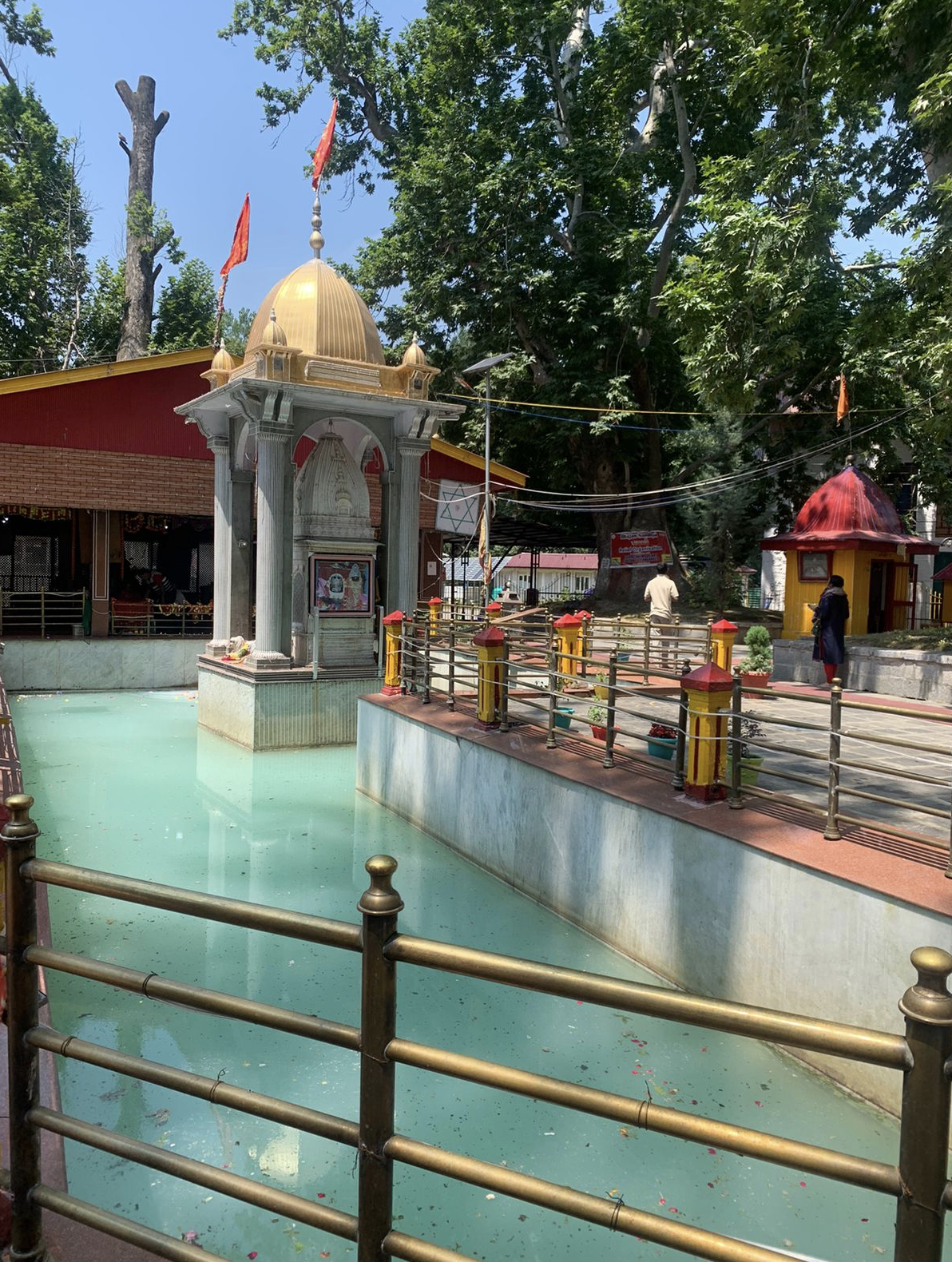
Surrounded by majestic Chinars, the Brari Maej temple shrine stands as a serene sanctuary, nestled beside a grand spring with crystalline waters spanning approximately 15 meters in diameter. Facing eastward atop the upper bank of the spring, the temple exudes an aura of divine tranquility. The spring, captivating in its allure throughout the seasons, holds a mystical charm that enthrals those who seek solace in prayer along its banks, facilitating spiritual transformation. Reverberating with the echoes of spiritual ascension, the temple precincts bear witness to the transformative journeys of revered saints. Swami Ramji, a saint of profound stature, graced Murran with his presence for two decades before 1947, ascending to exalted spiritual heights. His contemporary, Swami Madhavananda Ji, enriched the spiritual landscape further, journeying from Varanasi to engage in rigorous yogic practices within these hallowed grounds. Legend whispers of Adi Shankaracharya’s sojourn, spending five years in a cave behind the temple, delving into various paths of God realisation…a sacred space that endures as a testament to the enduring quest for spiritual enlightenment.
Adjacent to the Brari Maej temple stands a Shivalaya, honouring Lord Shiva, enriching the spiritual landscape of the sacred grounds. Behind the main temple lies a marshy expanse known locally as Saar, adding a touch of natural serenity to the surroundings. Welcoming pilgrims and travellers are two Dharmshalas, thoughtfully constructed on the right side of the main entrance, offering accommodations for weary souls, wandering monks, dedicated pujaris, and other wayfarers seeking refuge. The temple’s precincts are graced by the presence of numerous walnut trees, spreading their canopy over approximately ten Kanal of land, adding to the tranquil ambiance. Notably, amidst this serene landscape, a breadmushuk (salix caprea) tree stands tall, its flowers revered for their significance in the traditional thaal barun ritual. Procured a day before Navrah or Soanth, these blossoms hold sacred importance, symbolising renewal and auspicious beginnings as they adorn the thaal on the morning of Soanth and the New Year’s Day (Navrah), weaving a tapestry of tradition and spirituality within the temple’s embrace.
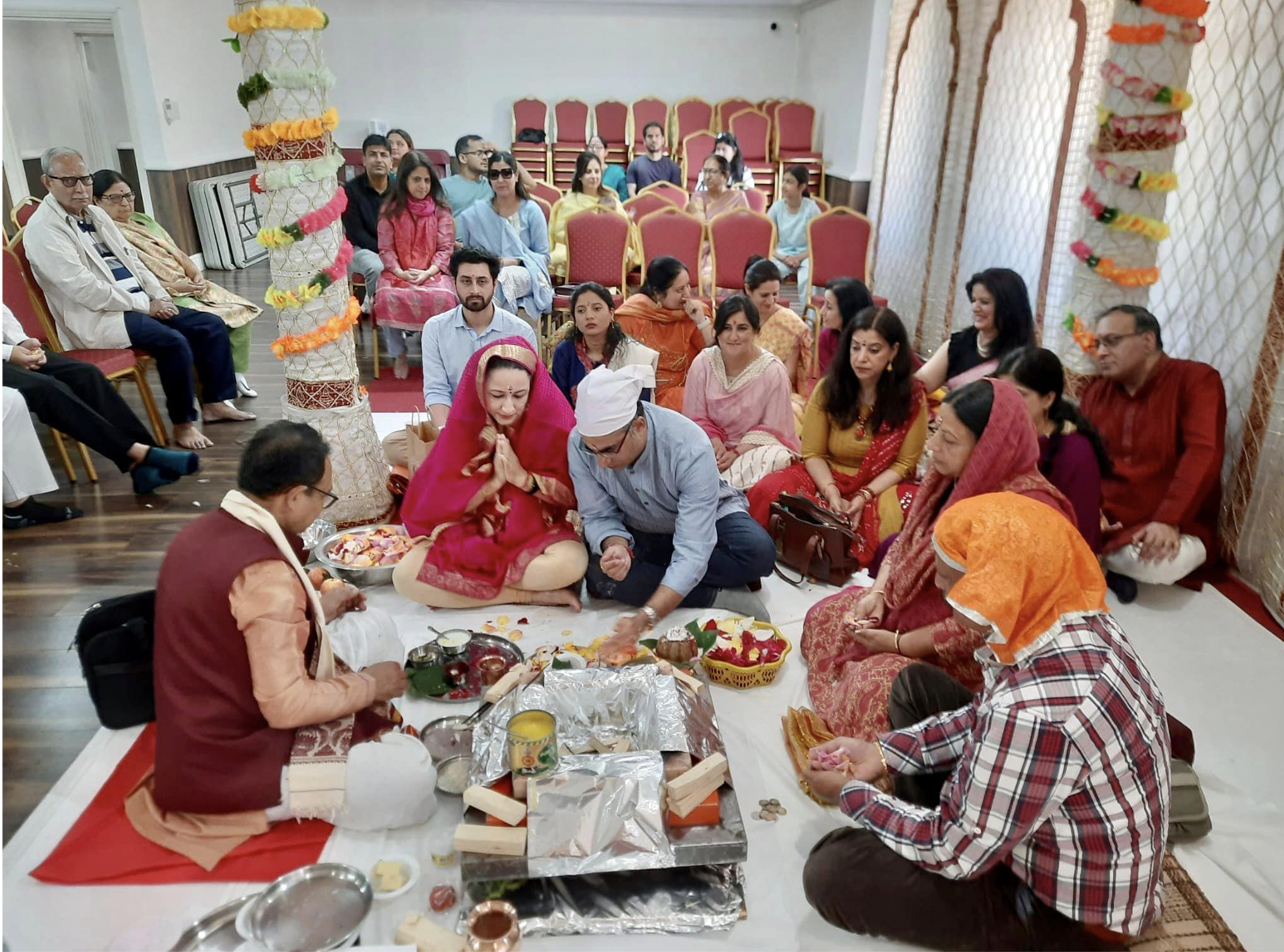
The annual Yagna, a sacred ritual encompassing the cleansing of the spring post autumn, held profound significance at the Brari Maej temple. Essential items required for this ceremony were gathered from the villagers, with particular emphasis on contributions from the Pandit community. The occasion was further enriched by the theatrical performances staged by the Uma Natak Mandli. Before the exodus, it was customary for the elder members of the community to diligently perform daily puja rituals at the temple, embodying a deep seated commitment to spiritual devotion.
Numerous individuals have encountered profound spiritual revelations within the sacred confines of the Brari Maej temple, while others have been blessed with divine visions of Goddess Uma herself. The mystical allure of the spring extends beyond daylight hours, as many have attested to witnessing its ethereal radiance even in the darkest hours of the night. Such experiences serve as poignant reminders of the transcendental power that permeates this revered site, offering seekers of truth and enlightenment a gateway to spiritual awakening and divine communion.
One evening, when Pandit Sarwanand Bhat’s cow failed to return from the pasture, all family members, except the women, embarked on a search. As dusk descended, Smt. Sampakuj, spurred by concern, ventured out alone in search of the missing bovine. To her astonishment, as she neared the Brari Maej temple from the Devspat paddy fields behind it, she encountered a surreal scene: little girls adorned in silk garments, joyfully playing within the temple precincts. Among them stood a remarkably beautiful girl, bathed in an ethereal glow that illuminated the surroundings. Overwhelmed by the divine aura, Smt. Sampakuj humbly offered her salutations to the Divine Mother, who herself was engaged in play with the children. Continuing her search, she soon found the cow a short distance away from the temple, returning home with a heart brimming with gratitude for the miraculous encounter.
Before partition, a cherished tradition among the women of Murran was to gather at the temple in the early hours, preceding the arrival of the men folk. Each woman, particularly from the Pandit families, upheld the ritual of “brandeh fash,” cleansing the stairs of their homes as well as the sacred sites in the Valley. This sacred act was imbued with a sense of reverence, with women competing to be the first to perform it. One morning, Smt. Haarmal, wife of Pandit Zinda Bhat, awoke with a sense of urgency, fearing she was late for the customary ritual. Hastily, she made her way to the Brari Maej temple, where she washed her face before attending to the liven dul, the cleaning pot. With care and devotion, she filled it with fresh water and began the task of scrubbing the stairs. Once completed, she entered the temple to pay homage to the Divine Mother, honoring the sacred traditions passed down through generations with reverence and dedication.
Unaware of her early arrival, Smt. Haarmal completed her ritualistic duties at the Brari Maej temple before encountering a mysterious sight near the temple gate. A little girl, adorned in silk attire, appeared before her, gently advising her against arriving too early in the future, then vanishing into thin air. Filled with a mixture of astonishment and reverence, Smt. Haarmal hurried home to share her extraordinary encounter with her husband. It was later revealed by the village elders that the enigmatic girl was none other than the Divine Mother herself, imparting wisdom in disguise to the devout worshipper, leaving an indelible mark of divine intervention on the humble village of Murran.
Under the veil of dark nights, amidst the tranquil embrace of the Chinar trees, the sacred shrine of Murran exude an ethereal ambiance, inviting seekers to transcend the mundane and unite with the divine. Amidst the moonlit glow, the Brari Maej temple emerges as a beacon of mysticism, enchanting devotees with its otherworldly allure. Within its hallowed halls, bathed in moonbeams, devotees experience profound spiritual connections, transcending earthly boundaries to commune with the divine. These nocturnal sojourns offer glimpses of the mystical and the divine, weaving a tapestry of spiritual experiences that resonate deeply within the soul.









POST COMMENT