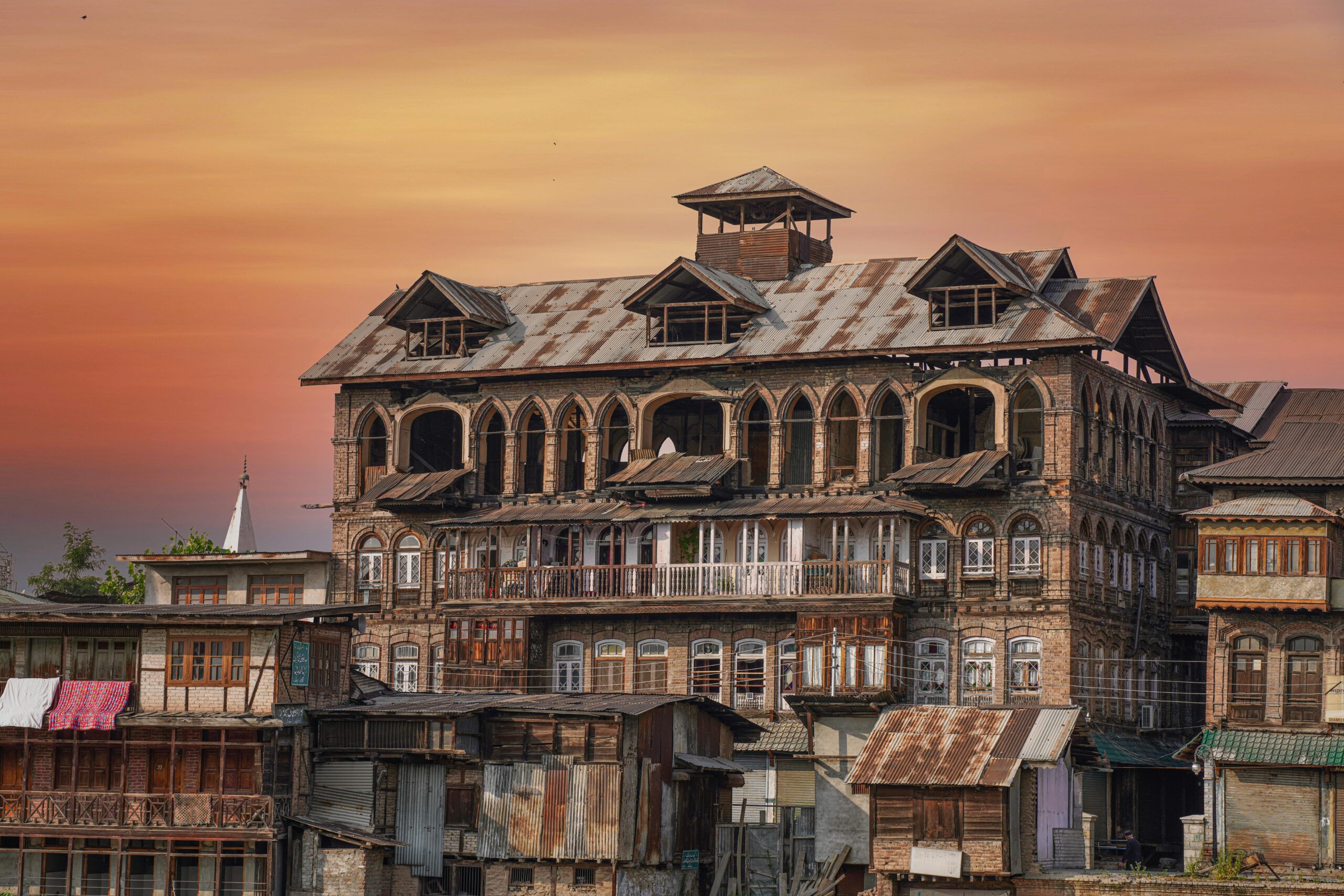

The Silent Pacific: Where Love Chooses Darkness

Far away from the snow-clad mountains and the quiet hum of the Sindhu River, in a cramped corner of Jammu’s dusty outskirts, lived Ashok Bhat and Sarla—an elderly Kashmiri Pandit couple, displaced from their ancestral village near Ganderbal.

Their world had shrunk, yes, but their hearts hadn’t.

Despite the forced migration, the refugee camps, the humid heat, and the distant memories of home, they had built a little universe of their own—marked by shared cups of morning Kehva tea and afternoon noon chai, evening bhajans, and silent glances that said more than words ever could.

Ashok had once been a schoolteacher in their village, known for his calm temperament and flowing white kurta.

Sarla, with her almond-shaped eyes and poetic smile, was the daughter of a temple priest.

They had met during a spring fair beside the Sindhu, where Ashok recited a verse by Lal Ded, and Sarla listened, transfixed. It was love that didn’t need much speaking—it grew in silence, like the Chinar trees of their homeland.

After their migration to Jammu in 1990, like thousands of other displaced Pandits, life became about survival. But even in a tin-roofed quarter with cracked walls, Sarla kept the tulsi plant alive and the temple bell rang. Ashok wrote poetry on old ration slips. And in those quiet evenings, they still sat together, fingers touching slightly, and talked about the Sindhu.

Years passed. Ashok grew older, his white hair now matched by weakening vision. Sarla, though past sixty, still carried a natural charm—a glow that came from years of love and sacrifice.

But one winter, Sarla developed an unusual rash on her skin. At first, she dismissed it. But soon, it began to spread, once-bright skin became patchy, discoloured, and marked with lesions that no medicine seemed to cure.

Sarla stopped going outside. She avoided the mirror. Her joy dimmed.

One night, she wept silently beside Ashok and whispered, “I’m afraid… you won’t love me like before.”

Ashok held her trembling hand and said nothing. But from that night, a quiet transformation took place.

Weeks later, while returning from a brief visit to his old school in Srinagar, Ashok met with a tragic road accident. He survived—but lost his eyesight permanently.

For outsiders, it was yet another misfortune in a long line of tragedies the couple had endured. But for Sarla, it was the beginning of a new kind of pain—and a strange kind of grace.

Now blind, Ashok depended on Sarla for everything. She guided him through the house, narrated the news to him, described the colour of the sky, and became his eyes.

And yet, he never once mentioned her changed appearance. He still spoke to her with the same softness. “You’re glowing in this sari,” he would say. “Your voice is even more beautiful than before.” Sarla smiled, half-believing, half-aching.

Years rolled on. Sarla’s condition worsened, but Ashok’s love never faltered. Even blind, he saw her, and she lived in the illusion that he could not see what she had become.

Then one monsoon morning, Sarla passed away in her sleep. Ashok sat beside her, holding her hand long after it had turned cold. The walls of their tin shelter echoed a silence that felt unbearable.

After the cremation, Ashok packed a few belongings, ready to leave for an old-age ashram in Udhampur. As he walked, cane in hand, a neighbour stopped him and said, “Ashok ji, how will you go alone? You can’t even see. Sarla ji was your eyes for all these years.”

Ashok paused. He turned his sightless eyes towards the voice and smiled faintly. “I was never blind,” he said softly. “I only pretended to be. When I saw what her illness was doing to her… when I saw her beauty fading and her spirit breaking, I knew that my love had to become her shelter. If she had known I could still see, it would have shattered her. So I chose to live in darkness… so she could live in light, even for a little longer.”

The man stood stunned.

Ashok turned and walked away, the burden of his secret love heavier than ever—but his heart light with the knowledge that he had protected her from her own despair till the very end.

Reflection of words that are there…..

Love isn’t about what we see—it’s about what we choose not to see.

In a world obsessed with appearances, Ashok and Sarla remind us that true love is a quiet vow—to walk beside someone not just when they shine, but when they wither too.

Sometimes, the greatest act of devotion is the kindness of pretending, the courage to hide one’s pain, and the grace to carry someone’s brokenness like it were a feather.

Rajender Koul, a resident of Talab Tillo, Jammu, is a retired officer from the State Bank of India. After decades of his first innings and very dedicated service in the banking sector, he now enjoys his second innings in the quiet rhythms of retired life. A keen observer of people and the world around him, Rajender Koul, has turned to writing as a way to reflect, create and reconnect with life’s deeper meanings. He spends his leisure time crafting short stories and capturing memories, experiences and moments that often go unnoticed in the everyday hustle. Through his thoughtful storytelling, he seeks to preserve personal and collective journeys of spiritual growth, humane love, loss, resilience and hope. Prayers and blessings a support to the world of ours we live. Jai Bhagwan ji

2 Comments

  • Manju Wali

    A deeply touching love story that captures the essence of pain, healing, and acceptance. It beautifully portrays how love isn’t always about perfection or fairy-tale endings, but about standing by each other through struggles, embracing flaws, and finding peace in togetherness. Emotional, raw, and heartwarming, it leaves a lasting impact.What a write up Sir 🙏

  • Shikha

    Beautiful, deep touching and a meaningful story. Pain, devotion and kindness arey takeaway from it 😊

POST COMMENT

Your email address will not be published. Required fields are marked *