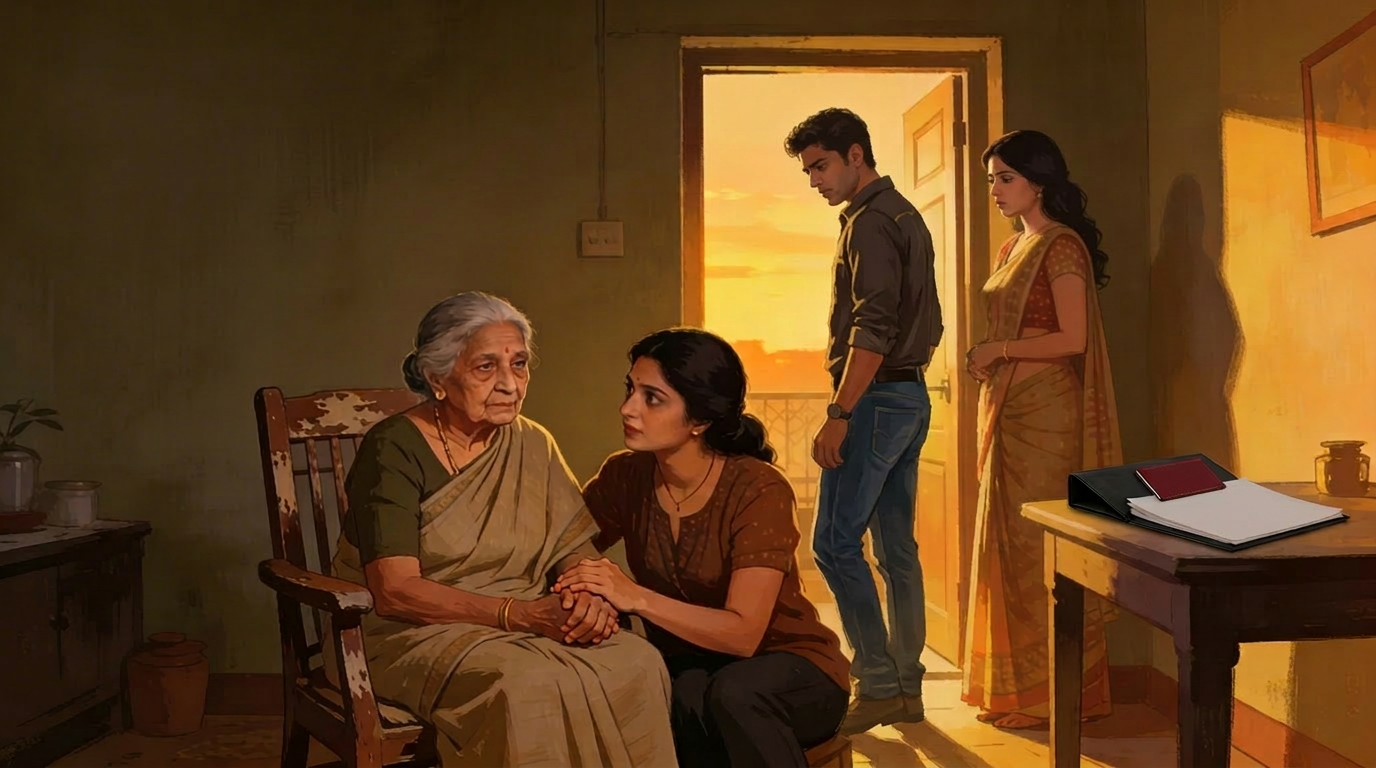
In an aging part of old Jammu, where silence clung to the window grills like dust and the afternoon light fell soft on cracked walls, a girl named Ruchi lived with her mother, Shantha.
Their house wasn’t grand two rooms and a small courtyard where a Tulsi plant grew in an old brass pot. But within those humble walls lived a world unseen by others a world of love wrapped in longing, of memories pressed between the pages of silence.
Ruchi was born not of scandal, but of love that dared to breathe outside the stitched laws of society. Her father, Vikram, was a name people respected. A man with presence, intellect, and the charm of a born orator.
In Srinagar, he lived with his first wife and two children—a son and a daughter. His life painted perfectly for the world.
But here in Jammu, far from the eyes of propriety, he had built something secret, yet sacred—with Shantha. The unknown love, of commitment and sacrifice unilaterally accepted by the peace-loving Shantha.
He never divorced his first wife. Their so-called secret marriage, his and Shantha’s—was quiet, without legal seals or societal approval.
But for Shantha, love was enough. And when Ruchi, her daughter came into the world, she held her like a whispered prayer, vowing to shield her from the world’s judgments.
Ruchi remembered her childhood in seasons. Spring brought mango blossoms to the courtyard and her father’s visits every Sunday. He came with chocolates in brown paper, old storybooks, and that fragrance—half aftershave, half nostalgia. He never stayed for long, but he brought enough smiles to last a week or a fortnight but would not last long.
Ruchi would draw him pictures of rivers and stars. He would smile, pat her head, and say, “One day, you’ll paint the sky, Ruchi.”
But he never stayed to watch it happen.
Summers were crueller. Shantha would tire herself in the kitchen, cooking his favourite mutton curry and boiling rice that smelled of saffron. She would fix her hair with care, put on the old sky-blue saree he once complimented.
But sometimes, he wouldn’t come.
No calls. No apologies.
Shantha would quietly serve the food to the crows outside. Ruchi would watch her from the corner, her young heart confused, her little soul quietly cracking.
Monsoons were bittersweet. Ruchi loved the rain. She would sit by the small window and write poems in her diary about clouds and birds who had no homes.
One day, she asked her mother, “Are we like those birds?”
Shantha had smiled and kissed her forehead, “No, Ruchi. We have a nest.
It’s just hidden from the world.”
But even a hidden nest crumbles when there’s no one to protect it.
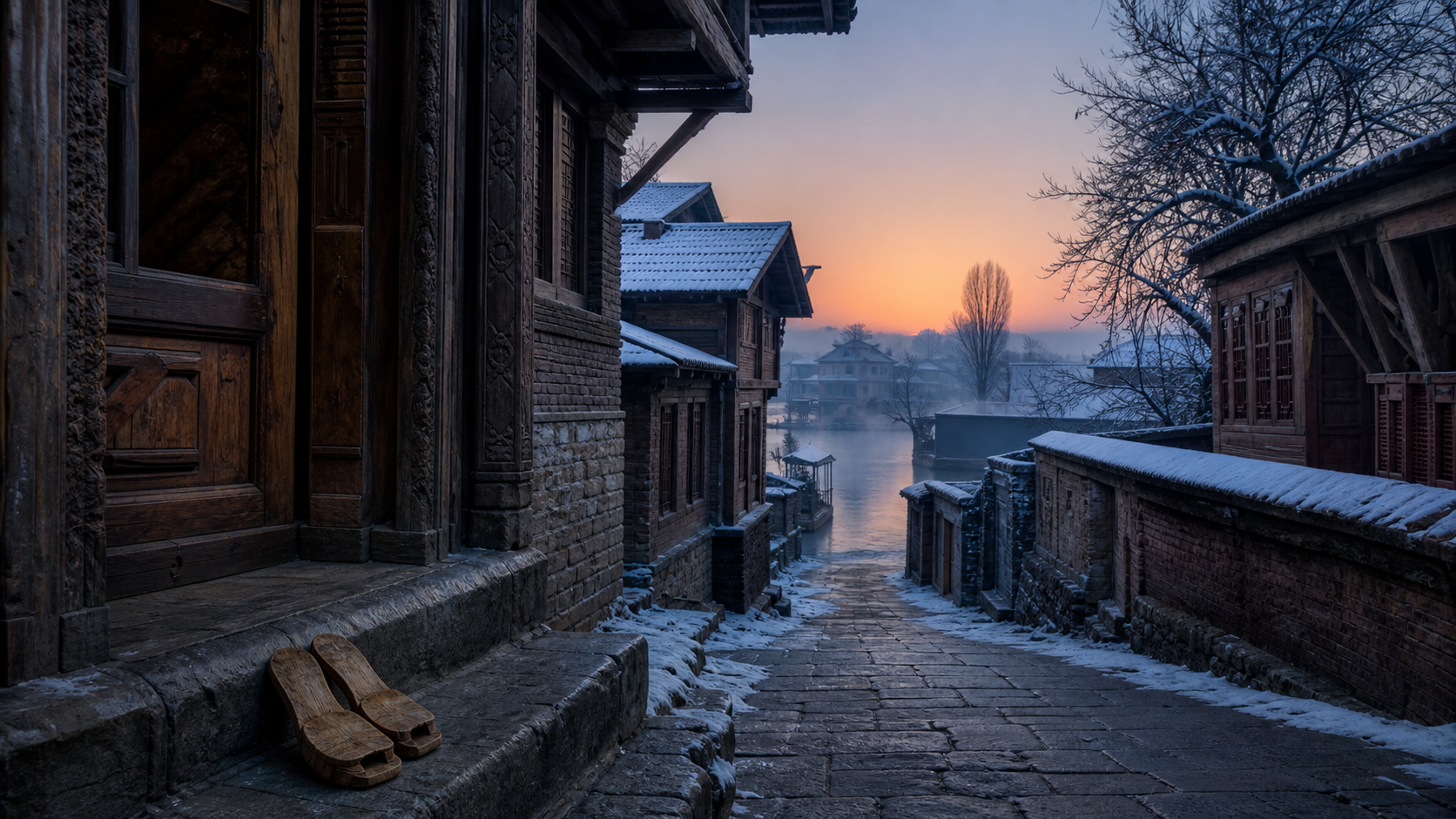
In winter, everything slowed down. The wind got inside their bones, and silence wrapped the house like an old shawl.
That was when Shantha often fell ill.
Her hands trembled more. Ruchi, now a teenager, took charge—making tea, running errands, heating water. Her father still came on some Sundays, carrying woollen shawls and dates, but he never stayed long. He avoided eye contact when Ruchi asked him about her school admission or why people whispered things about them in the market.
Then came the winter of 2020. The world went silent with the pandemic. And so did her father. Weeks passed. No visits. No messages.
The phone rang into silence. And then one day, it stopped ringing at all.
His daughter-in-law had found out. Their names had been erased from his phone.
Shantha wept just once that night—her sobs so soft, they sounded like the breeze that crept through the cracked window.
Four years passed. Ruchi grew—not just in age, but in silence, in resilience.
She learned to boil milk without it spilling, to keep pain in her eyes but hope in her voice. She scored well in school.
She helped her mother sell pickles. She stitched dupattas to help pay for coaching classes.
But every Sunday still haunted her.
Then in March of this year, fate gave her a moment.
Through an old friend of her father, she found him again.
He looked older, wearier. His eyes, once proud, now carried a quiet shame.
When he saw her, something in him trembled. She touched his feet. He kissed her forehead.
“You’ve grown into a woman, Ruchi,” he whispered.
“I was always growing, Baba. You just weren’t there to see it.”
He said nothing. They met, just once.
Then he vanished again—like winter wind that visits only to leave the window colder.
But Ruchi didn’t cry this time.
She sat in the courtyard, now overgrown with weeds, and opened her old diary.
The Tulsi plant still stood strong.
Her mother, older now, rested inside, still wearing the same sky-blue saree.
Ruchi wrote….
“I was born in a forgotten courtyard.
I was raised by a woman who taught me that love doesn’t need witnesses.
My father taught me distance. My mother taught me grace.
And every season, even winter, taught me how to survive.”
Ruchi now teaches at a school. She speaks at women’s forums.
She holds her mother’s hand every night and tells her, “We’re not forgotten, Amma. We just lived in a chapter the world refused to read.”
And in that courtyard of broken promises and seasons gone by, a new Tulsi plant grows beside the old one.
Because some roots—no matter how buried always find a way to bloom again.
This is what is supposed to be a powerful narrative of resilience, memory, and the quiet dignity of women forgotten by law, but remembered by the soul.
This most humble Earth belongs more to the mothers, especially daughters like Ruchi who silently and bravely face the odds and the lasting dreadful disease.
Their motivation and endless efforts of courage and conviction would kill the disease without medicine.
But what about their tears rolling through their eyes all their lives unnoticed by the external world we actually perceive.







Dr Lovely Razdan
So profound & poignant.