
The Ashram of Exile: A Reflection in Red
This narrative is a beautifully woven, emotionally resonant piece of intimate prose that traces the agony, resilience and cultural spirit of the Kashmiri Pandit community in exile. It culminates in a symbolic and heartfelt reunion with their homeland—a return not just of memory, but of dignity and tradition.
There is a certain red that never fades. It is not the red of politics or anger. It is the red of memory. The red of turmeric-stained Pherans, of Sindoor on parted hairlines, of tilaks made with crushed flowers, of dried chinar leaves curled into the shape of longing.
It is the red that runs through every Kashmiri Pandit even after thirty-five winters of exile. For those who left, voluntarily or otherwise, that red still courses, quietly and fiercely, like a river trapped under frozen ground. This is the story of that red. Of families who carried their homeland not on their backs but in their blood.
On the bitter night of January 19, 1990, the sky over Srinagar trembled with the thunder of loudspeakers. The azaan was replaced by threats. Streets once filled with laughter and saffron-scented air now echoed with slogans of death. Doors slammed shut. Windows were boarded. Temples fell eerily silent.
Rani Koul, matriarch of a modest home in Zaina Kadal, lit the evening diya, her hand trembling. Beside her, her husband Shambhunath—a schoolteacher of Sanskrit—packed a single trunk. Their children, Ajay and Bhavna, stayed quiet, absorbing the fear in the air. There was no debate. The decision to leave was neither spoken nor questioned. Before dawn, they walked away from their home, their gods, their neighbours, their history.
They didn’t lock the door. They knew.
Udhampur, 1991.
They now lived under a tarpaulin roof held up by bamboo sticks. Dust choked the air. Snakes slithered at night. Summer heat blistered their skin and powdered milk was the only nutrition for months.
The tragedy wasn’t just exile. It was the everyday erosion of dignity.
Elders became pensioners of pity. Young men stood in ration lines. Children saw their parents reduced to ration card numbers.
Yet, Rani refused to break. In the midst of dust and despair, she lit a brass lamp every morning. It had survived the journey from Srinagar. So had her tattered photo of my Mata Ragnya Bhagwati.
Slowly, women from nearby tents came to her room. They prayed, they wept, they remembered. Her home became a temple. She called it the Ashram of Exile.
Ajay, once a brilliant student of engineering, now taught children under a neem tree near the relief camp. He had no books, no blackboard. He taught them by drawing in the dirt, and telling them stories of Lal Ded, Abhinava Gupta and Bhagwan Gopinath Ji Maharaj .
“This is not just education,” he would say. “This is remembrance.”
Elsewhere, Pinky Zutshi—recently widowed had turned her sorrow into strength. Her only daughter, Neeru, studied by kerosene lamp as Pinky began teaching displaced girls without any institutional support.
She named them “Satis of Tomorrow”. Her lessons were more than just academics; they were about identity.
In the neighbouring relief block, Amar Nath Bhatt—once the golden voice of Radio Kashmir—had fallen silent. His wife Pushpa nudged him back to life. She placed their grandchildren before him and asked him to tell them the stories of their past. Soon, other children joined. His voice returned. He told tales of Harwan gardens, of Harmukh mountains, of lakes that heard prayers.
He became a storyteller for a homeland that had no land.
There was also Sheela Handoo of Anantnag. Her husband now sold cold drinks, tea and household items near the bus stand. But every Sunday, Sheela ji cooked a traditional dish over a single kerosene stove.
She passed down recipes as if they were mantras. “Our food,” she said, “is a scripture. If we forget how to cook, we forget how to pray.”
She hand wrote her recipes in school notebooks and shared them with every young bride who married in exile. Each recipe was a ritual of resistance.
By 2004, a new generation asked, “Where is Kashmir?” They had never seen it, never touched its soil.
But they heard it in the Kashmiri rhymes sung by Bhavna, now a cultural activist. She traveled across settlements to record wedding songs, lullabies and hymns from the mouths of elderly women.
She called her project……..
Ghar Mera Zinda Hai . The home is alive.
The home, though vanished in stone and soil, had taken residence in voice, in food, in story, in silence.
What the world never saw was the pain behind the composure. The death of elders in relief camps without a proper cremation.
The bright boys once, became desperately addicted and directionless. The girls hid their cultural identity to blend into a world that refused to understand them.
The silence of mothers who held photographs of homes that no longer existed. The letters that were never posted. The keys that opened were no doors.
And yet, they did not vanish. They distilled.
They turned mourning into memory.
They stopped begging for return and began enacting it—in prayers, in shrines built in exile, in Sanskrit classes taught in tin sheds, in food stalls selling Kashmiri yakhin in Delhi lanes.
The red in their blood never changed. Not diluted. Not forgotten. It remained vibrant—the red of sindoor, of holy thread, of chinar leaves, of dried saffron flowers hidden in tin boxes.
And then, one day, thirty-five years later, came the moment no one had imagined.
In 2025, under the soft golden light of a late autumn afternoon, hundreds of Pandit families made their way back to the valley—not as protestors, not as tourists, but as pilgrims of identity.
In the refurbished temple of Bhairav at Baramulla, Rani’s granddaughter lit the same brass lamp her grandmother once lit in exile. Ajay—now grey-haired—stood at the banks of the Jhelum and sprinkled the ashes of his father into its waters.
Bhavna sang the same lullabies once recorded in refugee camps, now echoing in the gardens of Nishat Bagh.
Neeru laid down the manuscript of her mother’s school on the stone steps of the old shrine at Tula Mula and read aloud, “We have not returned.”
At the Bhagwan Gopinath Ji ashram at Kharyar the eternal bliss brought the rays of red background on our shoulders, said Rajender the Bhakta. “We remembered our way back.”
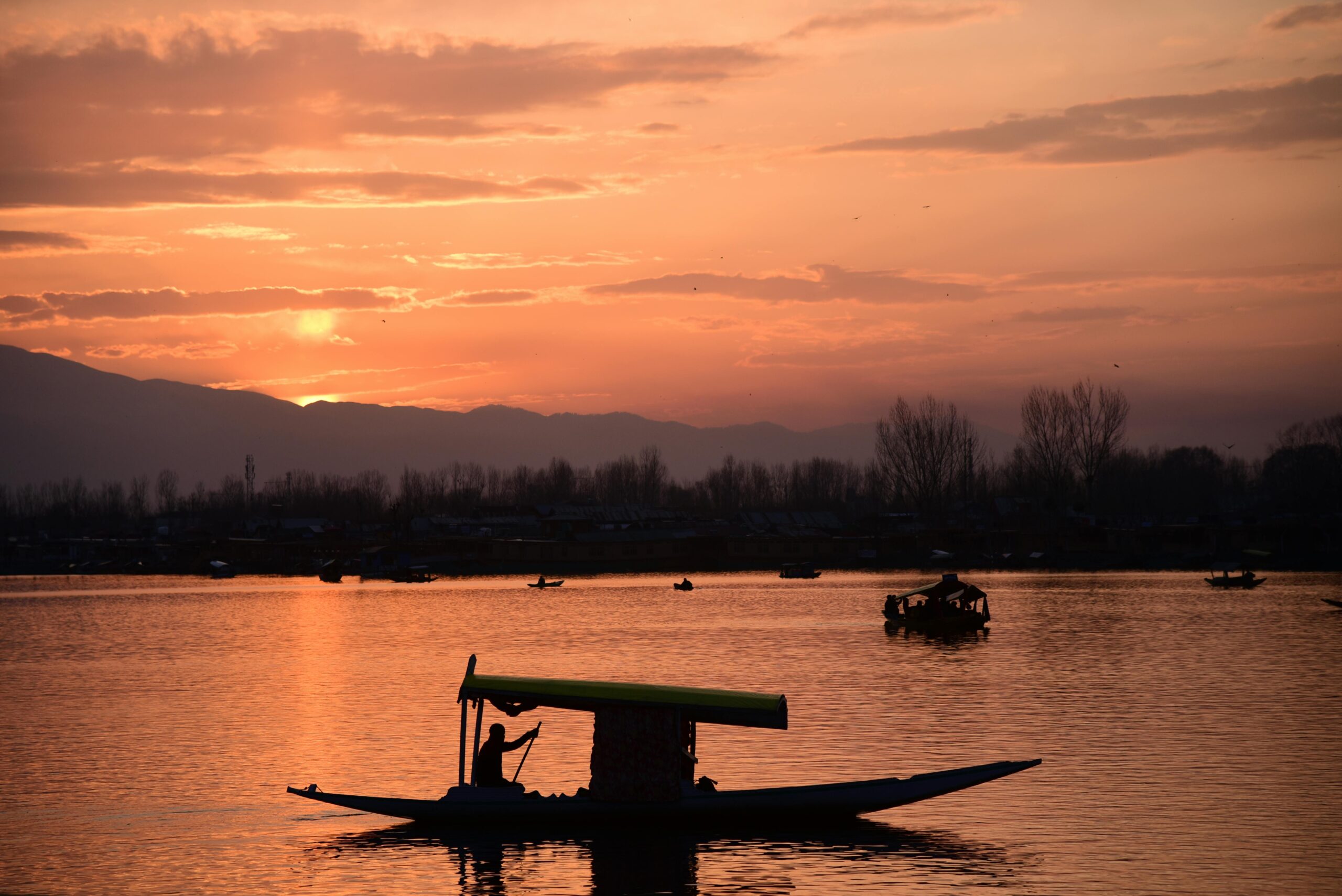
That evening, beneath the red blaze of a thousand chinar trees, as the sun dipped behind Shankaracharya hill, the valley listened.
It did not speak. It did not apologise. But it listened. And the silence was enough.
We were never exiled. We were stationed. The ashram lives in us. And now, it breathes again in the soil from where it once rose.
The withering acts of kindness in the valley, the mohalla, the gullies, the lanes, neighbourhood and from the erstwhile friends echoing still, persisted in the new borns, seeds of poison now fairly coloured speaks of unending curse to major majority of people repenting a lot but the lips are tight not to accept in silence of the people and the stitched population.
What is distanced from the soul of peace in Kashmir is found now, the Divine Blessings, at the Bhagwan Ji’s Lotus feet.
Rajender Koul
Rajender Koul, a resident of Talab Tillo, Jammu, is a retired officer from the State Bank of India. After decades of his first innings and very dedicated service in the banking sector, he now enjoys his second innings in the quiet rhythms of retired life. A keen observer of people and the world around him, Rajender Koul, has turned to writing as a way to reflect, create and reconnect with life’s deeper meanings. He spends his leisure time crafting short stories and capturing memories, experiences and moments that often go unnoticed in the everyday hustle. Through his thoughtful storytelling, he seeks to preserve personal and collective journeys of spiritual growth, humane love, loss, resilience and hope. Prayers and blessings a support to the world of ours we live. Jai Bhagwan ji
Related Posts
Border
In the dead of night, amidst a thunderstorm that blanketed the border
Through The Lens Of A Daughter: Tribute To A Father
Growing up on the lively streets of Karan Nagar, Srinagar, my father,

Celluloid Memories: Kashmir’s Cinematic Golden Era
Step inside the lost world of Kashmiri cinema, where childhood memorie
Rajnath’s Silent House
Rajnath Pandit had never pictured loneliness settling over him so comp
The Courtyard of Forgotten Seasons: A Mother’s Daughter
In the old lanes of Jammu, Ruchi and her mother Shantha build a life h
Shiv Khori: The Sacred Cave of Lord Shiva
Hidden deep in the serene hills of Reasi district, Jammu & Kashmir, Sh


POST COMMENT