
Threads of Love and Legacy
In the heart of a Kashmiri Pandit family’s settlement in Jammu, the warmth of a late August afternoon carried the fragrance of fresh marigold garlands and incense sticks.
The household of the Dhar family was abuzz — not just with the hum of preparations, but with the excitement of a day sacred to memory, love and tradition: Raksha Bandhan.
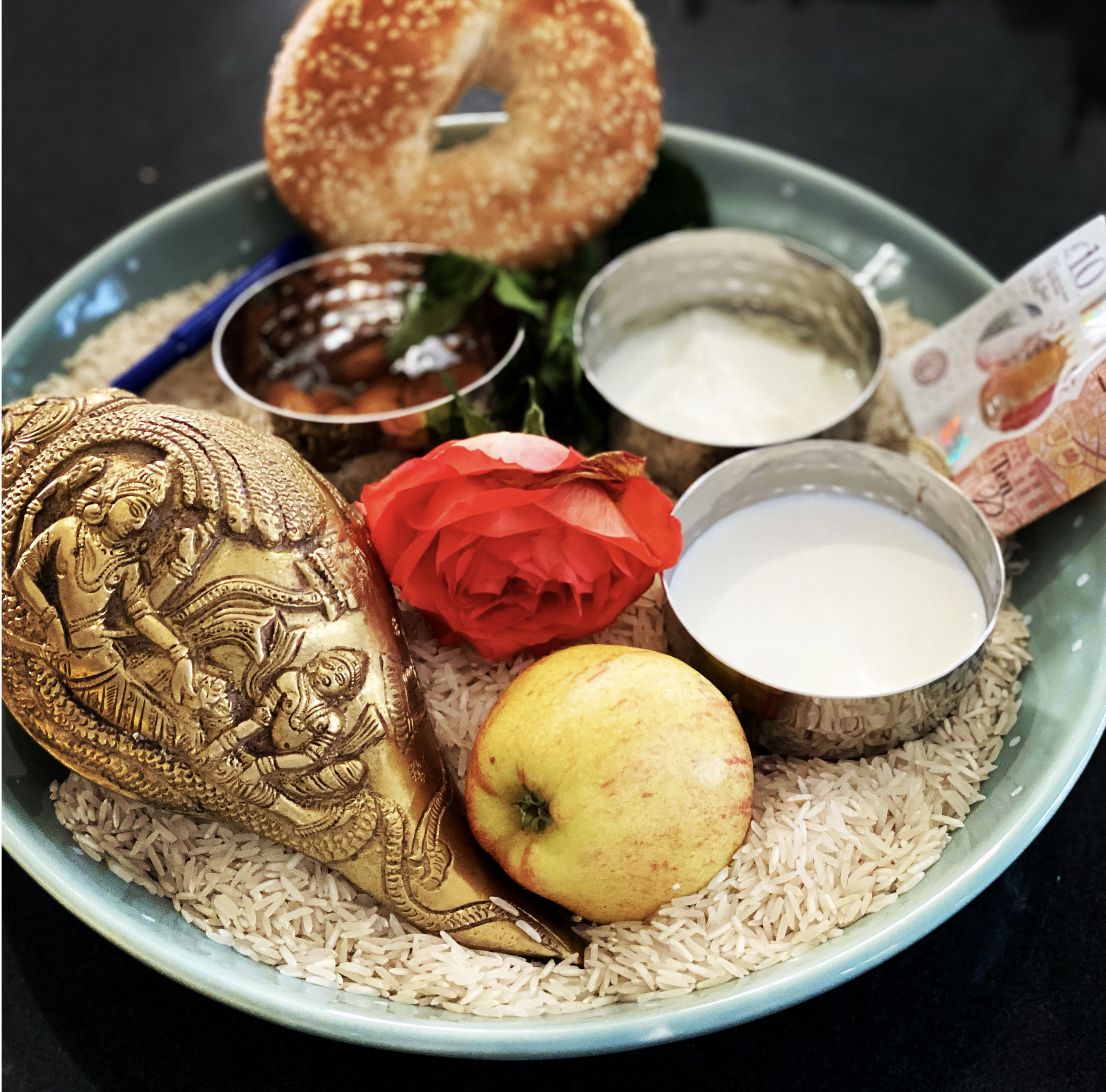
Sunaina Dhar, the youngest daughter, sat cross-legged on the veranda floor, carefully arranging rakhis in a steel thali. Beside her lay small bowls of kumkum, rice grains, and mishri. She wasn’t alone — her cousins Meena and Anjali, visiting from Delhi, were giggling and teasing her about the elaborate designs she had chosen.
The air was alive with the chatter of women from the extended family — aunts, sisters-in-law, and even old neighbours from the days in Srinagar, who had come to witness the occasion.
The eldest of the Dhar brothers, Rajan, had just arrived from Srinagar on a surprise visit. His army posting kept him away most of the year, but he had made a promise to his late mother that no Raksha Bandhan would pass without him sitting before his sisters. His entrance was greeted with joyful squeals, and his youngest niece, little Ira, clung to his leg, asking if he had brought the chocobar ice creams he always did.
In a corner, their uncle, Pandit Raghunath Dhar, sat sipping chai, his wrinkled face glowing with satisfaction. “This is what makes us a family,” he said to no one in particular. “Not just the ritual, but the gathering — the remembering.”
The middle brother, Vivek, a school teacher in Udhampur, was the quietest. Yet, today, even he was animated, telling his sisters about his students who had never heard of Raksha Bandhan until he introduced the story of Krishna and Draupadi in his class. His wife, Shobha, handed around plates of steaming pakoras, reminding everyone to “eat slowly, or there will be no space for lunch.”
As the sun dipped slightly, the rakhi ceremony began. Sunaina tied the first rakhi on Rajan’s wrist, her eyes moist. She prayed silently for his safety, while he, in a rare moment of tenderness, placed his hand on her head in blessing.
Meena tied hers on Vivek, joking that he still owed her a book from college days.
Even little Ira tied a tiny rakhi on her teenage cousin Aman, who blushed but accepted the ladoo she fed him.
The family’s joy was not without its undertone of wisdom.
Pandit Raghunath, leaning on his cane, reminded them gently:
“Children, the rakhi is not just for brothers to protect sisters. It’s a promise a two-way bond of love, sacrifice and respect. In these times, when families live scattered and values are tested, remember this thread is your living heritage.”
As the evening lamps were lit and the air filled with the scent of incense, Rajan and Sunaina stood together at the threshold. They looked at each other not as children once did, but as two adults who had weathered the same storms, knowing no force on earth could sever their bond. And in that stillness, the day closed with their exchange — not of gifts alone, but of words that would outlast the festival itself:
Brother to Sister:
Your laughter is my dawn,
Your tears my twilight,
My arm is your shield,
My heart your home.”
Sister to Brother…
Your courage is my strength,
Your word my song,
Our bond is the thread
that time cannot fray.
In the Dhar household, Raksha Bandhan wasn’t just celebrated. It was lived — as a quilt of living memories, stitched together with the threads of belonging, sacrifice and the unwavering truth that some ties are not made by the world, but by the soul itself.
Rajender Koul
Rajender Koul, a resident of Talab Tillo, Jammu, is a retired officer from the State Bank of India. After decades of his first innings and very dedicated service in the banking sector, he now enjoys his second innings in the quiet rhythms of retired life. A keen observer of people and the world around him, Rajender Koul, has turned to writing as a way to reflect, create and reconnect with life’s deeper meanings. He spends his leisure time crafting short stories and capturing memories, experiences and moments that often go unnoticed in the everyday hustle. Through his thoughtful storytelling, he seeks to preserve personal and collective journeys of spiritual growth, humane love, loss, resilience and hope. Prayers and blessings a support to the world of ours we live. Jai Bhagwan ji
Related Posts
A Brief Introduction to Kashmiri Shaivism
Shaarika Munshi Kashmiri Hindus follow a specific branch of Hinduism k
Stay True To Your Roots
In a world consumed by reels and trends,I want you to stay true to you
Sudh Mahadev: Pilgrimage Circuit
Nestled about a hundred kms from Jammu, the Sudh Mahadev circuit is a
Maha Kumbh: A Carnival of Devotion
The 45-day festival of Maha Kumbh recently concluded in the sacred cit
Is it not luck?
A reflection on the roles of luck and destiny, this poem questions the
The Essence of Gayatri Mantra
The Gayatri Mantra, an ancient hymn from the Rig Veda, is a prayer ask


POST COMMENT