



Dowry: The Social Menace
Dowry and Kanyadaan are two traditional practices associated with marriage, particularly in various cultures in India and these practices are fundamentally contrasting in their nature and intent. Interestingly, the practice of the dowry system is not exclusive to India and other South Asian cultures; it is also observed in certain Middle East and African societies in patrilineal cultures, where male dominance is more pronounced.
Several studies and scholarly papers have documented the persistence of the dowry system in India. A recent BBC article highlights that dowry demands and payments remain largely unchanged due to the lack of “dramatic changes or structural breaks in marriage markets, laws, human capital, and women’s labour market outcomes.” Another BBC report suggests that economic prosperity has, paradoxically, fuelled the demand for dowry rather than diminishing it.
A September 2023 paper published in Science Direct titled “The Marriage Markets and the Rise of Dowry in India” examines the dowry system beyond its financial transactions. It explores the deeper societal mindset that sustains this practice of enduring patriarchal exploitation embedded within it.
It is alarming that in the 21st century, despite significant advancements in science, technology, and social reforms, the dowry system still persists. From rural areas to metropolitan cities, this practice continues to thrive, revealing the stubborn grip of regressive traditions on various societies.
In many parts of India, dowry demands are directly linked to the groom’s educational qualifications and financial status. While education should ideally promote social progress, it is often used as leverage to extract wealth from the bride’s family. This practice, driven by material greed, exposes a stark contradiction. Even well-educated individuals often accept or expect lavish “gifts” from the bride’s family, a phenomenon now referred to as “silent dowry.” A report in ‘The Daily Star’, titled ‘Dowry Still Exists in the Guise of Gifts’, highlights how this social menace imposes financial burdens on families and increases the risk of marital abuse.
The consequences of this system are devastating both in rural and urban areas. As exposure to modernity grows, so do the financial expectations placed on brides and their families, making marriage an increasingly transactional affair rather than a partnership of mutual respect.
In recent years, there has been a conscious shift from traditions like Kanyadaan, which symbolically implies that a daughter (Kanya) is “given away” in marriage. Many modern families now challenge this notion, asserting that daughters are not objects to be transferred but individuals who should be cherished and valued. This shift aligns with the broader movement towards redefining marriage as a partnership rather than an arrangement, reinforcing male dominance.
To eradicate this social menace, various social and academic theories emphasise the importance of women’s education, financial independence, and empowerment. However, this alone is not enough. The evidence suggests that women’s upliftment, men’s mental and ethical transformation is equally crucial. Educated, self-respecting men must take a stand against both explicit dowry demands and disguised forms of dowry, such as gifts and financial contributions.
Government initiatives and women’s support organisations have taken steps to curb dowry-related exploitation, yet the problem persists due to societal complicity and lack of stringent enforcement. The ultimate solution lies in fostering gender equality in marriage, both legally and culturally, by ensuring that brides and grooms are treated as equal partners. Moreover, continuous awareness campaigns by societies, young and old must highlight the devastating consequences of the dowry system and work toward dismantling patriarchal structures that perpetuate it.


Shikha Zalpuri Kapila
I am a UK-based neurophysiotherapist and case manager with over 20 years of experience in rehabilitation, supporting individuals with neurological conditions and life-changing injuries. Writing has long been a cherished hobby, and as my son has grown older, I have found more time to embrace it. Passionate about social issues, I write to raise awareness, empathy, and positive change in the society. Outside of work and writing, I am a proud daughter, wife, sister, and mother who enjoys music, meeting new people, and meaningful conversations. Whether through my clinical work or creative expression, I am deeply committed to uplifting others and finding joy in everyday human connections.
Related Posts

Between Hearts, Hopes and Homes: Under the Same Moon 🌙
Beneath the evening’s golden hue, Penn Medicine rises—a testament
Where Do We Stand?
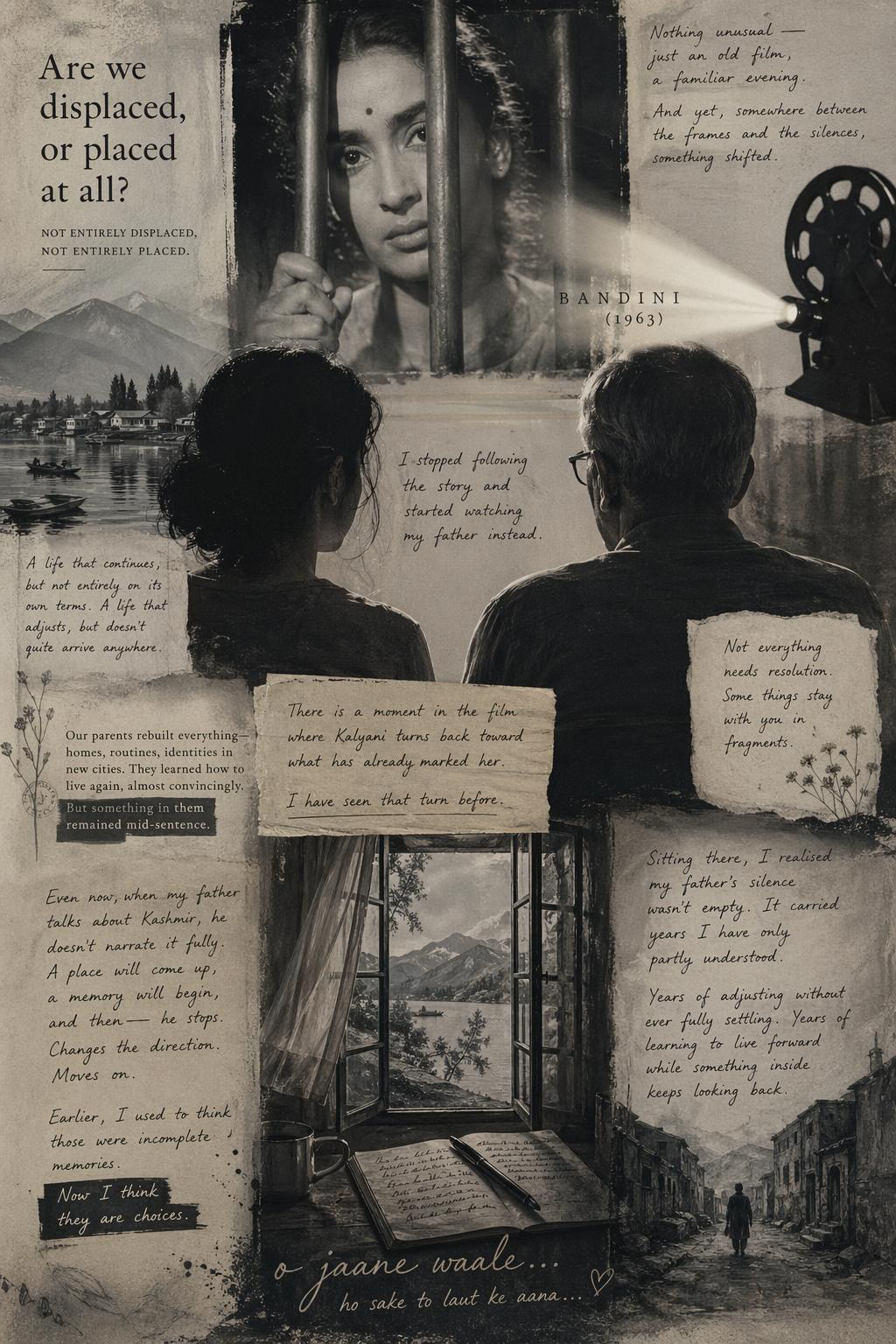
Yesterday, I watched Bandini with my father — an old film, a familia

Where The Pigeon Still Waits…
In the winding lanes of Habba Kadal, memory weaves its gentle spell. E

Sudh Mahadev: Pilgrimage Circuit
Nestled about a hundred kms from Jammu, the Sudh Mahadev circuit is a

The Essence of Gayatri Mantra
The Gayatri Mantra, an ancient hymn from the Rig Veda, is a prayer ask
Salaam Mubarak, Smell the Marigold…..
Nipa Charagi The day after Shivratri, Kashmiri Pandits celebrate Salaa
POST COMMENT