Beyond Conflict and Paradise: The Stories Woven into Kashmiri Pashmina
By Karishma Shivani Dar
(Edited by: Margaret Go and Hasnain Khan)
Garah wandai gara sasah, barreh neraha ne zah
There is no place like home
Kashmir is a mountainous Himalayan region whose territory today spans areas administered by India, Pakistan, and China. As a British-Kashmiri, I feel inextricably connected to my heritage, having grown up with the rich flavours of Kashmiri food, wearing pherans, admiring the artistry of my mother’s pashminas, and – most of all – listening to stories about the enchanting nature of Kashmir. Kashmir is a place that stays with you. Even when you leave its mountains and valleys, it remains.
Kashmir has long been depicted through the lens of conflict and political tension. At the same time, the region is traditionally described as “paradise on earth”, its landscapes stretching from the lakes and meadows of the Kashmir Valley to the high-altitude deserts of Ladakh and the towering valleys of Baltistan and Hunza. For centuries, the region lay at the heart of the ancient Silk Road, a network of trade routes connecting Central Asia, South Asia, and beyond.
Gar firdaus, bar ruhe zamin ast, hamin asto, hamin asto, hamin ast.
This was a phrase my grandfather often recited, a well-known Farsi saying reflecting on Kashmir’s natural beauty that translates to: “If there is a paradise on this earth, it is here, it is here, it is here”(1). While Kashmir’s beauty is undeniable, a wholly romantic imagery is a simplification that cannot capture a nuanced reality.
Kashmir is multifaceted. It cannot be reduced to paradise, nor defined solely by conflict. This article aims to move beyond these binaries, allowing the region to speak in its fullest, truest voice.
History and Craft
Kashmir has long sat at the crossroads of civilisations and trade routes. Its arts and crafts bear the imprint of early Tibetan, Chinese, Greek, Indian, Central Asian, Afghan, and European influences (2). Interestingly, many artisans in Kashmir rarely needed to seek out the world – the world came to them. As one saying goes, “A Kashmiri had only to sit by his window and the whole world passed by”(2).
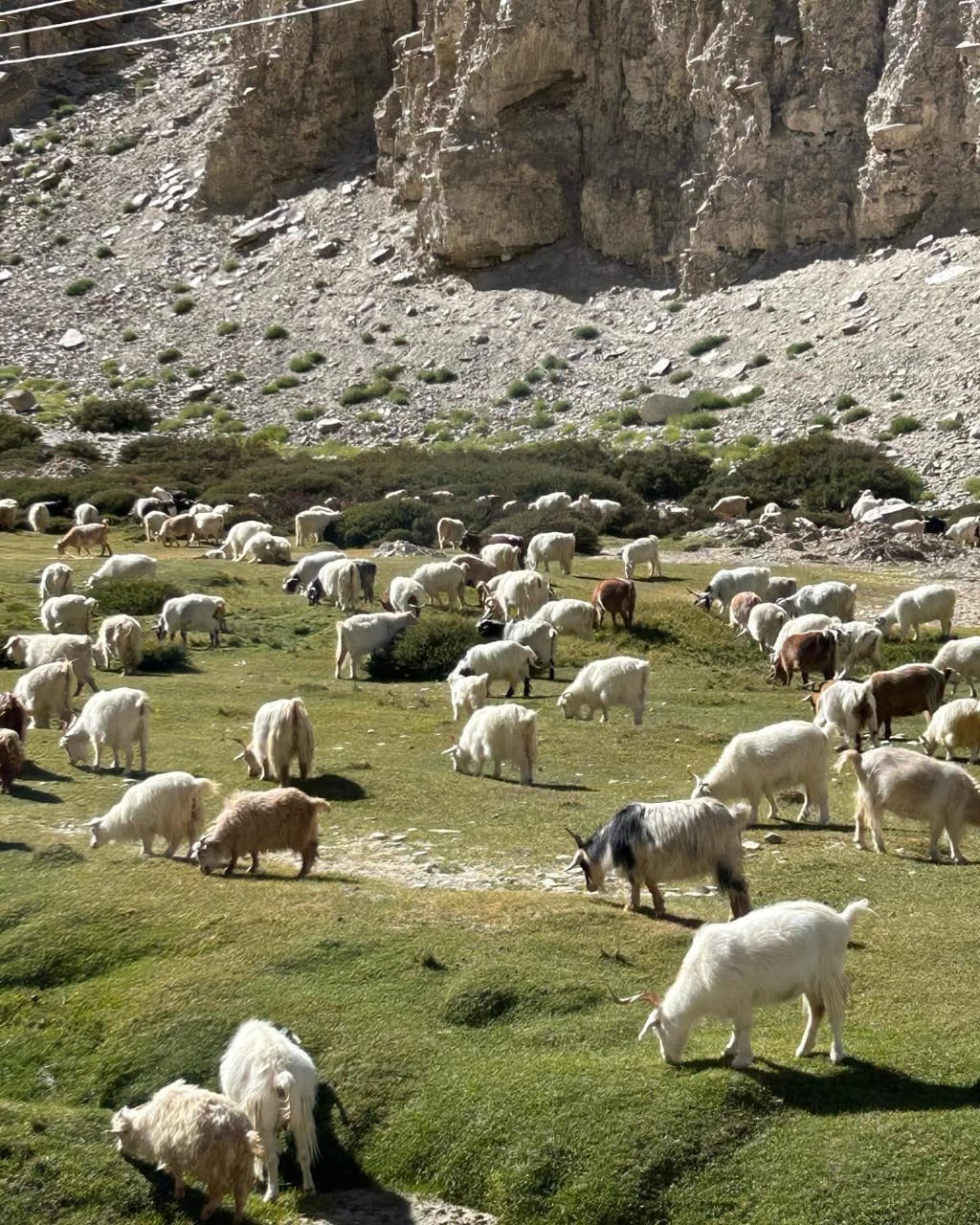
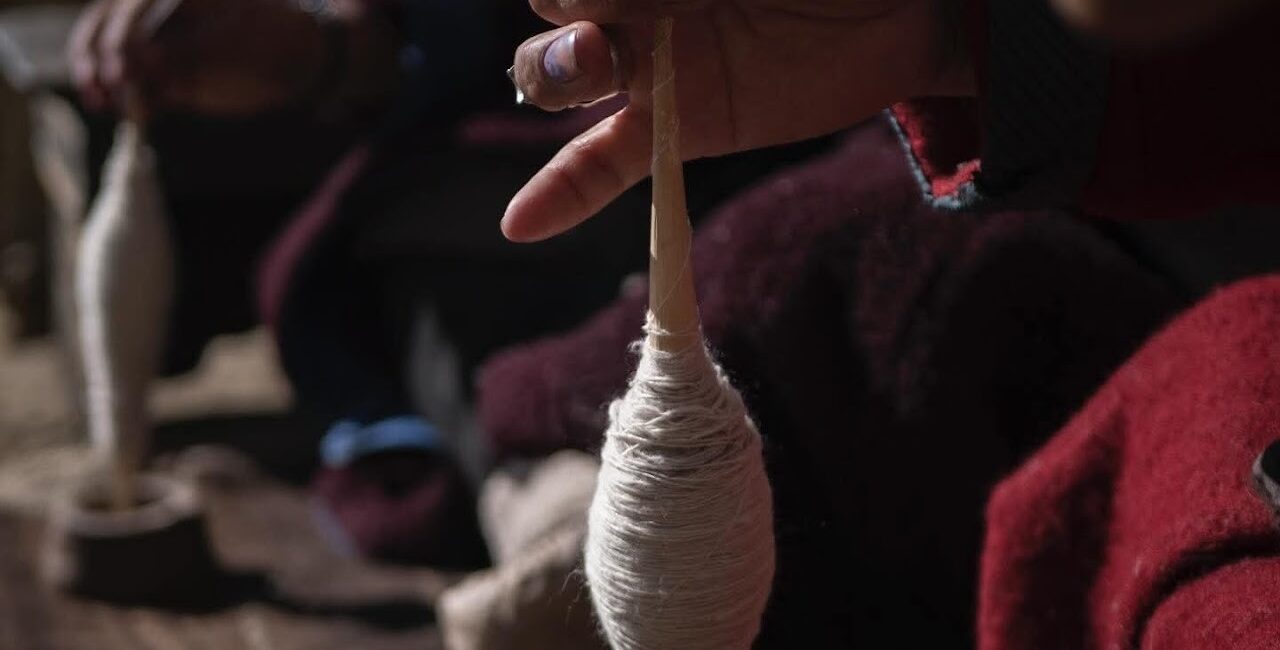
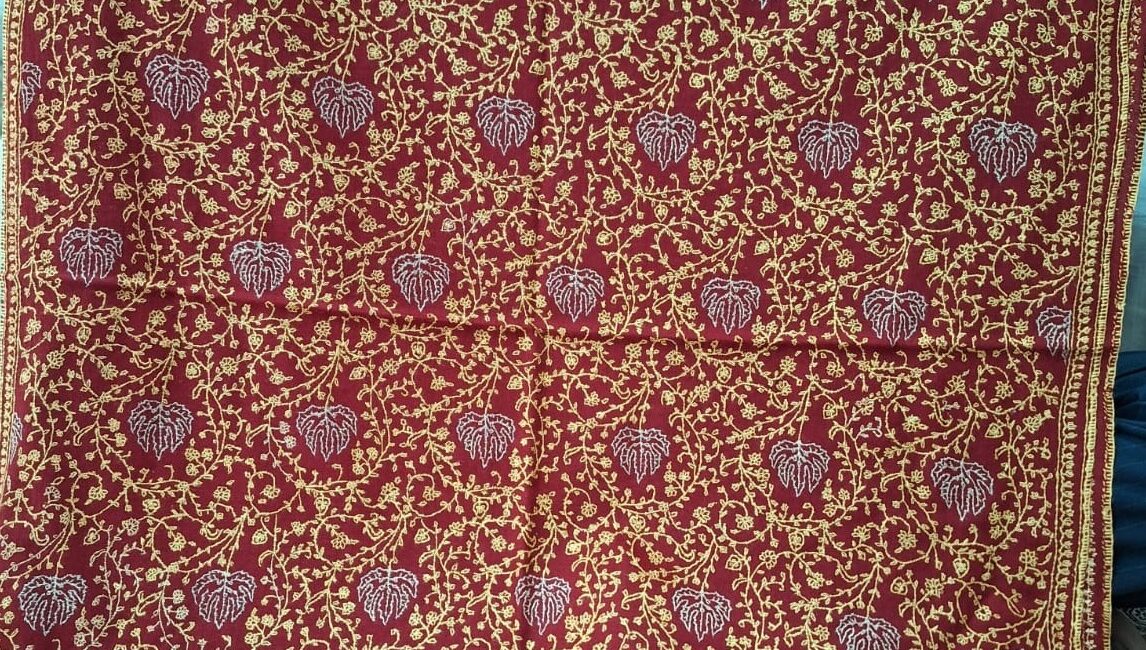
Among the many crafts of Kashmir, pashmina shawls are the most renowned. The word pashmina comes from the Persian word pashm, meaning “wool,” and refers to the fleece of Changthangi goats, native to Ladakh (3). The fleece is handwoven into shawls, embroidered in intricate styles. Making a pashmina shawl is a delicate and time-consuming process, taking anywhere from weeks to months – or even years – depending on the design.
These shawls are exceptionally soft, thanks to the ultra-fine undercoat of the Changthangi goats, and are highly praised worldwide. Through patient hands and intricate weaving, raw wool becomes more than cloth, but a story – layered, delicate, enduring – much like Kashmir itself.
Memory and Inheritance
Growing up, I would often open my mother’s wardrobe to find a section filled with beautiful shawls in a spectrum of colours and intricate designs. I wanted to wear them, but I always knew they were special and had to be treated with care. Some had been passed down through generations before me. These, I later came to understand as I grew older, were pashmina.
They are not just pieces of cloth or garments. They carry the stories of generations before them and are often passed down as gifts from elders, from great-grandmothers to grandmothers to mothers. In this way, a pashmina becomes more than an object; it becomes a fragment of the region’s spirit, carried forward and preserved.
Colonial Fascination and Imitation
These shawls, carrying generations of memory, soon attracted attention far beyond Kashmir’s valleys, drawing the gaze of European collectors and traders. British officials of the East India Company brought pashmina to Europe in the late 18th century (4). Their intricate designs were widely admired and imitated, the most famous example being the paisley pattern.
The shawls became extremely popular in Victorian Britain for their softness, warmth, intricacy, and associations with luxury and beauty. Cheaper imitation shawls were soon produced using industrial technologies, but these often erased the unique nature of pashmina – a product of the hands of Kashmiri artisans who dedicate long hours perfecting their craft.
Kashmiri culture cannot be reduced to romanticised imagery or imitation. You cannot imitate something by merely desiring its beauty; true artistry comes from the work behind it.
The long hours, skill, labour, and pride that go into each shawl are what make it a true pashmina. Machinery cannot replicate this delicate craft. Because pashmina is difficult to obtain, its fibre was eventually labelled as “cashmere” in Europe, along with other variants.
Pashmina refers specifically to the finest fibres of the Changthangi goat native to Ladakh (5), while cashmere more broadly comes from various goats across Mongolia, China, Scotland and other regions. Pashmina fibres are finer and lighter, and the shawls must be handwoven, whereas many modern cashmere products are produced using industrial machinery.
The East India Company was not only interested in exporting shawls to Britain but also in learning the techniques behind them. William Moorcroft, a key figure in this effort, spent months living in Kashmir, taking notes, observing closely, and questioning weavers and artists. He even proposed bringing Kashmiri weavers to England so that manufacturers could learn directly from them (4).
Moorcroft believed that once British manufacturers understood the patterns and techniques, they could produce superior shawls. However, no imitation could capture the essence of Kashmir embedded in the handcrafted work of its artisans. Moorcroft’s efforts ultimately failed, but they highlight the global fascination and significance of Kashmiri shawls.
Romantic Landscapes and Modern Commodification
During the early nineteenth-century, British officials, artists, and writers were fascinated by South Asia, including Kashmir, then a princely, autonomous region with growing British influence (6).Kashmir played a central part in this Romantic-era imagination (4), often described through flower-filled meadows and snow-capped mountains. It was this landscape that inspired Kashmiri artists, and Kashmiri shawls became not just garments, but symbols of the region itself.
Today, the word pashmina is often used to describe shawls that are not truly pashmina. Many companies sell imitation shawls at lower prices. Profiting from and imitating Kashmiri culture is not only part of the colonial past – the commodification of pashminas continues today.
This practice spreads misinformation about what pashmina really is and erases the historic, intergenerational cultural significance created and continuously preserved by Kashmiri weavers and artisans. Ashraf et al. found that Kashmiri artisans face significant challenges, including low pay and high raw material costs. One key cause is the declining demand for authentic pashmina, as imitation shawls flood the market at a fraction of the cost (7).
Conclusion
Kashmiri culture exceeds the narratives most often imposed upon it – of conflict and paradise. The pashmina is a testament to this: it carries the talent, artistry, and hard labour of Kashmiri artisans, embodying the beauty, legacy, and depth of the region’s history. But it also reminds us that Kashmiri culture is more than aestheticised representations or romanticised images imposed on it.
This article is not concerned with gatekeeping culture. Pashmina should not exist only for, or be worn only by, Kashmiris. Rather, it is about recognising the rich heritage and history that pashmina represents – and acknowledging the artisans whose work sustains that tradition.
Like a pashmina, Kashmiri culture is layered and enduring, woven through generations of craft, memory, and resilience. It cannot be reduced to narratives of conflict, nor contained within the image of paradise.
1. Goodreads (n.d.) Amir Khusrau. Available at: https://www.goodreads.com/quotes/7386585-farsi-couplet-agar-firdaus-bar-roo-e-zameen-ast-hameen-ast-o
2. Savasere, R. (2010). ‘Cradle of Craft’, India International Centre Quarterly, 37(3/4), pp. 286-307.
3. Kashmir Bloom (n.d.). The Timeless Elegance of Pashmina: Kashmir’s Gift to the World. Available at: https://kashmirbloom.com/blog/the-timeless-elegance-of-pashmina/
4. Zutshi, C. (2009). ‘Designed for Eternity: Kashmiri Shawls, Empire, and Cultures of Production and Consumption in Mid-Victorian Britain’, Journal of British Studies, 48(2), pp.420-440.
5. Kashmir Bloom (n.d.). Pashmina vs Cashmere. A Guide to Understanding the Difference. Available at: https://kashmirbloom.com/blog/pashmina-vs-cashmere/
6. Encyclopaedia Britannica (n.d.) Kashmir region, Indian subcontinent. Available at: https://www.britannica.com/place/Kashmir-region-Indian-subcontinent
7. Ashraf, S.I., Ashraf, S.N. and Hafiz, S.M. (2016). ‘Obstacles faced by craftsmen and traders in pashmina sector: A study of J&K’, International Journal of Advanced Research, 4(6), pp.1227-1239.
Related Posts
‘The Kashmir Files’ and The ‘P’ word
The word "propaganda" gets thrown around a lot these days, but rarely
Welcoming Spring in Kashmir
Sonth in Kashmir is a deeply nostalgic celebration of spring, when the
Growing Up To The Crackle
In October 1983, Kapil Dev's newly crowned World Champions came to Kas
The Centrifugal Soul: Finding Your “Centre” in a Simulated World
In a world of endless scrolling and algorithm-driven identities, we ri


POST COMMENT