The River Still Remembers: People’s Archive of Exile, Memory and Grace
The night Arvind Raina returned to the banks of the Jhelum, he wasn’t sure what he was seeking. He had lived in Delhi for over two decades built a name, raised a family, survived like the rest of them. But something inside had turned hollow.
He remembered what his uncle Raghav once said, in the last days before migration: “We are not leaving Kashmir. Kashmir is leaving us.”
It was now the year 2025, and Arvind had come to trace back what they’d lost—through archives, audio tapes and perhaps even silence.
In the bag slung over his shoulder was an old diary, two black-and-white photos, and a small portrait of Bhagwan Gopinath Ji. In his heart, a fire still smouldered.
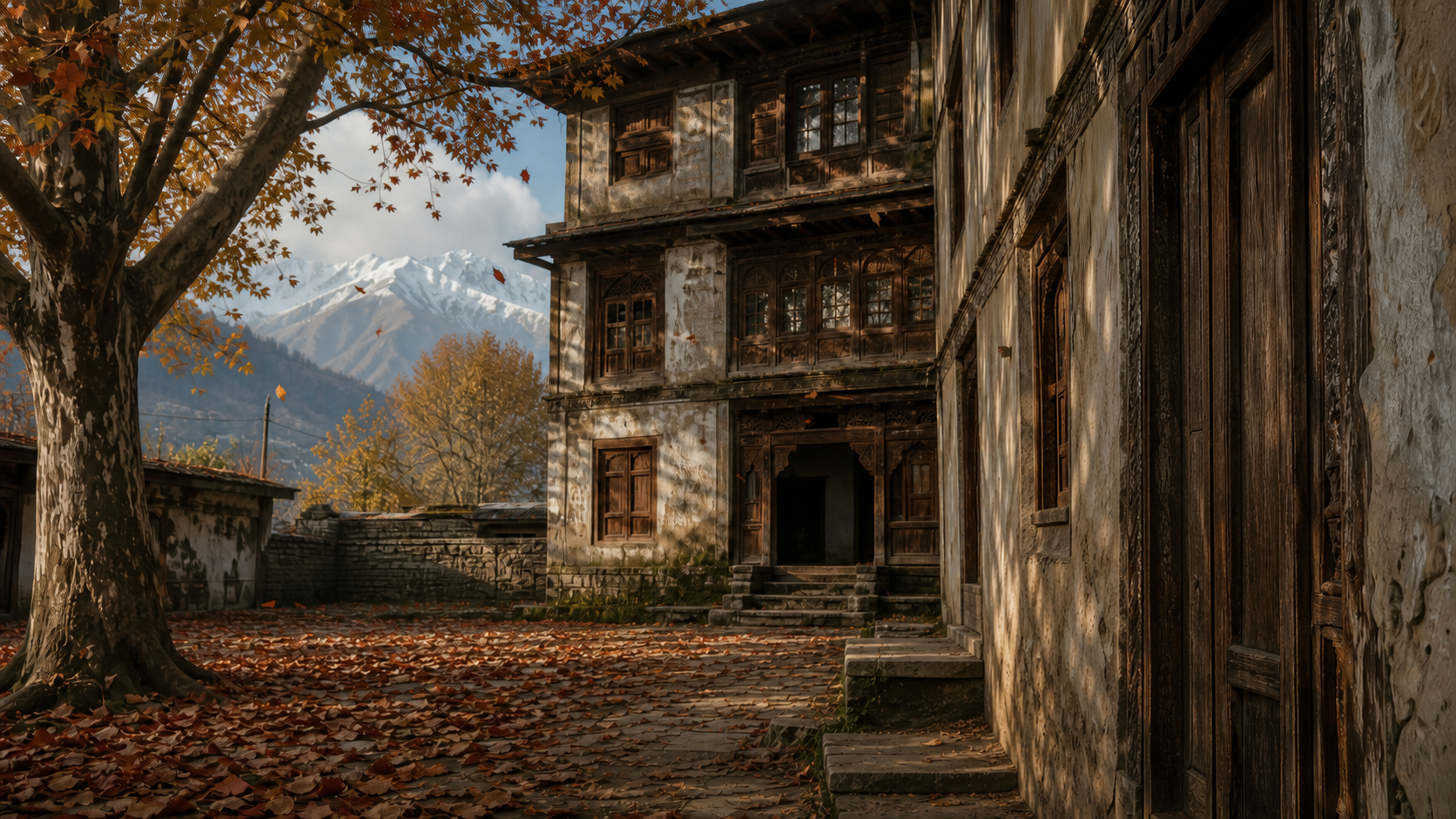
He stepped into the abandoned courtyard of his ancestral home in Rainawari and the breeze whispered, “Welcome back.”
The House With No Walls
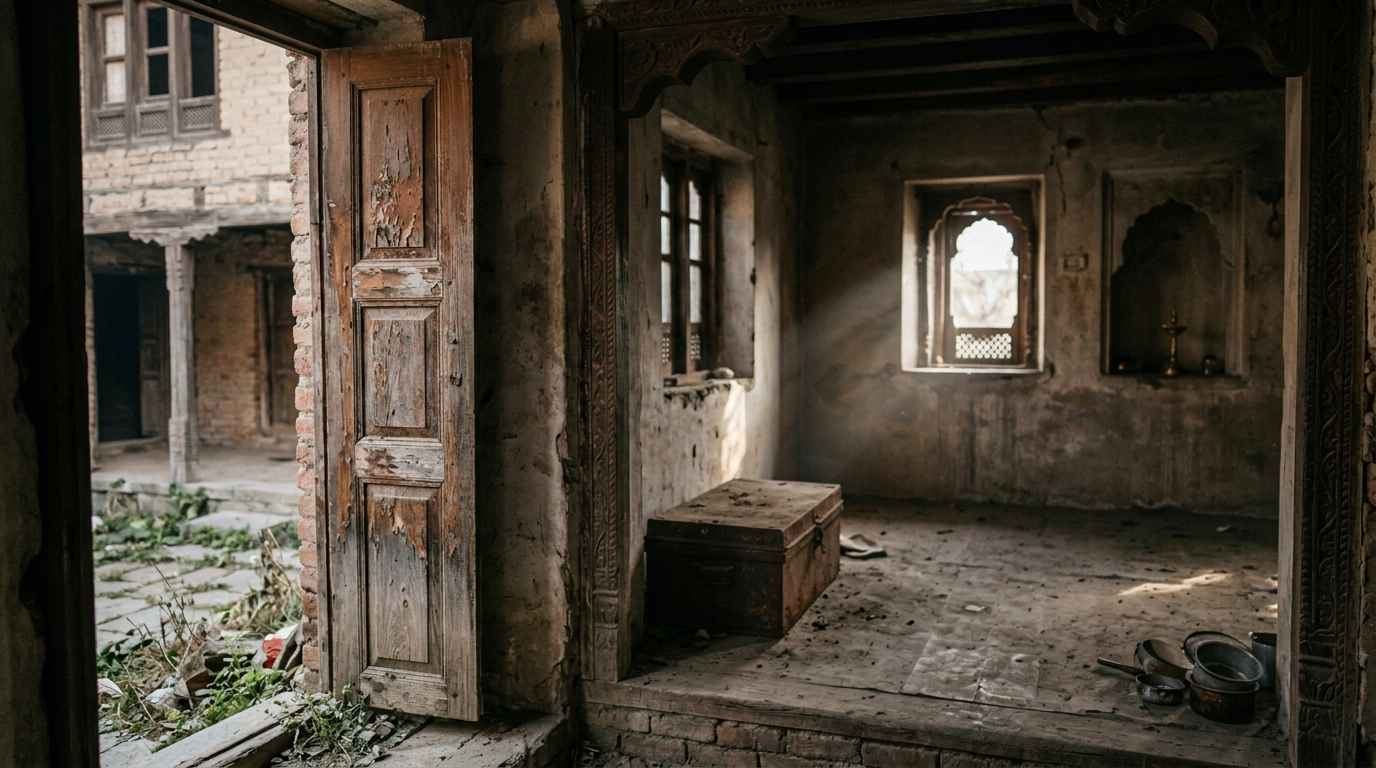
The Raina house had no roof now. The Chinar tree still stood tall, its roots stronger than any map. Graffiti stained the outer wall and the temple bell once strung beside the tulsi pot lay cracked in the debris.
Yet, the house remembered.
Arvind walked barefoot through the ruins, picking up a rusted bell, a broken ladle and a brass key. Objects his grandmother once touched now felt like scripture.
In the evening, he sat beside the crumbling kitchen tandoor and opened his uncle Raghav’s diary.
Even if we have no walls, let us build a home from stories.
He whispered the words and lit a diya.
A neighbour peeked through a broken window. “Raina Sahib?”
It was Farooq—his childhood friend’s son. And just like that, the house began to breathe again.
Letters That Burn But Do Not Vanish
Rummaging through attic trunks and courtyards, Arvind collected what is remained, letters from the 1980s, school certificates, recipe books, temple receipts. Each letter held laughter, salt, loss.
A postcard from Sopore. A marriage invitation from 1986. A scribbled recipe for nadru yakhni. He began scanning them, preserving them digitally.
We may have lost the house, but not the handwriting.”
He called the project, The River Still Remembers.
A cousin in Pune donated funds. An old classmate in Toronto sent family documents. Sheela Ji from Jammu, his grandaunt—sent audio tapes from Bhagwan Gopinath Ji’s satsangs.
Slowly, stories returned home.
Rainawari Is a Poem
The lanes of Rainawari whispered poems Arvind had forgotten. He visited the old school building. A Muslim teacher there had preserved a wooden desk once used by Raghav.
An elderly Muslim woman offered him kahwa. “Your mother gave me sugar when mine ran out in ’89,” she said.
He recorded her story, titled: “She Who Shared Sugar Amidst Storm.”
That day, he realised: Rainawari was not just a place. It was a poem of co-existence, broken but not erased.
He ended his journal with: “Rainawari did not exile us. Yes, Fear did.”
Sheela Jis Pheran
In Jammu, Sheela Ji lived in a two-room flat with peeling walls and a box of Pherans, she had brought from Srinagar.
Each one had a name—Babli’s Wedding Pheran, Bhaiya’s Last Shivratri Pheran, Mother’s Mourning Pheran. She opened the box before Arvind and said: “These are my temples.”
She told stories of Bhagwan Gopinath Ji’s ashram in Kharyar, of pre-dawn walks with her brother to attend satsang, and how the scent of sambrani once lingered in their kitchen.
Arvind recorded everything.
That night, they both cried. Not because they missed the land, but because the land still pulsed through their bones.
The Gopinath Chronicles
With permission from the ashram caretakers, Arvind began digitising rare satsang recordings and handwritten notebooks of devotees. He created a section in the archive called The Gopinath Chronicles. Voices rose from the tapes.
Om Namoh Bhagwati Gopinathaya,
Yusha pari tas lagi bhavasar taar.
Bhagwan Ji’s presence was not bound by exile.
People from across the globe began submitting stories—how they survived in migrant camps, how they kept festivals alive, how Bhagwan Ji gave them strength to work quietly and rise again.
From Ashok Nagar, Jammu, Kharyaar, Habbakadal and Rainawari to Alberta, the Bhaktas spoke through their souls and heartfelt emotions.
And Gopinath Ji smiled through every byte of remembrance.
The Jhelum Gathering
Arvind proposed a gathering—not a conference, but a mehfil.
A circle of elders and youth met on the banks of the Jhelum in Srinagar, joined by former neighbours, friends, poets.
They didn’t discuss policy. They told stories.
A Muslim boy recited a Raina family poem. A Pandit girl sang a sufi verse. A Sikh elder shared his memory of 1947.
One line echoed……
This land does not need fences. It needs forgiveness.”
The gathering ended with a pledge to build Shaam-e-Sharda, a cultural evening in Jammu.
The river listened.
The Home We Carry
Jammu – March 2025
The air in Jammu was drier, heavier. Arvind Raina stepped down from the bus carrying memory more fragile than glass. Waiting outside was Sheela Ji, who greeted him in silence.
Later that night, the Raina family sat in their small Kamadhenu, flat sipping chai as Arvind projected his laptop screen on the wall.
A digital archive he named ……….
“The River Still Remembers” came alive.
Photos of lost temples, scanned pages, names of elders and youth alike.
“This is our temple now,” he declared.
Voices joined, elders offered stories, youth offered code, musicians offered ragas.
A home was no longer exile it became a pilgrimage. Sheela Ji lit a diya before Bhagwan Gopinath Ji’s portrait and whispered the sacred line….
“Om Namah Bhagwati Gopinathaya,
Yusha pari tas lagi bhavasar taar…”
Weeks later, the archive was live.
Named ” Pheran Mein Yaadein”—it spread like wildfire across continents.
Arvind’s final journal entry for the chapter read…..
‘We have carried our temples in our hearts. We have carried our Kashmir in our language. And now, we carry our future in our stories.”
The Letter That Never Left
In the attic, Arvind discovered an unsent letter from his uncle Raghav to a childhood friend, Tariq Ahmad Dar of Rainawari.
It was dated around 1990, exact date not visible, a raw emotional confession of friendship severed by conflict.
Arvind tracked down Tariq, who now lived quietly in Delhi. The letter was handed to him, and tears rolled as he read it. “He called me brother, even after everything.”
Later that evening, Arvind updated the digital archive with a new post titled
“The Letter That Never Left.” It included a scanned copy of Raghav’s words.
A bridge was built—not by politicians, but by memory.
The River Speaks Back
Tagore Hall, Jammu, hosted an cultural evening, Shaam-e-Sharda, a community event where forgotten songs and languages were reborn. Kashmiri Pandits, Muslims, Sikhs and youth from across India gathered. The evening began with lullabies, that followed by Vakyas of Lal Ded and Nund Reshi, and poems of shared longing.
Tariq read Raghav’s letter aloud. A young girl named Suhana stood up: “Tonight, I felt Kashmir remembered me.”
A temple bell was rung, and the audience rose in silence. Kashmir, through its children, spoke again.
The Temple Without Walls
At Kharyar Ashram, Arvind offered the first print copy of this holy digital, The River Still Remembers, at the feet of Bhagwan Gopinath Ji. Elders gathered, memories intact. The book was more than a memoir—it was a living temple.
It bore family trees, letters, rituals, songs. It bore witness.
A final inscription in the temple register read….
Let this not be the end of a book, but the beginning of a civilisation that remembers its soul. May Bhagwan Gopinath Ji guide all who walk the bridge between exile and return. And may every river, one day, speak again.”
All the details written and expressed from the core of the heart beats turned a shape in the volume of this book .
“The River Still Remembers” has now been completed for not finished as the things are more than what it appears so the work continues.
It reads as a continuous narrative of remembrance, resilience, and strength rediscovery, centered around the legacy of Kashmiri Pandits and with the blessings of His Divine Blessings.






POST COMMENT