In the wistful summer of 1975, when the chinar trees swayed gently over the lanes of Karan Nagar and the scent of almond blossoms lingered like whispers in the air, a thin, barefoot boy from Nepal arrived at the gates of the Dhar household.
Ramkishen, the Unclaimed Son
He was ten—dark-skinned, dust-caked, with hair matted from journey and eyes hollowed by hunger. His name was Ramkishen. No one asked for his surname. There was no paper, no birth date, no lineage—only a name and the aching stillness of abandonment.
The Dhar family, respected Kashmiri Pandits, were known for their intellect, their charities and the daily rituals of temple giving.
At the helm was the ageing patriarch, Pandit Radha Krishen Dhar, frail and confined to his bed. The household needed help—not a servant, but a shadow of care, a silent helper who would stitch the gaps left by time.
Ramkishen was found by Bushan Lal Dhar, the eldest son, during a pilgrimage to Amarnath.
At the Baltal base camp, he saw the boy scavenging near a langar. Something about his quietness, his unwillingness to beg, but readiness to serve, stirred something within him.
“We’ll keep him,” said Kaushalya Ji, the matriarch, placing a hand on the boy’s cheek, cracked from the mountain sun. “Not as a servant. As our own.”
And Ramkishen believed her. For fifty years, he believed her.
A Life in Service, A Heart in Silence
Ramkishen melted into the rhythm of the Dhar home. At dawn, he would light the diya in the temple room, polish the brass idols with milk and tulsi and prepare the sigri for Kaushalya Ji’s morning tea.
He learned the patterns of life—the drawer that held the grandfather’s socks, the exact number of almonds Vibha liked in her kheer and when to expect the postman’s knock.
He slept near the kitchen oven, curled on a mat, with the fragrance of mustard oil and haakh as his lullaby.
When Vibha fell sick with jaundice, it was Ramkishen who stayed by her side through the nights, changing cloths on her forehead, feeding her rice water, whispering Nepali lullabies. “Ram Bhaiya, don’t go away,” she murmured once, clutching his kurta.
He never did.
During Shivratri one year, when a guest brought a cracked kalash, it was Ramkishen who ran barefoot through sleet to fetch another. When he returned soaked, trembling and victorious, someone remarked: “This boy has more Dharma in him than any of us.”
When Kaushalya Ji suffered a paralytic stroke in 1984, it was not her sons, but Ramkishen who carried her on his back through narrow lanes to the hospital. When asked by the nurse if she was his mother, he simply nodded. “She is everything,” he said.
The Exodus: A Promise Packed in a Trunk
In 1990, when Kashmir bled slogans instead of azaan and temple bells, the Dhar family fled in the dead of night. Temples were sealed. Furniture covered. Gods wrapped in cloth.
“You will come with us,” Rajnath said. “You are family. We’ll get you a job in Jammu. A room of your own in Talab Tillo.”
Ramkishen packed nothing but belief.
In the cramped refugee colony, where the Dhar family now stood in queues for water and ration, it was Ramkishen who held them steady.
He cooked on gas stoves, washed clothes until his hands blistered, tended to the elders and whispered prayers for their well-being.
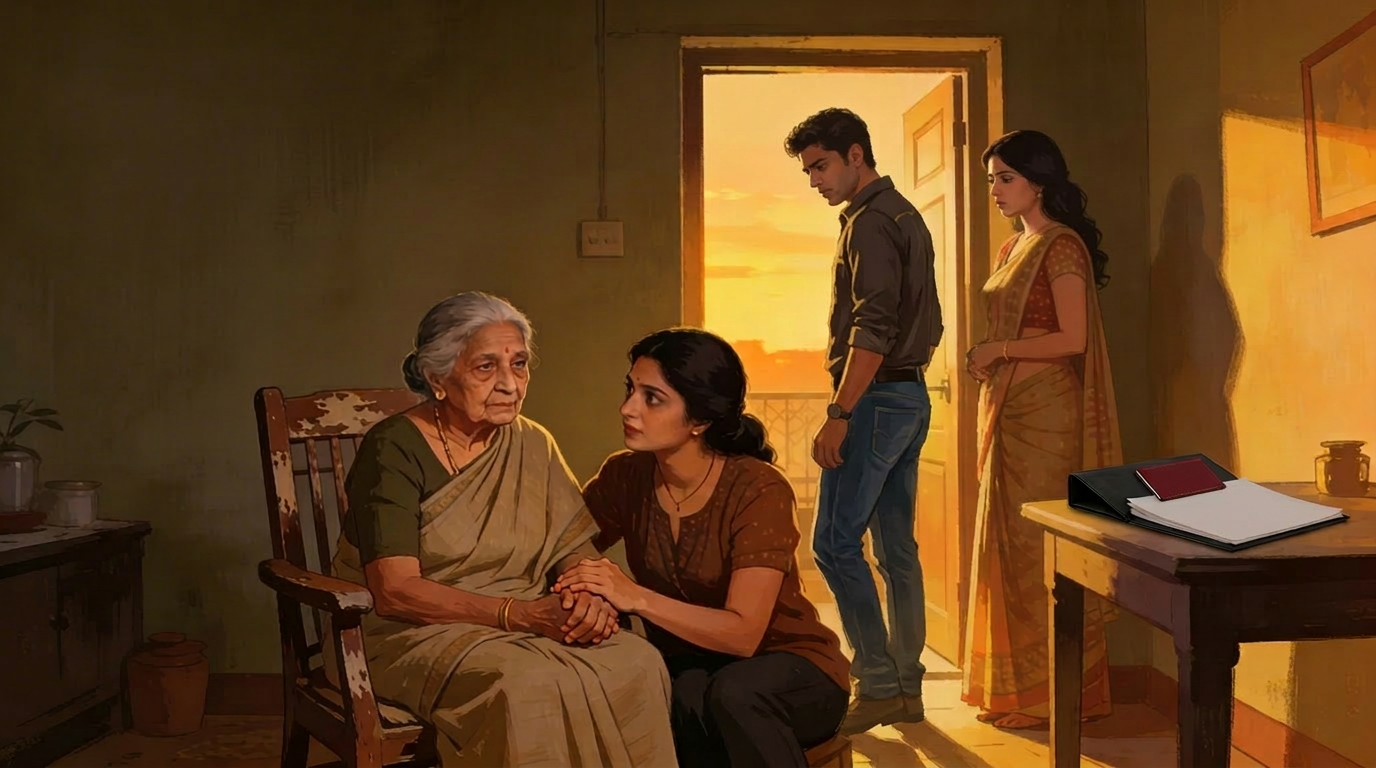
When Kaushalya Ji passed away, her final breath was exhaled into his cupped hands. Her eyes sought only him. Her last words were faint: “You are my own.”
But when her gold bangles were divided, when property papers for Udhampur and Talab Tillo were signed—Ramkishen’s name was not there.
Not as heir. Not as a witness. Not as a son.
A Life Lived in the Shadows.
Today, Ramkishen is 67.
He lives in the disused back portion of the same Talab Tillo house he helped build with his own hands—where he mixed plaster, laid bricks, lit the incense.
The roof leaks. The walls are cracked like old memories.The cracked water tank, broken windows and Ramkishen borrowed Colour TV, which he watches rarely.
The Dhar sons live in Noida and Delhi. They post photos with saints and speak on webinars about heritage and devotion.
But no one calls the man who held their mother’s dying hand, who fed them with his hands, or who kissed their foreheads when they cried.
Ramkishen now works at some house gardens as a daily labour at different sites Rehari, Subash Nagar, Bantalab, and also sometimes as watchman at Domana—all night waking up with worn bones for ₹500–600 a day.
It’s just enough to buy his insulin, eye drops and pain balms and medicines from a government Jan Avshadi pharmacy. He never married. Never went back to Nepal. Never claimed a single rupee.
His only hope: “When this house is sold, you’ll get your share. You are like a third son.” he revolves around that promise made by his so-called Masters.
But the house as yet is not stuck in any of the court disputes—between brothers and sisters of the owners, who won’t even admit Ramkishen exists.
Let the God Speak
But he still blesses them all when he receives a telephone call from them once a while.
Every morning, Ramkishen lights incense before a broken Shivling under the tulsi plant and whispers.
Ahee to Mummy Ji… Ahee to Daddy Ji… Ahee to the children who once held my finger… Ahee to those who forgot me… May they never feel the silence I live in.
Why doesn’t he speak up?
File a case?
“What is not written in my name or kismet,” he says, “will not come. I leave it to Mata Roopa Bhavani.” A great Bhakta of Mata, he would usually go to that temple on every occasion and make his day joyous by doing the kaar seva.
The Real Tragedy
Ramkishen is not a domestic helper. He is not a leftover memory. He is the soul of a home that forgot its own heart.
He is the face we saw every morning, the hands that bathed our elders, the smile we walked past.
If the Dhar family were to gather for a shraddh today, and someone asked, “Who looked after your parents in their final days?”—the silence would thunder louder than a temple bell.
Because in our time, love has no legal standing. Devotion has no address proof. And gratitude… dies without heirs.
Let This Be a Call to Conscience
To all who inherited homes, land, gold, stories—
Don’t forget Ramkishen..
They believed your promises. They gave you their youth. They asked only to be remembered.
If there is truth left in your Dharma,
Let one name be written. Let one bed be made. Let one man be told—
“You mattered.”
Ramkishen still whispers: “Main yahan hoon. Your Ram.”
Let someone, somewhere, finally say:
“Yes. You are.”
Let the good sense prevails.






POST COMMENT