Ghar Myon Mandar (My Home is a Temple) as Sharika says.
In a peaceful old housing colony of Udhampur, surrounded by Gulmohar trees and early morning silence, stood a modest Kashmiri Pandit home. Neither luxurious nor lavish but lit from within by the soft glow of incense, tradition and the blessings of Bhagwan Gopinath Ji.
To anyone who entered, the home whispered something sacred. It wasn’t in the furniture or the flooring but in the energy.
“This house,” visitors would often say, “feels like a temple.”
And it was. “Ghar Myon Mandir”—a home that had quietly become a place of worship. Not because of what was kept in its corners, but because of what lived in its hearts.
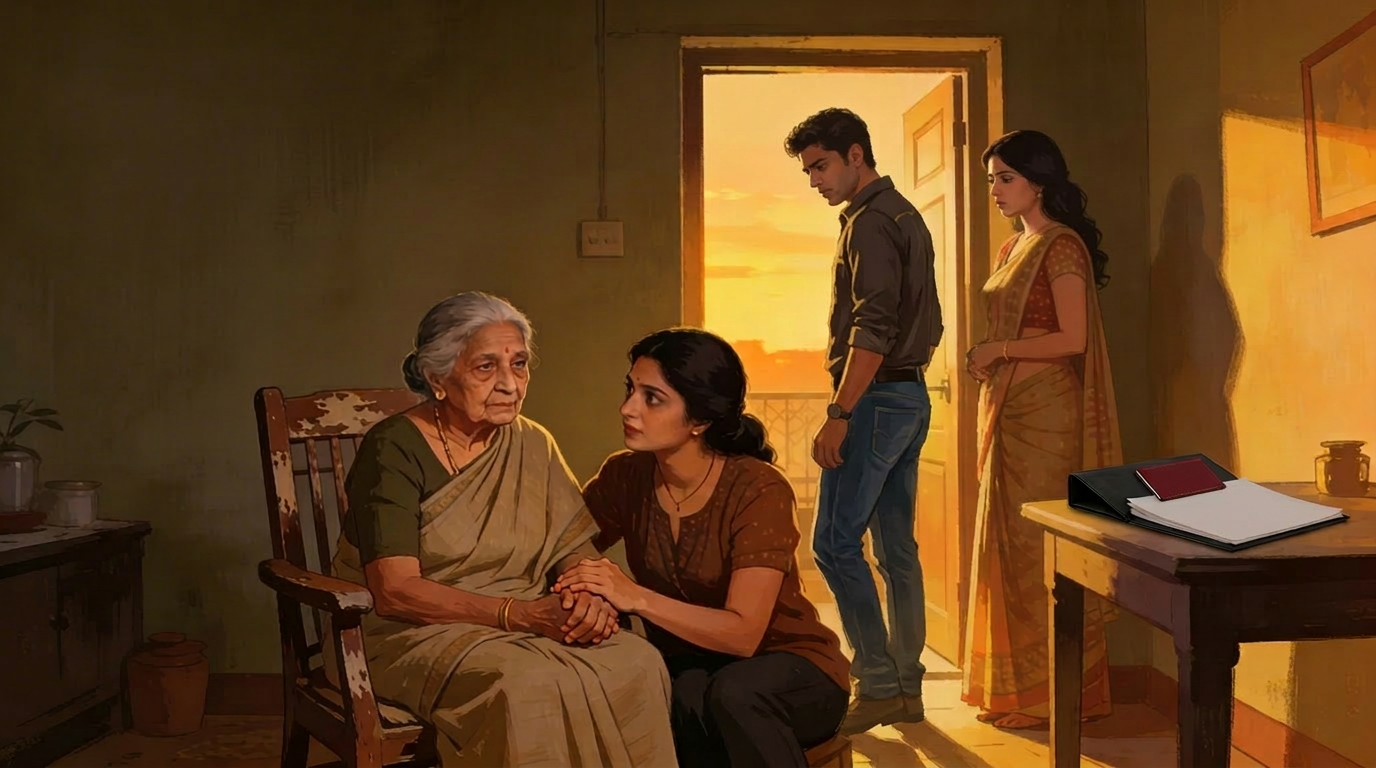
This was the home of Pushkar Nath Koul and his wife Sharika Ji, both now in the restful phase of their lives. Not too old to need constant care, yet not so young to be completely independent.
But their real blessing lay not in their health or wealth but in their three children, whom they had raised with love, discipline, and divine awareness. Their sons, Vivek and Rohit and their daughter Meenakshi, were now settled, responsible and deeply spiritual souls. They were not born saints, but they were groomed in grace.
From their early childhood in Rainawari, Srinagar, they had been taken—rain or shine, cold or warmth—every Sunday morning to Kharyar, to the ashram of Bhagwan Gopinath Ji. They remembered walking through the stone-lined lanes with their father holding their hands, their mother carrying a bag of fruits and flowers. The sacred silence of the Samadhi room, the gentle voices of bhajans and the deep gaze of the photograph of Bhagwan Ji, garlanded, serene, all-knowing.
Even as children, they didn’t understand the full import of it. But something within them always stirred when they sat cross-legged on the floor, listening to the chanting of “Om Namo Bhagavate Gopinathaya”.
And over time, that divine vibration nestled into their being.
When exile came and the family had to leave their ancestral home, the Kharyar visits stopped but the connection never broke. For Bhagwan Ji had already built His Ashram in their hearts. Now, years later, the same children had grown into caretakers of the very parents who once took them to the divine. Not because their parents were weak—but because their children had grown strong in spirit.
Vivek, the eldest, worked from home but made it his sacred duty to help his father with his bath each morning, applying kesar oil to his joints, dressing him with care and feeding him warm meals with quiet reverence.
Rohit managed their medicines and took Sharika Ji for her eye checkups. In the evenings, he would sit by her side, massaging her feet, while she shared tales of past Shivratris at Motiyar Temple and community satsangs at Bhagwan Ji’s ashram.
Meenakshi, a lecturer, balanced her job and family with an unwavering devotion to her parents. She fed them, changed their bedding, adjusted their pillows and sat humming Gopinath bhajans late into the night. Just like she once heard as a little girl sitting in the back of the ashram hall.
They didn’t do all this to gain praise or applause. They did it because they had attained something higher—a spiritual realisation born from Bhagwan Ji’s divine presence in their upbringing.
In their quiet way, they had experienced Sezar—the acceptance of life’s duty as divine.
They lived with Pazar—the discipline of selfless service.
And they were moving toward Shrochar—the inner cleansing and illumination that arises when one lives in dharma.
Perhaps this is what the sages meant when they said, “Child is the father of man.”
For these children now nurtured their parents with a love deeper than any role or ritual.
One afternoon, Vivek sat beside his father and gently asked, “Baba, do you remember those Sundays when you used to take us to Kharyar?
I didn’t know then what it meant—but I do now. That silence, that stillness, it lives in me.”
Pushkar Nath, with eyes moist, peacefully whispered, “You are living what I prayed for.”
That night, as Sharika Ji drifted into a light sleep, she whispered with folded hands, “Mey chu Bhagwan Bub Gopinath Ji hund shukar… mey chu aashirwad.”
(I thank Bhagwan Gopinath Ji… my children are my blessings.)
Their home had become an Ashram without signboards.
Their care had become Sadhna.
And their love, expressed through gentle hands and patient hearts, had become true Bhakti.







POST COMMENT