There once lived a woman named Radhika. She was known in her neighbourhood as a quiet, pious soul. She had no great wealth, no property worth boasting about, and no power in society. What she possessed instead was something rarer: an unwavering faith, a compassionate heart, and the patience to endure life’s harshest trials without bitterness.
When she was young, Radhika married a man who appeared respectable and ambitious. She believed, like many young brides, that marriage meant companionship, protection, and a shared destiny. She gave her husband everything: her youth, her loyalty, and her trust. But destiny had written a different script for her.
As the years passed, her husband began drifting away from the sanctity of his marriage. Wealth slowly came his way, and with wealth came arrogance. He formed alliances with other women and built separate lives with them. From those relationships came more children, more houses, and more land. Yet the woman who had first stood beside him, Radhika, was quietly pushed aside.
One day, in a moment that revealed the depth of his cruelty, he left her almost like an abandoned traveller on the roadside of life, without dignity, without security, and without the affection she had once believed was hers by right.
A Mother’s Hope
By then she had children. Among them was her son Ravana, her pride and hope. Like most mothers, she believed that whatever injustice she suffered from the world would be softened by the love of her children.
She poured her remaining strength into raising them. She endured humiliation silently, trusting that her son would one day become her support, her shelter in old age.
But sometimes the seeds of gratitude do not grow where they are most lovingly planted.
Ravana’s Rise
Ravana grew up seeing his father’s wealth, his father’s influence, and the glitter of material success. Over time, he began to admire not the sacrifices of his mother, but the prosperity of his father. Gradually he adopted the same world view.
When Ravana married Rantus, a woman equally fascinated by status and wealth, the distance between him and his mother widened further. The young couple began building their lives around property, bank accounts, and social prestige. The humble, ageing figure of Radhika did not fit into that polished picture.
They seldom visited her. When they did, it was often with impatience, as though her very presence reminded them of something inconvenient. Ravana had forgotten the nights his mother had stayed awake when he was ill, the sacrifices she had made when money was scarce, and the silent prayers she had offered for his success.
Instead of gratitude, he felt embarrassment. Instead of compassion, he felt irritation. And Rantus, his wife, encouraged that distance. Together they believed that affection should follow wealth, not sacrifice.
A Life of Silent Endurance
Radhika did not protest. She had already learnt the language of silent suffering. Fortunately, life had given her one blessing: her youngest daughter. This daughter possessed none of Ravana’s arrogance. She had inherited her mother’s simplicity and kindness.
She and her husband welcomed Radhika into their modest home. For thirty-five long years, the daughter cared for her mother with quiet devotion. There was no show of sacrifice, no announcement to the world, only simple acts of love: preparing meals, offering medicines, listening to her mother’s memories, and ensuring she never felt abandoned again.
Their house was not large, but it was full of warmth. Radhika often looked at her daughter with tears of gratitude. In her heart, she knew that God sometimes balances life’s injustices by placing an angel in disguise beside those who suffer.
The Waiting Shadows
Time, however, spares no one. Radhika grew frail with age. Her steps slowed, her voice softened, and her eyes carried the quiet fatigue of a life filled with struggle. Word reached Ravana that his mother’s health was declining. Suddenly, he and Rantus began showing interest in her again, not out of affection, but out of calculation.
They had heard that Radhika still had a small bank balance. Compared to the vast wealth Ravana and his father had accumulated through properties, lands, and questionable dealings, this amount was insignificant. Yet greed often ignores proportion. Even a drop seems valuable to the thirsty mind of greed.
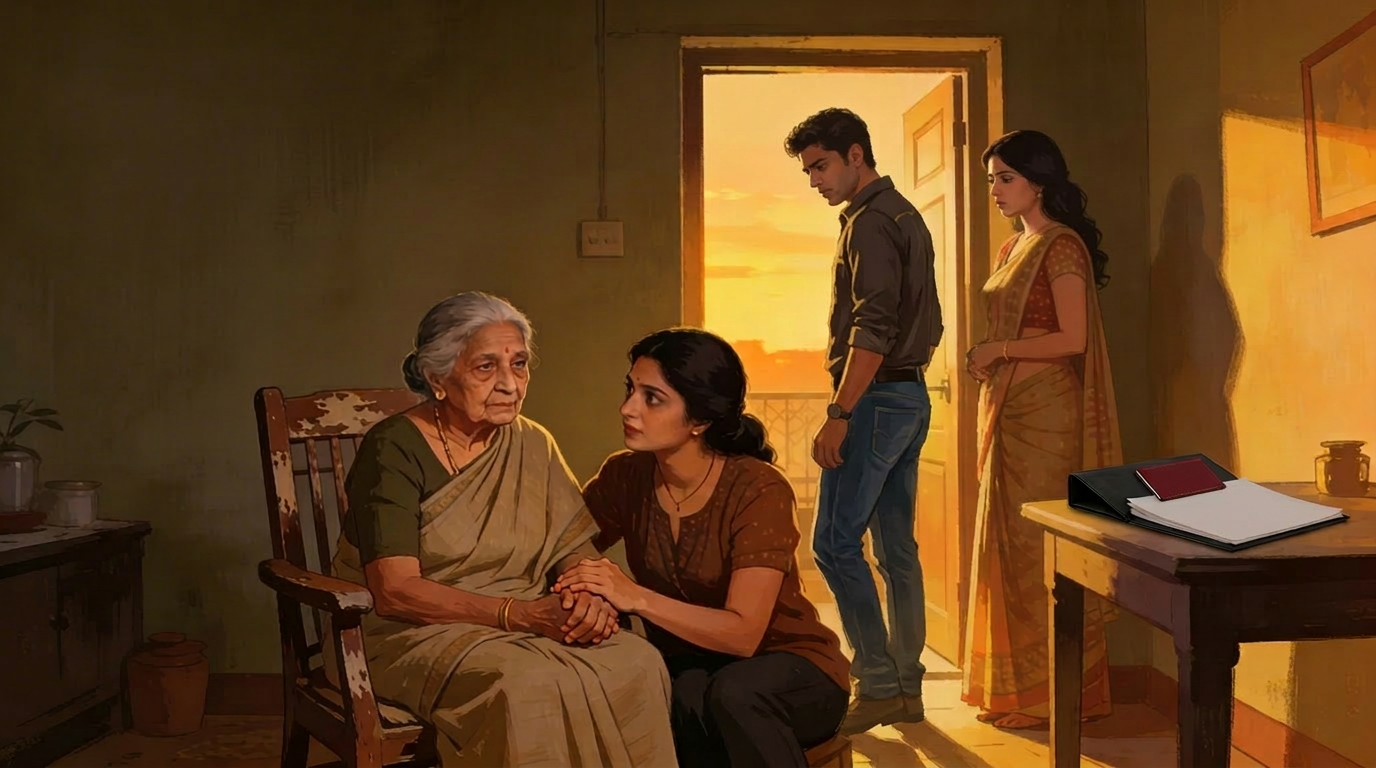
So Ravana and Rantus began visiting occasionally, not with warmth, but with impatience. Their eyes wandered more towards documents and passbooks than towards the fragile woman lying before them. In quiet whispers, they wondered how long it would take, how soon the old woman would depart, how quickly the remaining money could be claimed.
The Mother’s Heart
One evening, Radhika sensed the truth. Old age sharpens certain intuitions. She understood the glances, the whispers, and the restless anticipation in their behaviour.
Yet she did not curse her son. She only sighed softly and whispered to her daughter, “Children sometimes forget the path that brought them where they stand.”
Her daughter held her hand and said nothing, because some truths do not need words.
The Moral of the Story
Stories of ungrateful sons have echoed through cultures for centuries, not because they are rare, but because they are painfully common.
The tragedy of Ravana was not poverty, nor lack of opportunity. His tragedy was forgetfulness. He forgot the woman who had carried him before the world even knew his name. He forgot that success without gratitude is hollow. He forgot that wealth cannot purchase the blessings of a mother’s heart.
History shows that the gravest punishments are not always supernatural curses. Sometimes the punishment is simply this: a life filled with wealth, but haunted by the quiet knowledge that one failed the very person who loved them most.
In the end, society remembers not the wealth a person gathers, but the humanity they show. For in every home stands an invisible test of character: how we treat the parents who once carried us when we could not walk.
Those who honour them rise in dignity. Those who forget them, like Ravana, may gain the world, but lose their soul.








POST COMMENT