


She Gave My Childhood a Home
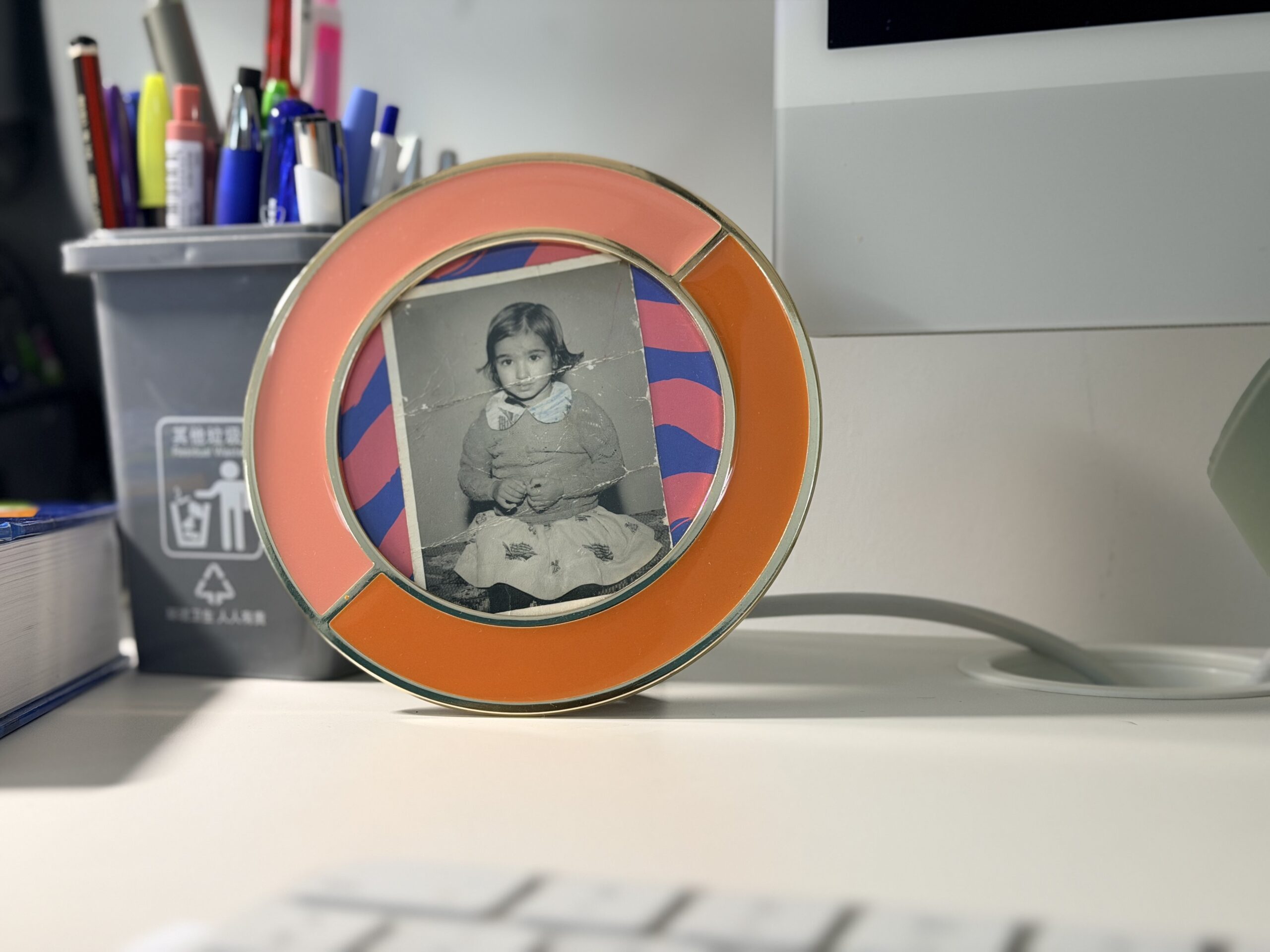
As I try to tidy my daughter’s desk, my eyes fall on a beautiful photo frame. I had given her the picture a long time ago, in passing, the way we hand things over before we are ready to explain them. But the frame was hers. She had gone out and chosen it, brought it home, and made it a place for my childhood to rest.
She had gone out and chosen it, brought it home, and made it a place for my childhood to rest.
I pick it up and hold it for a moment. It is a photograph of me, perhaps the only one that now exists from my childhood. There I am, sitting timidly as the photographer tries to arrange us both. A toddler doing her best not to show her fear, small and serious, unaware of what the years will one day ask of her. What that child could not know was that her own child would one day hold this image close to her heart. That this small piece of photo paper may be the only tangible thing connecting her to her mother’s childhood.
We left Kashmir when I was a little girl. Leaving is hard for those who live it. It is often harder for those who inherit it. I did not realise that I was already passing something on.
Leaving is hard for those who live it. It is often harder for those who inherit it.
I stare at the photograph for a long time, searching my memory for the feel of that day. Very little comes back. I think about asking Ma. She would know, perhaps, the season, the occasion, what we had eaten for breakfast. But I cannot bring myself to take her back there. Some memories are hers to keep or quietly let go. I will not ask.
What I do find, looking closely, is something I had forgotten entirely until now. Along the collar of my frock, there are faint streaks of blue ink. I remember them suddenly and clearly. I had decided, with great seriousness, that the white collar needed colour. I took a pen to the photograph itself, coloured in a little, then lost interest or nerve and left the job half done. The ink faded over the years to something barely visible: a ghost of a small girl’s intention, still there, in a photograph that has survived more than I dare name.
A ghost of a small girl's intention, still there, in a photograph that has survived more than I dare name.
The picture was most likely taken at a studio in Baramulla. I imagine the stiffness of being posed, the photographer asking me to sit still, the strange formality of an ordinary afternoon that did not yet know it was about to become the past. That child with the ink-stained collar did not know she was being preserved. She was simply sitting, impatiently, waiting to go home.
I inherited this photograph from my mother. I have since moved countries, changed homes more times than I care to count, and through all of it, this picture has stayed close. For years it lived the way displaced things do, tucked into my mother's handbag, folded into my father's wallet, or slipped inside his blue VIP briefcase alongside his most precious documents, among them the papers to a home we left and never returned to. It was carried, not displayed. Held close, but never given a place to rest. It has never stood in a frame before. And yet here it is: evidence. Proof of a childhood, a home, a self that existed before the loss.
When we left, there was no time to gather things. You do not reach for photo albums when you are fleeing for your life. I am grateful this picture found its way out with us. But I grieve the ones that didn’t. The images that might have shown me my home in vivid colour, my sister beside me in ordinary moments, the rooms I can no longer fully picture. They are gone, and no amount of remembering will bring them back.
You do not reach for photo albums when you are fleeing for your life.
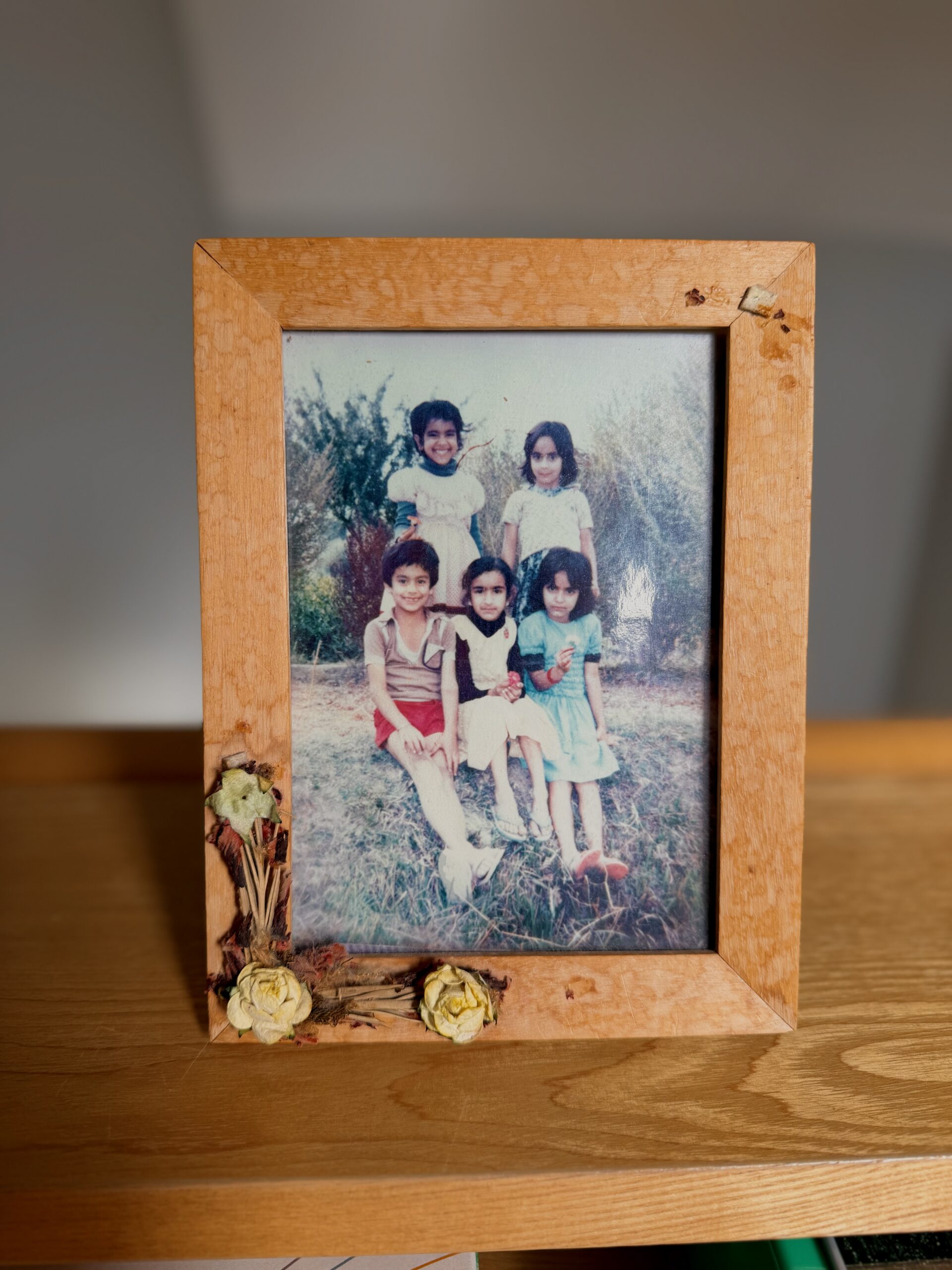
There is one other photograph I have from my childhood, borrowed from an aunt years later. My sister, our cousins, a family wedding with soft autumn light and hay in the background, yet nobody was performing for the camera. We are simply together, unaware. I look at it sometimes and don’t exactly feel sadness, but the ache of knowing that ordinary afternoon was already rare.
We have built homes many times since leaving. We have learned new streets, new neighbours, new ways of belonging. A life reconstructed is still a life. But there are moments when something cracks open. Not breaks. Cracks. Just enough to let the feeling through.
Sometimes I try to picture the street we lived on. Its curves and bends come back to me but not the sounds of our bustling neighbourhood. The place I knew is now devoid of what made it ours, its people scattered, those ordinary moments long dissolved. What remains is a feeling that has outlasted everything it belonged to. You can only carry it forward.
And that is what I have done without meaning to. I have passed it to her. The loss arrived on her desk, set in a frame she chose herself. She did not ask for this inheritance, the ache of a place she never got to know, the feeling of belonging and the not belonging that now runs, quietly, in her too. I passed it on the way all inherited things are passed, in the middle of an ordinary life.
For that, I am deeply sorry.
Perhaps that is how homes are truly rebuilt: not in the places we return to, but in the children who bring it home.
But I watch her, the care with which she found that frame, the deliberateness of placing my childhood on the desk where she begins each day, and I understand that she has already decided what to do with what she holds. She is not crushed by it. She has it held, carefully framed. She has given my lost world a place to rest, in her heart, in her life, in the future she is building without having to flee.
Perhaps that is how homes are truly rebuilt: not in the places we return to, but in the children who bring it home.

Sheetal Raina
Dr. Sheetal Raina is the founder and editor of ISBUND, an immersive platform dedicated to preserving and celebrating Kashmiri culture. Deeply connected to the heritage and traditions of Kashmir, she brings a distinctive voice to cultural discourse - blending academic insight with heartfelt commitment to her roots.
Related Posts
The Orchards We Carry
There is something quietly profound about the way certain foods anchor
Can a place be your homeland if you’ve never seen it?
A first journey to Kashmir becomes more than a holiday for Niyati Rain

Where The Pigeon Still Waits…
In the winding lanes of Habba Kadal, memory weaves its gentle spell. E
POST COMMENT