
Can a place be your homeland if you’ve never seen it?
My name is Niyati Raina, and I am a Kashmiri Pandit. But up until recently, I had never been to Kashmir. Growing up, I always felt a strong connection to Kashmir, even though I had never seen it myself.
I remember a classmate describing their trip to Kashmir. That day, I went home jealous and begged my parents to take me. They said, “It’s too dangerous.” The next time I asked, they said, “Not yet.”
Eventually, I grew tired of asking the same question over and over again. But in July 2024, something changed. We packed our bags and set off for Kashmir.
Instead of being greeted by beautiful mountain views or cold air, we were greeted by hundreds of soldiers. There were soldiers everywhere—inside the airport, outside the airport. At almost every turn we took, we could see them.
I had heard stories from my parents about terrorists, bomb attacks, and curfews. However, this was the first time I had seen the effects of those things. Seeing so many soldiers made me feel uneasy. It was strange to realise that the place I had dreamed of visiting for so long came with such tension and reminders of danger.
From the airport, we went to our hotel and then drove straight to Pahalgam. When we reached Aru Valley, I thought it looked unreal. Green mountains surrounded it on all sides. The grass was so bright, it looked like someone had put a camera filter on it. White clouds floated lazily above us. Everywhere I looked, people were smiling, clicking pictures, and just enjoying life—a huge contrast to the heavily guarded airport.
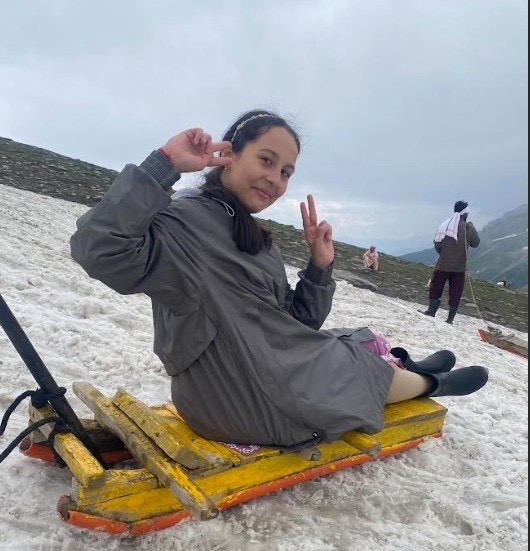
On the second day, we went to Sinthan Top, where I saw real snow for the first time in my life. It was a magical experience. We spent our time sledging, taking photos, and enjoying maggi. Our noses turned red with the cold, but the warmth we felt was enough to keep it away.
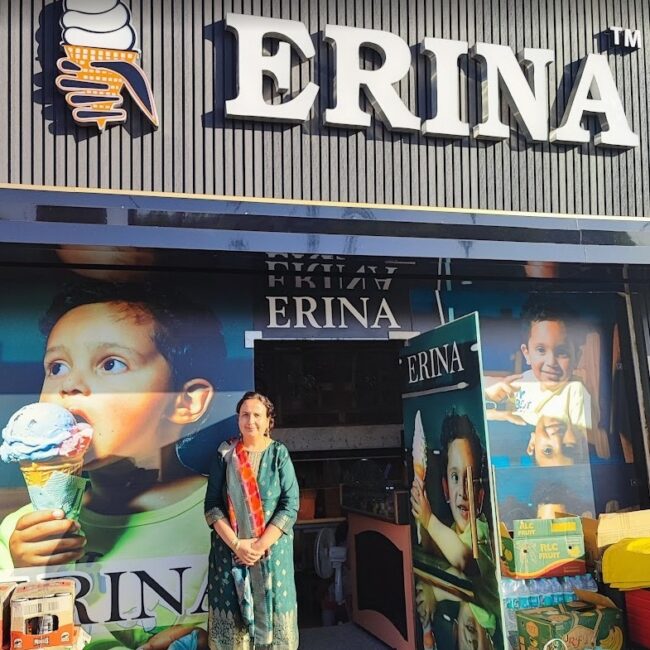
On the third day, we explored Srinagar. We visited the Mughal Gardens, Chashm-e-Shahi, and Pari Mahal, where I saw the city from a bird’s-eye view. After that, we stopped at Erina Ice Cream Parlour.
Most people see it as just a shop, but for me, it was more than that. Years ago, my mother and aunt were sitting in that ice cream parlour when a bomb exploded outside. They survived only because they were inside. As I stood there holding my ice cream, it hit me that if they hadn’t walked into that shop that day, I might not be standing there today.
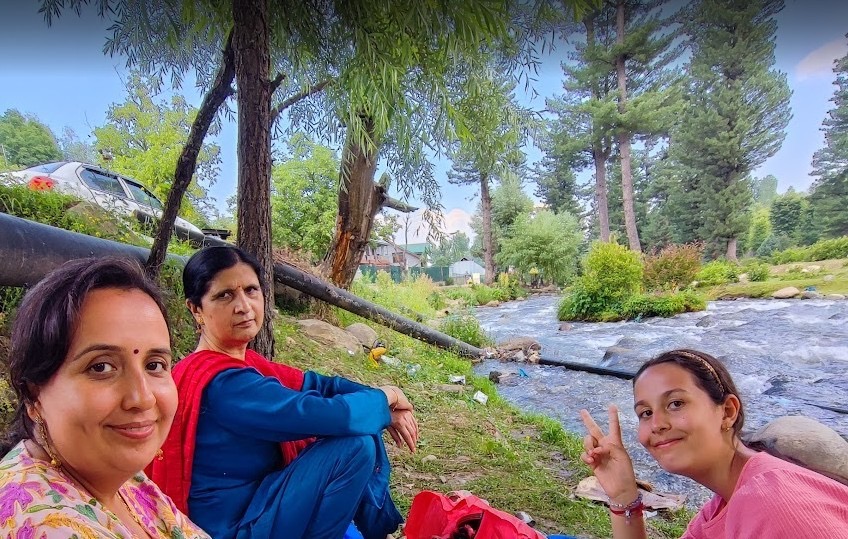
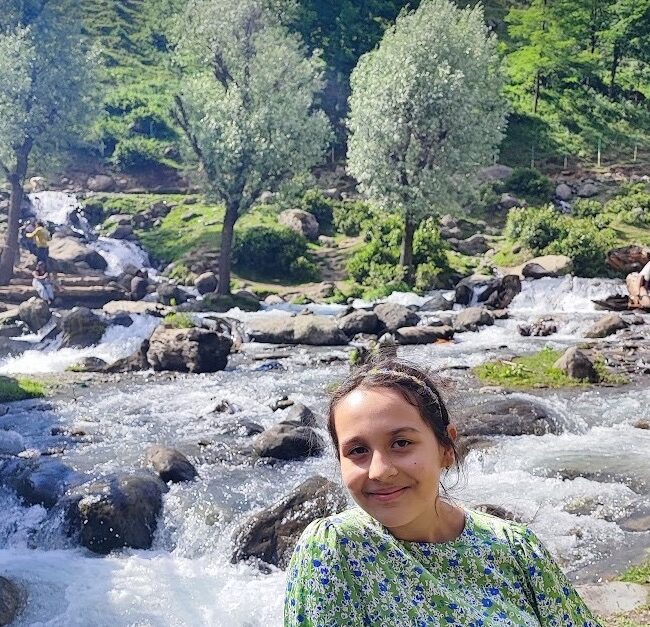
Day four was lighter, more of a break than anything else. We went to Doothpatri with my Mami. We began our day with horse-riding through vast green fields. After riding for a while, we reached the Shaliganga River. We dipped our feet in the cool, clean water and talked. On the way back, we found a quiet little spot next to a stream where we had a picnic. The food was simple and home-cooked but tasted better than any five-star hotel’s.
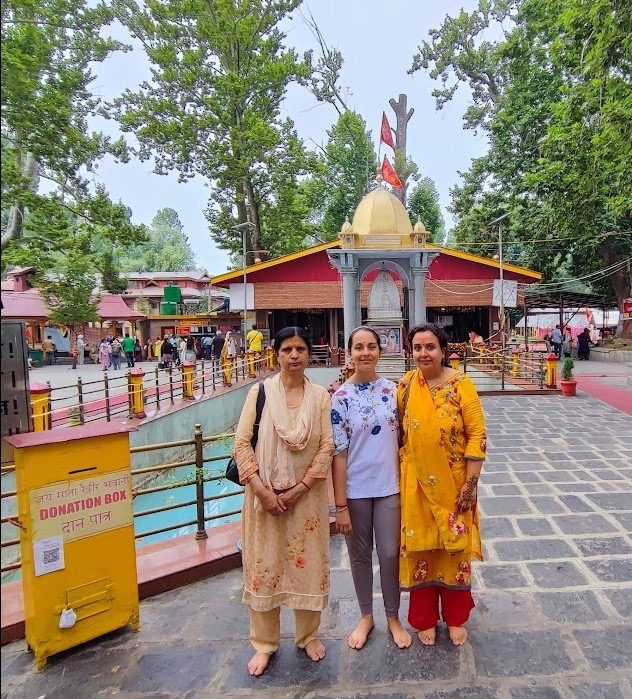
Day five felt more like a heritage tour than a simple vacation. We started by going to Shankaracharya—the oldest temple in Kashmir, with strong ties to Adi Shankara. After that, we visited Kheer Bhawani, probably the most famous temple in Kashmir. I have yet to walk into a Kashmiri Pandit’s house and not see a photo of it.
I saw the Kheer Bhawani spring I had been hearing stories about from my family. They had told me that during the Kashmiri Pandit Exodus, it had turned blood-red. It was in contrast to the light green water I saw now.
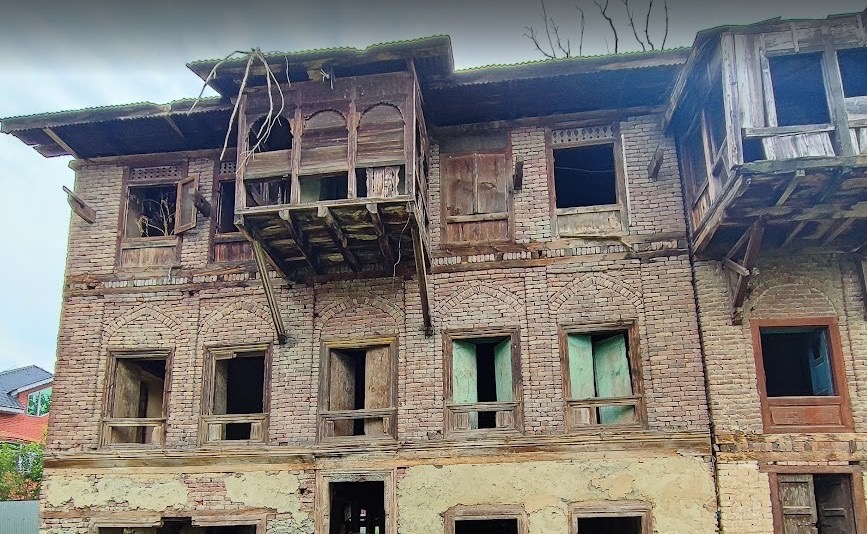
After visiting Kheer Bhawani, we realised that my Nani’s childhood home (Nanihaal) was only around five minutes away. We got back into our cab and drove to it. I was expecting to see a colourful old home filled with memories.
What I instead saw was the hollow, burnt remains of the place where my Nani had spent her childhood. The outer walls had turned completely black. It didn’t feel real at first. How could a place with so many memories, so much meaning, be destroyed like this? Then I realised—our ancestral homes had been destroyed, but the memories inside them could never be taken away.
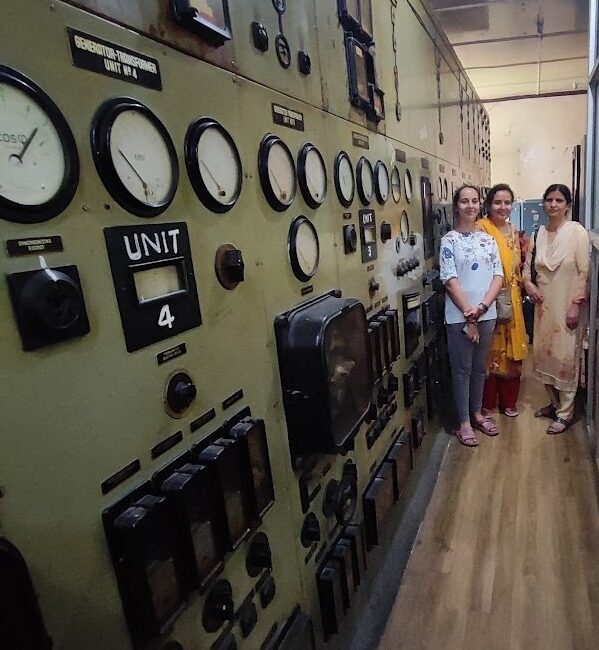
Finally, we went to a power station. My Nanu had worked there as an electrical engineer. When we told the people working there, they offered to show us around. For the first time, I was living in the stories my family had told me.
And with that, my journey came to an end. We packed our bags and headed back home. I realised that this wasn’t a normal vacation… It was me coming back to my family’s roots. It was me being reminded of my heritage. It was my journey to my homeland.
Niyati Raina
Niyati Raina is a creative and thoughtful 9th grader from Mumbai who loves writing stories, singing, drawing, and dancing. Often lost in her imagination, she enjoys turning her thoughts into words. Being a Kashmiri Pandit, her first visit to Kashmir was more than a trip—it was a journey of identity, memory, and belonging.
1 Comment
POST COMMENT Cancel reply
Related Posts
A Letter From The Last Tree
A haunting elegy told from beyond extinction, A Letter From The Last T
‘The Kashmir Files’ and The ‘P’ word
The word "propaganda" gets thrown around a lot these days, but rarely
Where The Pigeon Still Waits…
In the winding lanes of Habba Kadal, memory weaves its gentle spell. E
The Orchards We Carry
There is something quietly profound about the way certain foods anchor
She Gave My Childhood a Home
A photograph on her daughter's desk stops her mid-tidy. It is the only
A piece of Naveed … lifetime of memories
Making telvor in her kitchen, Deepa Kaul finds herself transported bac


SURYA SARAF
Really proud of you ❤️