My first trip abroad was to Nepal in 1983 or 1984 (I tried calling my Mum to verify the year but this time she was the one to say she was busy which was very disorienting especially because random questions and phone calls must be answered immediately, of course 🙂). Oh the excitement! So many firsts – of being on a plane and experiencing that strange pit in the stomach as the flight took off (something that one doesn’t even think about now); being served scrummy airline food with shiny stainless steel cutlery (firstly a moment of appreciation for cutlery otherwise only reserved for special occasions and secondly, who knew your entire meal could fit into a small tray and that you would get rice, a curry, roti, salad, a bread roll with butter AND a little asteroid of pure sugar and joy also known as a gulam jamun in layperson terms – you see, store bought sweets were never a thing for us growing up unless it was Diwali and we had to serve them to guests or take boxes to others when we visited them); of lovely, impeccably dressed ladies checking on you AND your seatbelt (what an inconvenience!); of pressing your face on the window to watch white fluffs of cotton candy in the sky; of seeing what I thought was Mt Everest at the time as we approached Kathmandu Valley. Even though it was an international trip, it felt strangely comforting like a giant hug from the majestic Annapurna range at Pokhara, a divine blessing from Lord Shiva at Pashupatinath and the bustle and warmth of local markets. When I look back, I distinctly remember that feeling and even more, the relief that while Nepal has its own language, everyone there spoke Hindi. For a child of 12 or 13 (gosh Mama, wish you would pick up the phone so we could sort this out once and for all!) that alone offered a huge sense of familiarity and ease.
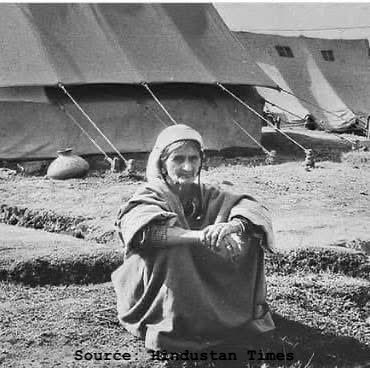
Something that my wonderful biradari, the genteel Kashmiri Pandit folk were not afforded the luxury of as they escaped from their beautiful homes in Kashmir valley to either refugee camps or 1 bed flats housing 12 people in Jammu or to other destinations across India – some found relatives in Delhi, others in Maharashtra (Pune was a favourite due to the weather and prevailing political climate) while some moved South to Bangalore and even Chennai. I don’t need to tell you that this was not a planned holiday with meticulously packed bags. For the older generation, they had neither the exposure to climes so different (it was inconceivable that parts of India did not experience chillai kalan – a 40 day period of intense, harsh winter, like what and instead had summers so harsh their skin dehydrated like the hokh syun hung out on the rooftops of their trepor makaan?) nor the knowledge of a language beyond their own lilting blend of Persian and Sanskrit. But they are nothing if not tenacious with a mind hungry for learning and the ability to start from scratch (after all they’ve got used to being forced to flee from their homeland since the 14th century).
Communication was always a strength but using it to be understood in what felt like a completely foreign land, even if it was only in Jammu, was a challenge – for context, even though it was the state of Jammu and Kashmir then, the Kashmiri language and culture are distinctly different from neighbouring Dogri. Nonetheless the kaknis, babis, gashis and jigris, lionesses all, adapted and with it created a genre of fusion language and grammar even. ‘Arre bayya, zara taaza taaza gaadi dikhao na?’ always confused the unsuspecting fishmonger – ‘gaad’ in Kashmiri is fish while ‘gaadi’ is a car in Hindi and the grand dames thought that pluralising the latter would get their point across. And by the way, ‘bayya’ was in fashion way before it became a thing in South Bombay or Delhi because the sound ‘bh’ or for that matter ‘gh’, used regularly in Hindi, does not exist at all in the Kashmiri language 🙂. With pride they would tell the rickshaw driver, ‘Bayya, mujhko sabzi market mein daalna’ who almost always had a minor coronary on hearing that these elderly ladies wanted to be ‘put’ inside the vegetable market, a direct translation of the Kashmiri word for ‘drop off’. New neighbours who dropped in were specifically asked ‘aaf mat peeyegi Lipton chai cup?’ much to their amusement at the specificity of the question. Suffice it to say that any tea which was not kehwa or sheer chai (two exquisite types of tea in Kashmir) was basically Lipton tea.
Within the house, they had to bridge generation gaps and talk in a way that the grand-children comprehended too. Every meal was punctuated with a ‘Ab kya hua, ek aur piece tszaaman ka le lo na, mere marne ki kasam hai!’ Now ‘meri kasam’ is a very common plea used by mothers all over South Asia for a variety of things ranging from doing to not doing something the poor child really did or did not want to ever do. For Kashmiris, the emphatic version of that is ‘myon marun’ but translated in Hindi, is far more graphic and disturbing, particularly over a meal, about a meal! Then you had the descriptive admonishment of ‘neeche se pata nahi tuh upar se karti hai baatein’ meaning ‘from the bottom you don’t know anything and on top of that you have the audacity to talk’ as a direct lift off from a Kashmiri phrase which drove us into fits of hysterical laughter as kids. The other firm favourite was hearing, ‘Tumko kya chatti hai? – ‘tse chhey chyett’? (why are you obsessing over this?) when they had reached their wits’ end after being asked a series of unending questions.
Things would reach their peak if the house help hadn’t cooked something well – a disapproving head shake preceded a passive-aggressive ‘hay hay hay, yeh kya yirvinaav kiya? Oloo ka daal bana diya hai, aur yeh posh jaisa batta tha, trath tszena hai isko. . .’ to which the accused would murmur under her breath with a smirk, ‘Deva! Kitna kitkit karte Mataji, kaay ko itna raag!’ in her own fusion of Marathi and Hindi (Gosh how much you complain respected Mother, why do you get so angry 🙂) Phantom may ‘move faster than eye can see’ but Gangsta Grannies’ repartees can surpass him too by a mile – ‘Dum karke karo kaam’ they smilingly chide while in the same breath asking ‘chai cup mat peeyegi?’








Sheetal
Ruby, I rolled over laughing at this piece. It’s wonderfully funny, yet so poignant in what it captures. Our Kanis, Behenjis, and Babis tried so hard to embrace everything that was thrown at them, and they did it with such dignity. Learning a new language, adapting to a new climate, and navigating unfamiliar customs, yet still holding on to their inner strength and culture. That balancing act comes through beautifully in your writing.
And the expressions! “Mugh ko tolna” (weigh out the radishes) is still my personal favourite, though “nehar mein daalna” (trying to say “drop me by the canal,” a classic Matador stop) comes a very close second. They capture that earnest, inventive way people tried to make a new language their own.