




Mridula Kaul
Mridula is an avid storyteller and connects the dots in everything she sees. She believes communication and engagement are key to progress. She is passionate about mentoring women and young adults. She believes there are no coincidences in life and is endlessly fascinated by the resplendent night sky. She loves music, poetry, food and travel. She is a committed hug giver, memory collector and gin maker.
10 Comments
-
Rohit Warikoo
Very well written 👏
-
Tina
@ Roobs, I’ve forwarded this to all our cousins in India, Reading it overwhelmed me and brought tears to my eyes, and I know they’ll feel the same. Your beautiful piece brought back vivid memories of the thaal, the three of us sisters, and our cousins eating together and being lovingly fed with baat myond
Sheetal 😘thank you for sharing all these-
Rashmi Razdan
Enjoyed reading and appreciated it all the more , now that we get less chances of having a Batai myundu offered ..
-
-
Anu Raina
Nostalgia overload!!
-
Kamesh Kaul
Only you have the power to transport us back in time, reminding us of the very essence of “Batta Myond” through your magical, mesmerising words and creative brilliance. Stay blessed, Rub lal!!
-
ASHOK DHAR
Interesting accounts of our memory lanes.
Would love more flows. God bless -
Shivani
Anu Didi’s dearest mother, who is our universal mother in Dudha family, has been feeding us all Batta-Myonds since time unknown… generations above me, me, and also the generations below me. As kids, if there was ever a way to sneakily feed us mischievous kids the unpopular vegetables, Chooni mamma would come lovingly armed with a thaal in one hand, and the powerful almighty fist holding the “mendoo” in the other hand. The queue of kids and adults alike would be longer than last minute Westend show entries, and just like all the food would vanish off the thaal. I miss being young!
-
Shipra
Oof…what more to say that hasn’t been said. Gobra, akh myond khyake – these four words hold an entire universe of memories and emotions. They move you from within and yet hold you steady from outside. Look forward to when all of us are together soon, celebrating the magic of batta myond with each other xxx
-
ROMA WANCHOO
Thank you Dr Anju Raina for sharing the beautiful baat myund- that has an ocean of memories attached. It brought back vivid images of my dear mother lovingly feeding my elder brother & and me generous baath mounds before we left for school or when we returned home. Those moments were deeply comforting and satisfying. And now, it’s heartwarming to see my daughter Abhilasha enjoying being fed with the same loving mounds. When she comes home she looks forward from baat myund either from her nani or me. The baat myund is not just a morsel but beautiful connection of relations. Thank you Ms Mridula for this lovely write-up which took us to our lovely past


POST COMMENT
Related Posts
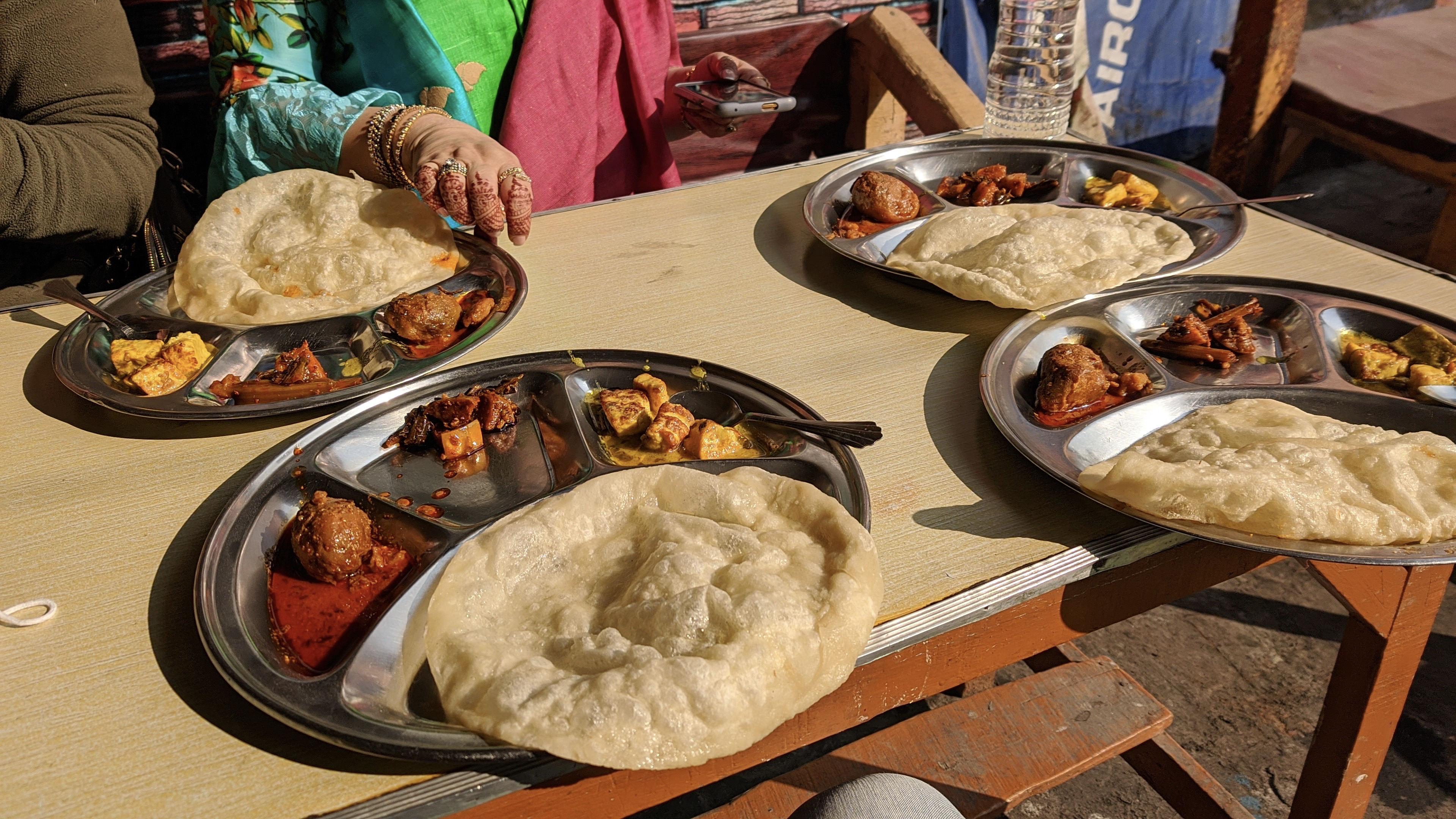
Loochi
Anita Raina Kotwal Ingredients: Maida (plain flour) 500 gram Oil to kn

The Blue Poppy and the Paradox of Beauty
Monika explores the Himalayan blue poppy.. at once fragile and elusive

What If We All Planted 15 Trees?
A Conversation on Sustainability Inspired by Professor Minesh Khashu W

Making Room for Absence: How We Get On, Somehow
Grief announces itself quietly, showing up in empty chairs and message

Where Threads Held More Than Just Dried Vegetables
Where Threads Held More Than Just Dried Vegetables is a quiet, moving

Flights, Layovers and Lessons
Flights, Layovers and Lessons whisks readers through the ever-evolving
Sunny kaul
This piece really stayed with me. Reading it brought back a flood of memories I didn’t even realise were waiting to be stirred — the same gestures, the same unspoken tenderness, the same quiet insistence that love is best expressed through food and the act of feeding.
What struck me most was how familiar it all felt. My parents and elders did exactly this — with each other, and with me. the ritual itself feels timeless and universal: hands gathering food just right, the gentle command to eat, the warmth of being looked after without having to ask.
I was also reminded of a story I’ve been told often — how my grandfather, returning from his travels, would sit down and feed all six of his children from a single thaal. That image has stayed with me all my life. I truly believe those shared moments — those hands moving from the same plate, that sense of equality, intimacy, and togetherness — are part of what has kept those six siblings so close and tightly bound to one another, even decades later.
Your writing captures that beautiful continuity so well — how these acts move effortlessly across generations. From grandparents to parents, from siblings to children, the form may shift, the names may change, but the meaning never does. It’s love without conditions, nourishment without negotiation.
There’s such warmth, humour, and emotional truth in this piece. It doesn’t just describe nostalgia; it recreates it. By the end, I felt like I’d been offered a myond myself — full, grounded, and quietly grateful. Thank you for putting into words something so many of us have lived, felt, and treasured, but perhaps rarely paused to name.