
Habba Kadal, And Everything After

A daughter traces her mother’s quiet courage from a Habba Kadal window through every crossing that followed.

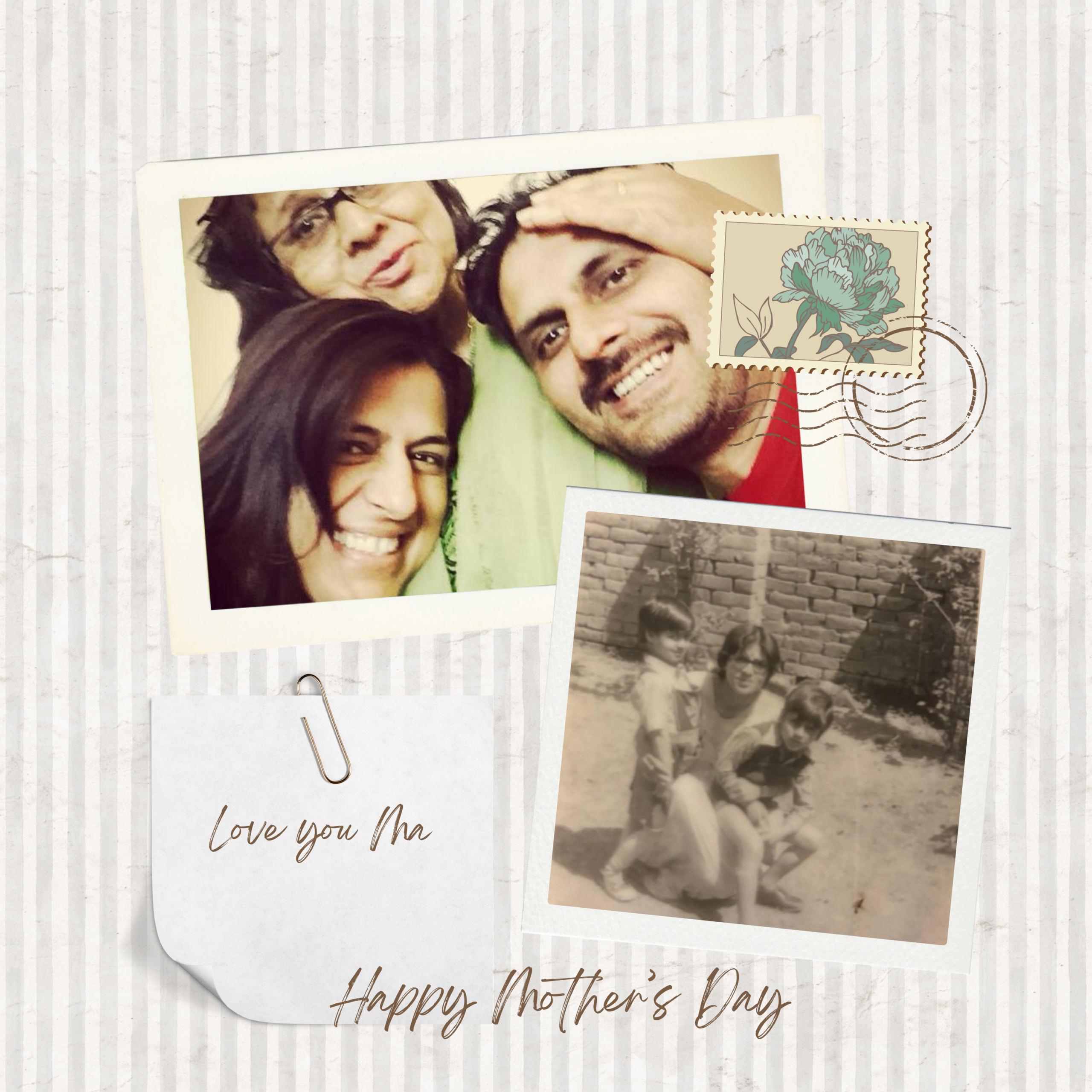
Habba Kadal was my first cinema hall, its window my balcony seat and my mother the only audience that mattered. Legs stuck straight out from the wooden ledge, I would lean into her shoulder and watch the world assemble itself below. Shutters rose with a metal sigh, a broom scraped the stone awake, and behind it all the Vitasta (Jhelum) kept moving steadily, as it had for centuries, unbothered. My childhood, perhaps, has always been woven around Habba Kadal.

And then, as if on cue, they would appear, the office-going didis and aunties. They moved with a purpose that rearranged even the dust in their path. Dupattas neatly wrapped under their Noori Pherans (if you know, you know), handbags swinging with the assurance of women who had already cooked, cleaned, soothed small tempers and packed tiffins, and were now stepping out to run another universe altogether. The school children with tin tiffins were obviously my tribe, but not yet my story. The didis and aunties were what my dreams were all about at that age.

Will you also go to work like them?” I would ask my mother, again and again, pointing with the subtlety of a small child who thinks no one notices. Sometimes she laughed. Sometimes she said, “We will see.” Sometimes she said nothing at all. I did not have the vocabulary then, but I recognise it now, that quiet audit where you measure your own life against the ones walking past your window. Habba Kadal was a bridge twice over, wood over water, yes, but also home to office, childhood to whatever lay on the far bank of growing up.

Long before I claimed that window, she had already crossed another kind of bridge. She became a mother on a Republic Day morning in Baramulla, in one of the crowded wards at St Joseph’s Hospital, while snow fell outside in impatient, determined sheets. I like to imagine her there, nurses moving in purposeful rhythms, women in labour breathing through their private storms, the town outside muffled as if someone had tucked a safed laef over Varmul. I arrived into a world that looked freshly laundered: streets softened, roofs blurred, everything wrapped.

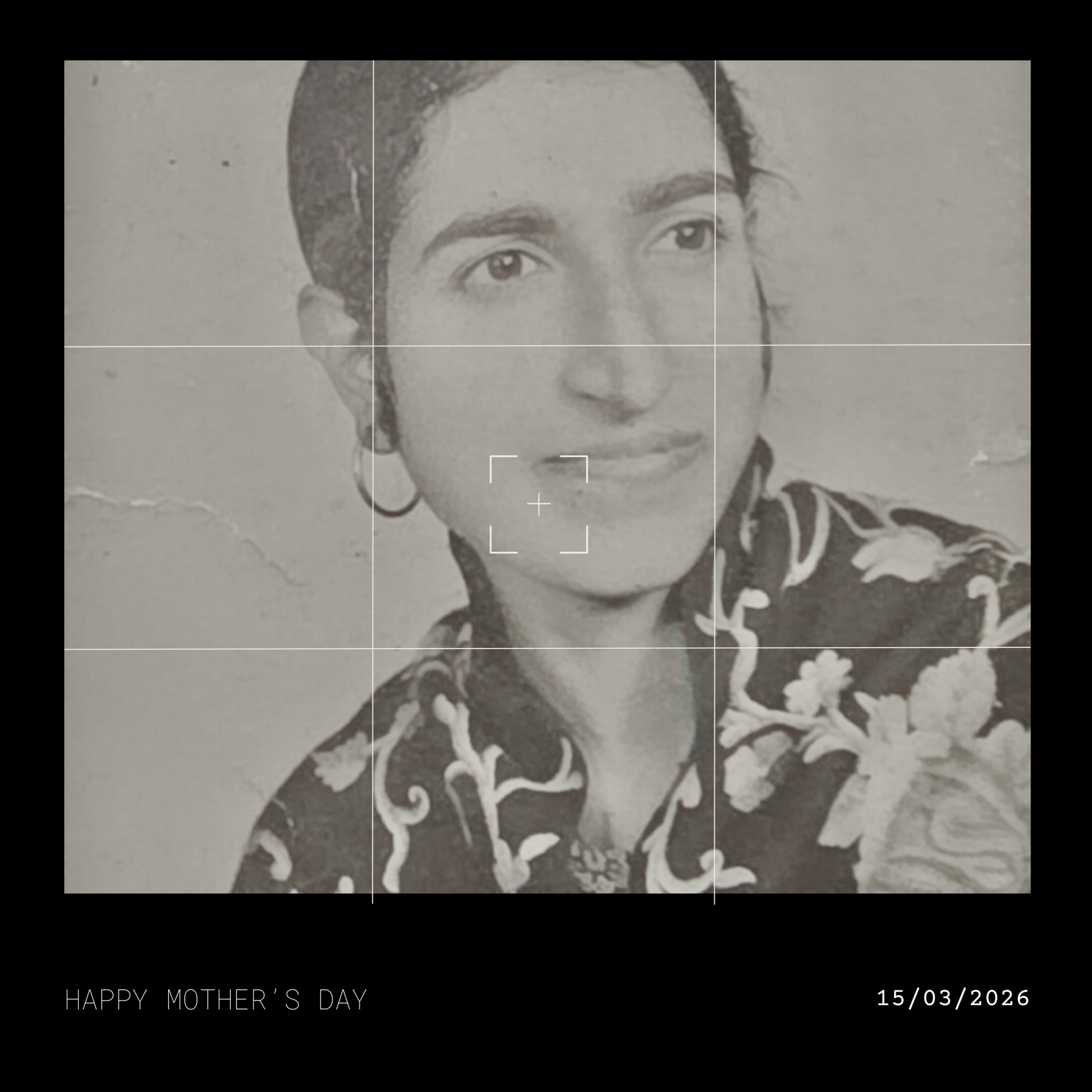
By the time I could hang my elbows on that sill, my mother had already lived several lives in the span of one, first as a daughter who lost her father young, then as a wife, a mother, and then a mother again. Only after my sister and I had arrived did she step out as a working woman, quietly setting a new routine around two small children.

From Habba Kadal we moved to Kanipora, adjusting to a different street, a different set of neighbours, a different way of being at home. Just as that rhythm of daily life seemed to settle into its own quiet beat, the exodus threw everything off tempo. Habba Kadal, Kanipora, Karan Nagar, much like so many other parts of Kashmir that were once brimming with Kashmiri Pandits, emptied almost overnight as families left homes they had occupied for generations. Home shifted from a place you inhabited to something you remembered. And when she might have thought she was finally finding her footing again, her mother went too. In her case, loss did not just arrive, it kept rearranging the seasons.

What she did with all of this did not look heroic. She just kept going. New town, she learnt its bus routes, its water timings, its temper. New role, she simply got on with it, embracing it as she always had. By the time we were born, she had steadily practised the art of enduring and adjusting; something the family would one day name as strength and lean on in times of need and otherwise.

People know her by many names. At home, she is just Mummy, the axis around which our illnesses, report cards, sulks and small triumphs revolved. To her siblings, she is Tathi, the one they turned to for decisions, emotional support, recipes and the occasional attempt at spiritual guidance. Others call her Picha; to her grandchildren she is Nani and beyond the soft borders of family she is simply Sarla, typed on forms that could never hold even a fraction of her. “Tathi aasi patta” (Tathi will know) is less a phrase and more a family policy. None of us ever asked who she turned to when she did not.

Of all the things that define her, one stands out like a carefully underlined line in an old notebook: her belief in education. It is her single non-negotiable. When we were fleeing, the first things she packed were our school bags, heavy with books that suddenly mattered more than almost everything we were leaving behind. In four decades and more of my life, she has raised her hand at me exactly once, not for stealing, lying or setting anything on fire. My crime was far more serious: I said I wanted to miss school.

We were in New Plot, Jammu that year, during the Darbar move, basking in the winter sun. I must have been three or four. An older cousin was visiting for her winter break, and I decided that school could wait but cousin time clearly could not. I declared I was not going. My mother, who had already fought a quiet war over my schooling, the right school, the right class, some continuity through every move, said no. I insisted. She said no again. At some precise point that no one quite remembers, something snapped. Her hand rose, landed sharply and the argument was over. I went to school.

The lesson settled somewhere deep. You could say it aligned all my chakras for life. For the rest of my years, I never quite found the courage to bunk, school or college. When a mass bunk was planned at university with all the drama of a minor revolution, I could not bring myself to leave the premises. While others marched out, I sat on the steps, consoling myself that technically, I had honoured an old pact. One well-timed slap proved more effective than any attendance policy. Did she enjoy that moment? Not for a second. She turned up at the school gate much earlier than usual, holding a treat and an apology carried mostly in her eyes. She still winces when I mention it. For her, it is perhaps a regret. For me, it is proof of how fiercely she guarded the one thing she believed no one could take away from us.

If I was a difficult child, it was not in the “teachers calling home” sense. I was the other kind of problem, perpetually ill, a small saboteur of timetables and plans. Schedules bent around fevers, tests and hospital visits. And there she was, in the middle of it all, ushering me from one appointment to another, clutching folders of reports, still smiling through her tiredness.

My sister, on the other hand, floated through childhood on an entirely different current, except, perhaps, for dentist visits, bowls of ice cream and a series of head injuries that deserve a piece of their own. Every story needs its comic relief. She is ours.

Food, for my mother, has always been more negotiation than pleasure. She watched her own mother battle metabolic disorders from a young age, an illness that eventually shortened a life that should have had far more years. She therefore treats food with a cautious eye. And yet she is human, gloriously so. A slice from Valerie Patisserie, a few soaked doon goze and like any self-respecting Sumbly, sochal wangun and Roth khand can still cut through her discipline.

She is a wonderful mother. But I suspect she is an even better grandmother. My child gets the benefit of her experience: patience refined, temper sanded down by time, love grown even larger. The rules around education, of course, remain carved in stone. Some doctrines are intergenerational.

We did not grow up sprinkling “I love you” into conversation. Affection arrived as extra helpings, scoldings about jackets, phone calls that somehow matched your commute home. Writing this is my attempt to translate that language back to her, in a script she might finally recognise and, perhaps just once, allow herself to believe.

And if you also come from a family that taught care instead of confessions, maybe this can serve as a gentle permission slip. We do not need perfect sentences or grand gestures. We can begin where our mothers did, with small, ordinary acts that dare to say what we have been feeling all along.

Happy Mother’s Day.

Dr. Sheetal Raina is the founder and editor of ISBUND, an immersive platform dedicated to preserving and celebrating Kashmiri culture. Deeply connected to the heritage and traditions of Kashmir, she brings a distinctive voice to cultural discourse - blending academic insight with heartfelt commitment to her roots.

15 Comments

  • Anu Raina

    Very touching and beautiful. I’m sure most of us would relate to the “school cannot be missed” part, it’s not about the attendance.. it’s about the discipline, commitment and to be aspirational!
    Happy Mother’s Day!!

    • Sheetal

      Thank you Anu, Coming from you I will take that as a compliment any day. Happy Mother’s Day.

  • Sudha koul

    This beautifully captures the quiet strength and endless love of a mother, the kind that shapes our entire world without fanfare. Truly moving

    • Sheetal

      Thank you Masi, You were one of those didi’s walking past in your Noori Pherans. Love you.

  • Mridula

    Sheetal! Where do I even begin? You know I don’t usually get lost for words but I am today. I have a lump in my throat and pride in my eyes. You are an embodiment of all that you have witnessed and lived. You’ve inherited the same quiet grace from Aunty and the way you get things done with determination and without any fan fare is your greatest inheritance. What a force of nature Aunty has been! Happy Mother’s Day to you and her.

    • Sheetal

      Ruby, I am so glad you liked my attempt to share a piece of mummy with the world. Happy Mother’s Day to you as well.

  • Moksha Laxmi

    Such a beautiful and heartfelt piece. Even though I was born later and never saw Habba Kadal the way you describe it, reading this made it feel so alive. The memories, the emotions, and the way you have written about Masi are so touching.

    For me also she has always been more than just a Masi, in many ways she has been like a mother to me. Her strength, care, and the quiet way she has always supported everyone in the family is something we have all experienced.
    You have captured her spirit so beautifully. Thank you for writing this and giving words to so many feelings we all share.

    • Sheetal

      Thank you Moksha, You were born around Habba Kadal but you didn’t get to experience it like I or Neena did. I can’t even express what joy you would have had walking to the ‘goor’ in the morning and getting a slab of fresh gamut dodh khand dropped on your palm. Sakshat Kanhaya lal would not miss it for anything. Happy Mother’s Day.

  • Ramit M Kaul

    Reading this felt less like reading prose and more like listening to poetry being spoken somewhere nearby. A listening that you do not want to interrupt, the kind you want to sit with quietly until the last word fades on its own.
    The piece feels like a necklace made of memories, each moment chosen with affection, each bead threaded with care, and when the stringing is complete, the necklace is not shown off to the world but placed gently in a velvet box, as if the true joy lies in preserving it, not displaying it.
    What stayed with me most is the abundance of warmth in it, emotions like admiration, love, nostalgia, wonder, gratitude, all arriving one after another, like a generous feast served without haste, leaving the reader free to savour every flavour at their own pace. Nothing feels forced, nothing feels heavy, yet the richness lingers long after the reading ends.
    Thank you for opening that velvet box for the rest of us. In sharing these moments from your childhood, you have not only preserved your own memories, but allowed the reader to quietly find reflections of their own, in a gesture, in a voice, in a small forgotten detail that suddenly feels familiar again. Some writings are read, some are admired, and a few are lived again while reading. This is one of those.

  • Shikha

    Habba Kadal window to every new beginning, her resilience and love shine through… and the lesson to never miss school! 😊

  • Minesh Khashu

    Sheetal

    Lovely rendition on Mother’s day!
    Well done.

    Stay blessed.

    🙏

    M

  • Deepa Kaul

    That’s such a beautiful tribute to your mom. Every word so meaningful and nostalgic. You painted beautifully with your words and it appeared as if I was there with you. Your mom is so beautiful and no wonder where your beauty comes from. Stay blessed and big hugs to you.

POST COMMENT

Your email address will not be published. Required fields are marked *