Navreh, the first day of the bright fortnight (Shukl pach) of ‘Chaitra’ (the 12th month of the Vikram era), also known as the first Navratra and celebrated throughout India, is the official new year for Kashmiris. Thaal Barun is performed on the eve of this festival, with the ritual taking place tonight and Navreh being observed tomorrow.
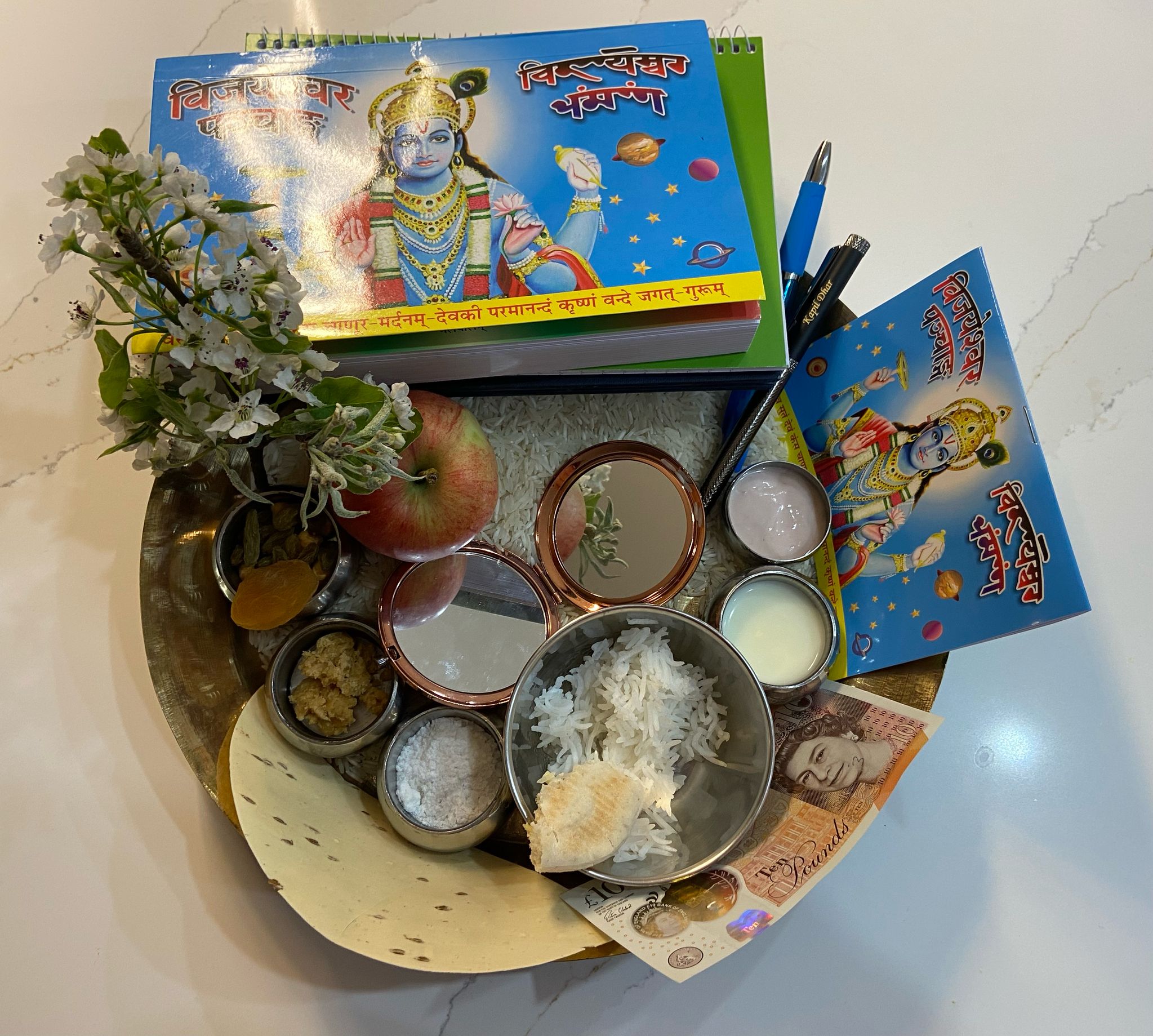
Traditionally, on the eve of Navreh the daughter‑in‑law of the house prepares the ‘Thaal’, which, among other things, contains uncooked rice, salt, sugar or nabad, walnuts (one for each member of the family), a morsel of cooked rice, yoghurt, milk, a mirror, a pen, nechipatir (the new calendar), Kral pach (portrait of the Goddess), seasonal flowers (traditionally almond blossom or daffodils), some vai (herb) or grass, and a silver coin.
These items on the Thaal represent abundance, progression, transformation, introspection, prosperity and herald the advent of good things to come. The Thaal is covered overnight and kept in the ‘Thokur kuth’ (prayer room) or ‘Tchoke’ (kitchen) and then viewed (Buth Wuchun) by every member of the family before they see anything else on the morning of Navreh. The rice on the Thaal is later served as ‘teher’ (yellow rice) with condiments, while the walnuts are dropped into a stream or river as an auspicious offering.
As always, there may be some variations for items placed on the Thaal but a general checklist includes the following:
Rice: It symbolises prosperity and abundance.
Yogurt, Milk: It represents purity, wisdom, and happiness.
Salt: It is a symbol of purity and preservation.
Coins: They represent wealth and prosperity.
Bread: It symbolises sustenance and nourishment.
Nabad: (sugar candy): represents sweetness in life.
A pen and a book: It symbolises knowledge, wisdom, and education.
A mirror: It symbolises self-reflection and introspection.
Walnut in odd numbers: Symbolise regeneration and stability.
New Janthari
Seasonal flowers
I wish you all a joyous new year, full of good health, prosperity and abundance of joys.
Navreh Poshte.







POST COMMENT