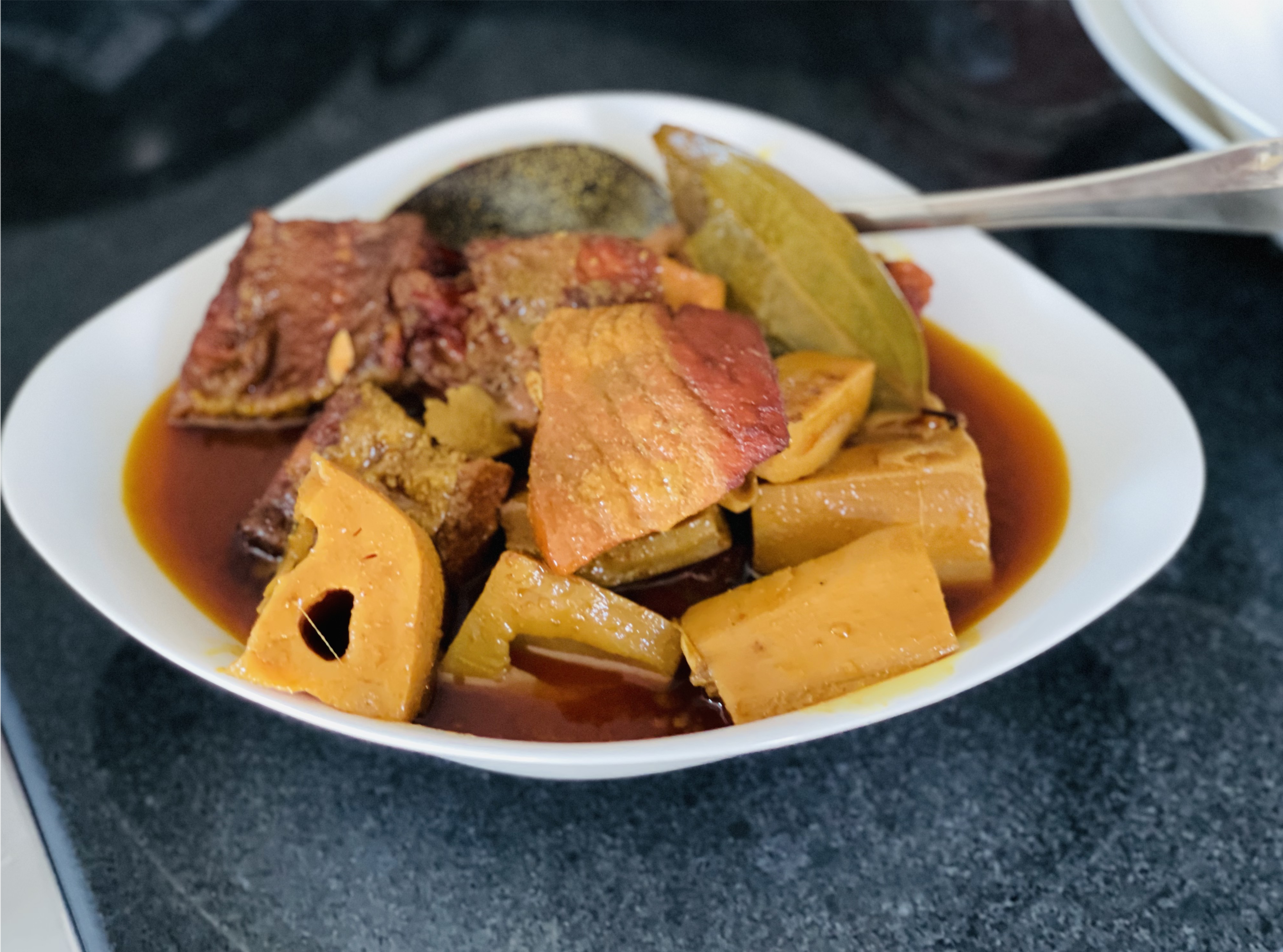
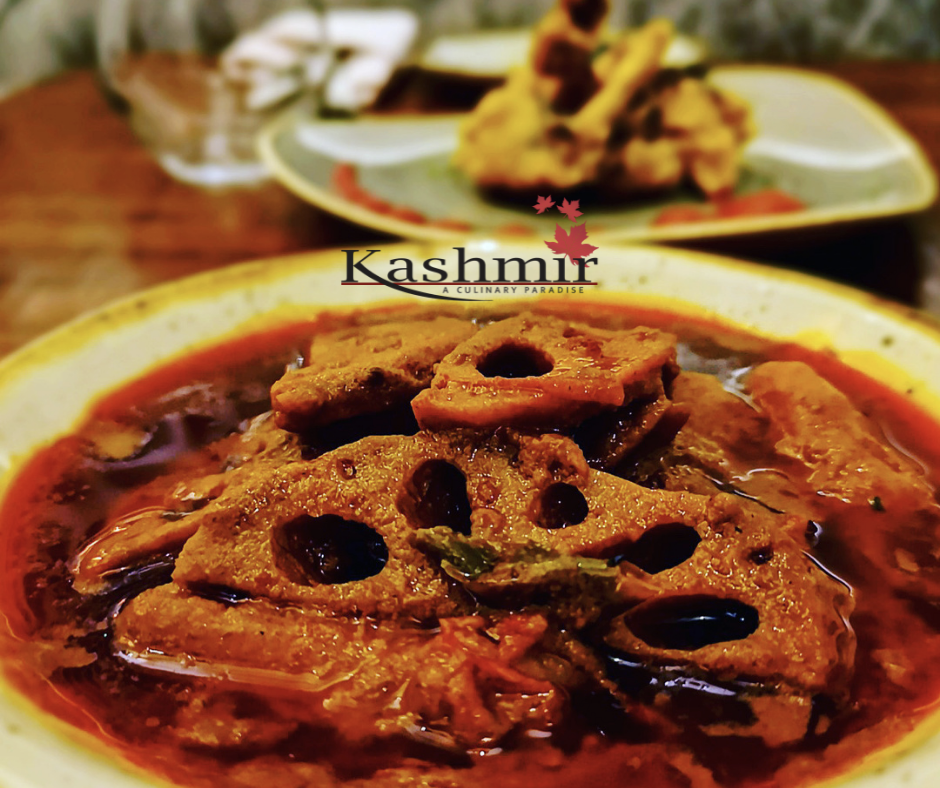
When the winter air races down from the mountains and the chill slips beneath the door in my Delhi home, all I want is a bowl of Roganjosh. It isn’t just food, it’s a memory of childhood winters in Kashmir, where the outside would freeze but the kitchen was always alive.
Roganjosh would arrive as both centre and backdrop of Sunday lunch. Each mouthful of Roganjosh tasted of my mother’s love and its aroma tugged at something deeper.
Kashmiri Simplicity: The Real Heart of Roganjosh
Roganjosh belongs to Kashmir, but every household keeps its secrets. Kashmiri Pandit version includes no garlic, onion or tomato. True magic, I learned, comes from the slow coaxing of mutton and the careful layering of spice; yogurt blended with a burst of Kashmiri chilli, then rounded by ginger and fennel only when the flavours have had time to deepen.
The colours are vivid, the aroma singular, but for us it wasn’t just about the senses. It was the ritual of stirring, the anticipation as the meat softened, the quiet pride when the oil bloomed crimson.
The Family Roganjosh Recipe
Ingredients
1 kg mutton (bone-in pieces from the shoulder or leg)
200g full-fat yogurt, whisked smooth
5 tbsp mustard oil
2 tbsp Kashmiri red chilli powder
1.5 tbsp fennel seed powder
1 tbsp dry ginger powder
1/4 tsp turmeric powder
1/2 tsp asafoetida (hing)
4-5 green cardamoms
2-3 black cardamoms
2-inch cinnamon stick
5-6 cloves
1-2 bay leaves
Salt to taste
Water as needed
Method
1. Warm the mustard oil until it smokes gently—this is how my mother’s kitchen always began; the aroma is a memory in itself.
2. Lower the heat and add the asafoetida.
3. Sear the mutton over high heat until lightly browned with cardamoms, cinnamon, cloves and bay leaves, coaxing out a fragrance that fills the house.
4. In a separate bowl, whisk the Kashmiri red chilli powder into the yogurt.
5. Add the yogurt-chilli mixture to the meat in batches, stirring well so it never splits. This slow addition, my mother said, is where patience becomes flavour.
6. Stir in the fennel powder, dry ginger powder, turmeric and salt once the gravy settles. Water just covers the meat; then it simmers for what feels like ages, transforming both meat and memory.
7. Simmer until the mutton is perfectly tender and the oil rises—a sign it’s ready, a sight I still find comforting.
A Taste of Home
We serve Roganjosh with steaming rice, but it can also be served with roti/paratha, a tradition generally known as Tschot Tsyun when you are invited for a quick bite. The first bite always brings silence; the second, stories. There’s nothing quite like that moment. Every time I cook it, I am home, no matter where I am.









Manisha Misri
Beautifully written Geeta!