


Haakh
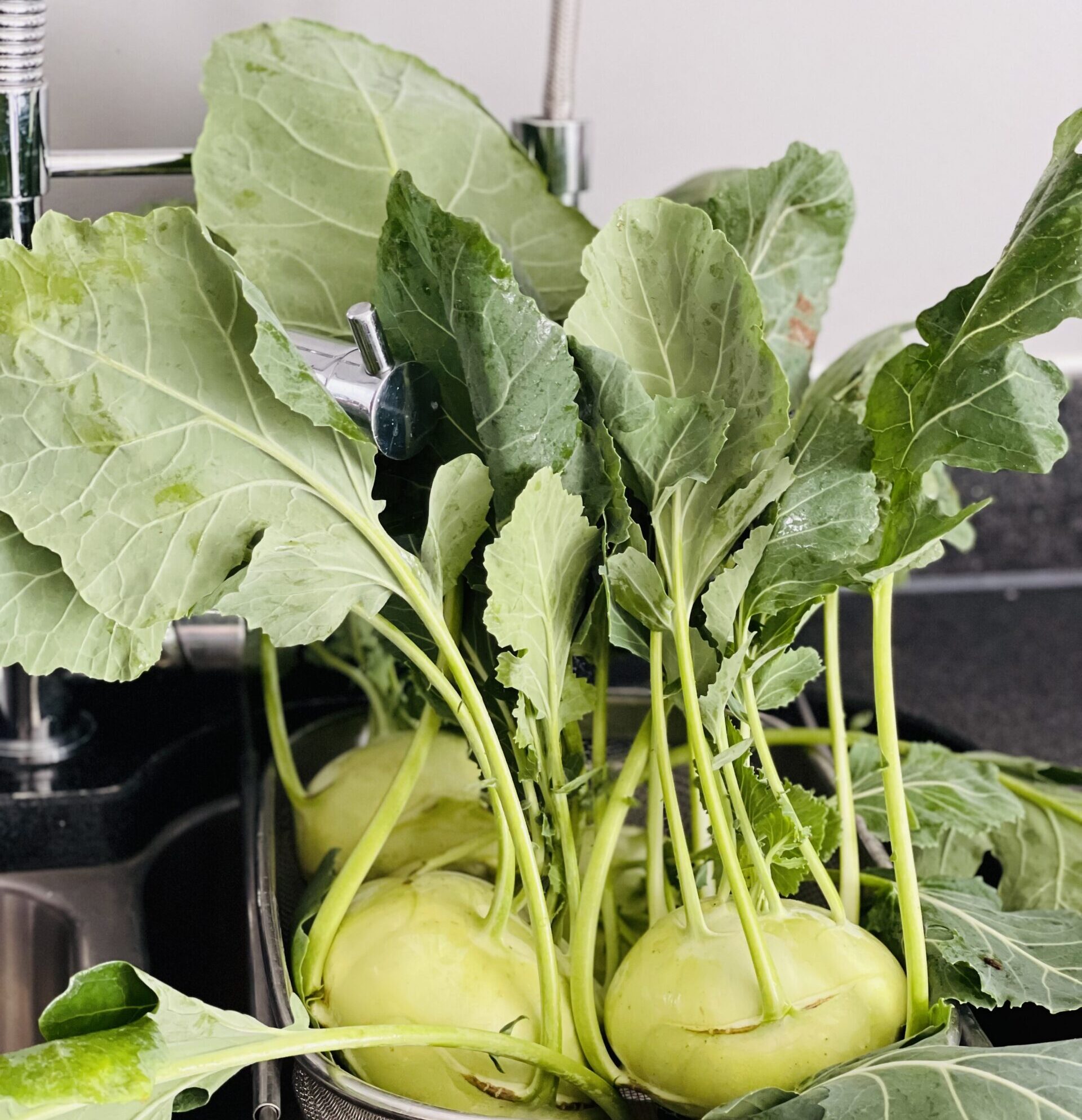
The dust track stretched out for miles before kissing the foot of the mountains looming over the horizon. In the past few years, Balji had often found himself on this road. The trees lining both sides of the road were familiar, yet intensely strange. For starters, they did not have cylindrical trunks. The base of each tree resembled a large, pale green turnip. And from the head of this turnip sprang tall, smooth stems dotted with fresh green leaves. From Balji’s vantage point, the trees looked like a row of endless tennis balls with shaggy green hairdos. A cold gust of wind forced Balji’s hands into his pockets. Clouds surrounded the sun and held it hostage. The light dimmed. Everything was bathed in a morose grey.
Balji passed a man walking a dog. The head of the man also resembled a pale green turnip with leaves bursting from the top. The dog’s head, too, was the same. Balji felt disoriented, but kept walking. The man and the dog recurred every fifty meters or so, like auxiliary characters of a low budget video game.
Balji blinked. When his eyelids slid up and the light flowed in, he was underwater. It took him a moment to grow accustomed to the new surroundings. Peering through the hazy, pale blue water, he realized he was surrounded by a school of pale green turnips. The leaves and stems, like the tentacles of a jellyfish, were pushing the water back and propelling the organisms forward. Balji swam towards one, but they all raced away startled. With the next blink, Balji found himself falling through space. Galaxies spun above and below him. Supernovas burst and black holes formed. And a pale green turnip, like a vegetable Sputnik, flew in front of him and disappeared into the infinite darkness.
Balji woke up with a start. He turned to his wife of 27 years and shook her.
‘I had the dream again,’ he said.
Girija, groggy-eyed and irritated, asked, ‘What dream?’
‘The dream about Monj Haakh.’
‘Uff...god knows how many times you and your Monj Haakh will spoil my sleep! I beg you… forget this godforsaken vegetable.’
Balji turned to the other side. Fragments of the dream came back to him in an absurd montage. He tried to put them away and sleep, but it was futile. The second hand of the egg-shaped Ajanta clock moved slowly, laboring over every centimeter.
Balji taught Physics and Biology to sixth-graders in Bharatiya Vidya Bhavan, a private school in Chandigarh. Back in the day, in Kashmir, being a teacher had been a respectable job. The term Master ji used to invoke reverence, and even a degree of fear. But these days, like everything else, education had become a business. There was no regard for teachers. Neither in the salary they received, nor in the status granted by society.
In Physics class, the topic of the day was Artificial satellites. The spherical ones, especially the ones from the Soviet era, reminded Balji of Monj Haakh. Mankind had conquered earth, water and space in the last 50 years. What it had not conquered was vegetables. Crops still depended on seasons, rainfall and geography. This was an urgent problem which required the undivided attention of the scientists of the world. But they seemed to be too preoccupied with diseases, climate change, god particles, and other inane scientific enquiries. Balji wanted them to focus solely on making Monj Haakh available throughout the year, in all geographies.
Mankind had conquered earth, water and space. What it had not conquered was vegetables.
By the time he reached home it was late afternoon. He kept his briefcase on the dining table and went into the bedroom to change. The brown half sleeved shirt was carefully placed on a hanger and kept in the cupboard. It would last another day. The dark brown trousers, spoiled by a lentil stain, were put away for washing. Balji stood in front of the dressing table in his undershirt. His yonya (sacred thread) crossed his chest diagonally like the sash of a highly decorated military officer. Balji slapped his slightly protruding stomach gently and playfully. Soon, you'll get some Monj Haakh soon, he told it.
‘Where’s my telephone diary?’ he asked Girija.
‘How should I know? Did you marry a slave who’ll keep everything in order for you?’ came the reply.
Balji sighed.
‘It’s in the third drawer. Under your socks. God knows why I married this man!’
Balji opened the drawer. The passport sized blue diary was there. He picked it up and leafed through the pages. Having found the number he was looking for, he walked up to the landline and dialed it.
‘Namaskar mahrah. How is everyone in the family? Yes, yes, all good here. Girija Ji is also well. Raju is in Pune. Third year engineering. Acha... I just wanted to know if anyone from Jammu is coming to Chandigarh in the next few days? Ok. No, no, nothing special. Just had a parcel which I wanted from Jammu. No problem. Hope everything else is fine. Acha mahrah, namaskar.’
Balji kept the receiver down disappointed. So no one could be requested to get some Haakh from Jammu. He thumbed through the diary randomly and suddenly stopped at the ‘S’ section. He stared at the last name — Shubhanji.
Should I? Balji thought.
Balji took a deep breath and dialed the number. In the narrow lanes of Talab Tillo, inside a small, dingy house, the shrill ringing of a phone shattered the peace and quiet of the neighbourhood.
A hoary voice answered it.
‘Hello..’ Balji's brother-in-law said.
‘Namaskar mahrah! How are you?’ Balji asked with forced enthusiasm.
‘Bas mahrah. Just living from day to day. How did you remember this nacheez today?’
‘Sir, what are you saying. It is I who am a small man. Khair, I am calling to invite you to Chandigarh.’
‘Is there some special occasion?’
‘Na marah. Just that it has been a while since we saw you. And since you saw your sister. She will be very happy if you visit us.’
‘Hmmm...I actually have to visit a client in Ambala next week. I can come to Chandigarh for a day after that.’
‘What good news! That will be great!’
‘Hmmmm…’
‘One last thing mahrah. Could you get some Monj Haakh when you come? It’s impossible to find it here.’
After a small pause Shubanji said, ‘Ok... I will see what I can do.’
Girija was not fooled. When Balji told her he had invited Shubanji, the knife cutting the cauliflower froze mid-air. Her eyebrows arched up in surprise — and then, as the truth settled, furious.
‘I have invited Shubanji to Chandigarh,’ Balji informed his wife.
The knife cutting the cauliflower froze mid-air. Girija’s eyebrows arched up in surprise.
‘You invited my brother?’
‘Yes. Why not?’
‘Because you hate my family.’
‘That’s nonsense.’
‘You hate us because we hail from a village. And you are from Srinagar.’
‘Ufff. God knows what you keep thinking about,’ Balji said.
‘When is he coming?’ Girija asked, softening a little bit.
‘Next week.’
‘I must prepare a saal for him. Will you get some mutton and chicken next week?’
Balji nodded.
Girija went to the kitchen to cook a disappointing meal of cauliflower in watery gravy and rice. When she was out of hearing range, Balji slapped his stomach and whispered to it, ‘Get ready for some yakhni and dum aloo,’ and lowering his voice conspiratorially added, ‘and some Monj Haakh.’
He whispered to his stomach — get ready for yakhni, dum aloo, and some Monj Haakh.
On the day of Shubanji’s arrival, Balji was on tenterhooks. Every ring of the bell propelled him from the takhtposh towards the outer gate. Most of these dashes, however, ended up in disappointment. He would open the door, breathless with excitement, only to find the maid standing there. On other occasions it was the milkman, the courier boy or the watchman. His brother-in-law was proving to be particularly elusive. Maybe he will not show up, maybe that’s his plan — to dash my hopes after raising them, Balji thought.
Finally, at around 5.30 pm, it was Shubanji who rang the bell. Balji went outside and received him with overly effusive greetings. While hugging Shubanji with all his might, Balji’s eyes desperately searched the bags for signs of Monj Haakh. But there were none. Before he could question his brother-in-law, Girija came out and hugged her brother. ‘Balay lagay. Waray chuka?’
Balji stood there staring at the brown VIP briefcase as the brother and sister exchanged pleasantries. It must be in there, Balji thought. Shubanji didn’t really care about him. So why would he take extra effort to preserve the Haakh’s freshness by carrying it in a separate airy package?
Balji opened the door for them to enter the house.
‘I will just keep your luggage in the guest room. Then we can all have some sheer chai,’ Balji said.
Shubanji nodded.
Balji carried the battered briefcase into the guest room and opened it. He carefully sifted through the immaculately pressed shirts, trousers and Rupa underwear, but there was no sign of Monj Haakh. On further intense digging, Balji discovered digestive tablets, a comb, medicine for diabetes, a jantri, a Happy New Year diary, and an inexpensive looking pen, but still no Haakh. Distraught, Balji closed the bag and joined his wife and brother-in-law for tea. Shubanji took a large, loud gulp and sighed with relief.
‘One sip and all my tiredness has vanished. Nobody makes sheer chai like our Girija,’ he said beaming at his sister.
‘The tea is good,’ Balji hesitantly agreed.
‘But wait till you see what’s for dinner,’ Girija smiled and said.
‘I have made mutton yakhni, nadur yakhni, chicken, dum aloo, czaman…’
‘We would have also made Monj Haakh,’ Balji butted in, ‘But you know how difficult it is to get here…’
Shubanji kept the shockingly white cup of tea down, wiped his moustache with a handkerchief, and said, ‘You are wondering where the haakh is?’
Girija looked at them confused. Balji’s cheeks flushed as he tried to utter an explanation, ‘No, no. I was just saying that…’
Shubanji held his hand up and stopped Balji mid-sentence.
‘No need to be formal. You requested me to bring some haakh when you called me…’ It suddenly dawned upon Girija why her husband had invited her brother. She stared at Balji furiously.
‘But I do not want to become your courier boy every month, so I got you this…’ Shubanji pulled out a small plastic packet from his shirt pocket. In it were a bunch of seeds. ‘Only for the sake of my sister,’ Shubanji added wagging a finger at Balji.
The vegetable market of Sector 38 was a sprawling affair. Hundreds of farmers, shaking from head to toe in their rickety tractors, arrived early in the morning from the hinterlands of Punjab. And by evening, they transformed the empty plot of land into a bustling marketplace. Tiny stalls, overflowing with fresh produce, were bathed in the phosphorescent glow of kerosene lamps. Fairy lights twinkled. Moongfali wallahs, chaat wallahs, toy sellers and popcorn vendors gave the market a fair’s appearance. Hordes of people, jute bags swaying in their hands, walked through the claustrophobic lanes. Aunties in Salwar Kameez and sneakers bargained like seasoned pros. Middle aged uncles, with small paunches, followed their wives. In subzi mandis men were content to play the second fiddle. For a brief moment patriarchy took a backseat. Through the air rang sharp and loud bargaining calls of the subzi wallahs.
‘Tees rupya mein 2 kilo! Tees rupye mein 2 kilo!’
Balji walked past the vendors, observing not the vegetables, but the men. He needed to find one he could depend on. An honest man who would deliver the results he wanted. At the end of the row, Balji found an old Sikh farmer sitting behind a mound of bright red tomatoes. He was on his haunches, calmly staring into space.
‘Sat Sri Akal Singh Sahab,’ Balji said.
‘Sat Sri Akal Ji. Dasso, how can I be of service to you?’
Balji held out the packet of seeds and said, ‘I want to grow this vegetable.’
‘Which vegetable is this?’
‘Monj Haakh. It’s a Kashmiri subzi. Grows mostly in Jammu and Kashmir…’
‘Veer ji. I don’t know how much help I will be...I don’t know this vegetable..’
‘Singh Saab, at least you have more experience than me! Just set up a small patch of this in my garden…please...’
The farmer retreated into silence.
After a while he said, ‘I can give it a shot. But there is no guarantee of success…’
‘I understand that. Just try once…that’s all’
Balji’s house had two small patches which could be cultivated. In the front was a garden, roughly the size of half a badminton court. In the back was a rectangular patch barely the size of a grave. Both were already home to a few plants. The Sikh farmer suggested planting the seeds out front. You get more sun there, and leafy plants need ample sunlight, water and air, he said.
The farmer carefully measured the distance between the seeds, planting them in such a way that there would be enough room for the plants, both above the ground and below. Having done the planting, he gave Balji two packets of manure. And further instructed him to lightly turn over the earth once the plants broke out.
Over the next two months or so Balji tended to the seeds as if they were his children. Every morning he meticulously watered the plants. And while watering he sang an old Kashmiri folk song:
ey haakh cz kait aakh
Ca koond ghar czaak
Cz Am Tak vaary aakh
Na cz noon na cz til na cz paakh
Oh! Haakh where have you come from?
And whose house are you going to?
Have you come from Am Tak's garden?
Without salt, without oil, and without cooking
Oh! Haakh where have you come from?
The devotion soon bore fruit. The first sapling broke out in October and Balji was overjoyed. Buoyed by the success, he started spending more time in the garden. Adding manure. Turning over the soil. Singing songs. And praying for a healthy crop. Girja grumbled about the lack of attention to her and the household, but was also relieved that the mania about ‘Monj Haakh’ had found an outlet.
Calamity struck in November. The saplings, green and fresh and full of promise started to wither. Balji was flummoxed. He went to the school library and devoured books on Botany. But no answers were forthcoming. Day by day, his patch of haakh drew closer to death. The young leaves and stems sagged as if their shoulders bore the weight of the whole universe. The fresh green of the leaves turned to the colour of rust.
The fresh green of the leaves turned to the colour of rust.
Frustrated and out of answers, Balji went to look for the old Sikh farmer in the subzi mandi. This time, the farmer sat behind a mound of plump brinjals.
‘Sat Sri Akal Singh Sahab..’
‘Sat Sri Akal ji. Sab changa?’
‘Not really ji. The Haakh you had planted started off well. But now it is dying…I don’t know where it went wrong. Can you come take a look at it?’
‘Ji bilkul. I will come in the evening after mandi is over..’
Just after the sun had bowed out, the Sikh farmer turned up at Balji’s house. He sat on his haunches and examined the plants. Balji held the torch. The farmer inserted his index finger into the moist earth and scooped up some soil. He repeated the same procedure in a few places. Then he sighed.
‘This soil is not fertile enough. I am sorry I did not inspect it thoroughly enough last time.’
‘But other plants are growing…’
‘That’s because they are hardy plants. Tulsi, Aloe Vera, Cacti and weeds...they’ll grow in any kind of soil...this soil has too much insecticide and dawai in it...’
‘So what can I do now?’
‘This crop you cannot save. I suggest you get some fertile soil and then sow again. Waahe Guru will definitely bless your plants…’
Balji stood in the garden for a long time after the farmer left. Hey Shiv Shambhu kripa kar, he intoned before returning inside to a joyless dinner of cabbage, lentils and rice.
The only ray of light that gloomy winter was the packet of seeds. Balji had used half of it in the first go. The surviving half was now be thrown like dice onto the gambling table of his garden. But the risks this time would be calculated.
After a lot of thinking, he had come up with an idea. The Sikh farmer had mentioned good, fertile soil. Balji knew exactly where he would find such soil. Soil which would be perfect to grow ‘Monj haakh’. Soil which had, in fact, grown ‘Monj haakh’ for centuries. He would get the soil from Kashmir.
When Balji told Girija about his plan, she slammed her palm against her forehead and walked away.
Balji took out his passport sized diary and looked for the number of Bansi Lal. Bansi Lal was one of the few Kashmiri Pandits who still lived in the valley. Balji dialed the number and waited. A gruff voice, moulded by smoking 20 Capstans a day for 30 years, answered. Balji explained the idea to his old friend. Now, any other man would have ridiculed this scheme, but not Bansi Lal. He, more than anyone else, understood the longing for one’s land. That’s why despite the maddening hardships of living in the valley, he stayed there.
He understood the longing for one's land. That's why, despite the maddening hardships, he stayed.
‘I will send you your soil Balji. Don't you worry. Bhagwaan kari bajah,’ Bansi Lal told him.
The next morning Bansi Lal asked his son to start digging in their small garden. After a few hours of back breaking work, a mound of soil was ready to be transported to Chandigarh. Bansi Lal filled a sturdy cloth bag with the soil. The bag was then placed in a leak proof container. The package would make the 700 odd kilometer journey from Srinagar to Chandigarh in the back of a goods truck. It would snake through the same roads through which lakhs of Kashmiri Pandits had escaped death and destruction in the late 1980s.
Back in Chandigarh, while droning on about Newton’s laws of motion, Balji dreamed about the piece of motherland making its way to him. He waited impatiently for the phone call. Pacing from one wall of the teacher’s room to the other. He checked notebooks without bothering to check the veracity of answers. When his fellow teachers spoke to him, he stared past them, into the distance. At home he refused to eat lunch. He was tired of eating beans and okra and potatoes. Girija, frustrated, and at her wit’s end, taunted him.
‘So now you are getting soil from Kashmir? What’s next? You’ll also uproot your old home in Indra Nagar and get it here? While you are at it, why don’t you get mata ksheer bhawani here for a day, I would like a darshan?’ she scoffed.
Finally, in the evening, Balji’s phone rang.
Cars, bikes and autos merged and emerged seamlessly at the Tribune Chowk roundabout. Balji stood at the junction nearby where rickshaw pullers and auto drivers were resting. The silence of the evening was only broken by the exhaust pipe booms of Bullets being ridden by sturdy Sikh boys. Balji stared down the long asphalt road and spotted a truck heading towards the chowk. His heart raced. As the truck came nearer the number plate became clearer. The prefix was JK. Balji gave out a little yelp. When the driver disembarked from the truck Balji pounced on him. Hugs, kisses on the forehead, and blessings followed.
One of the amused helpers extracted the bag of soil from the cargo and handed it to Balji. Overjoyed, Balji hailed an auto driver and headed home, clutching the bag of soil to his chest.
When he reached home, Balji did not even bother to go inside. He picked up the tiny shovel lying in the garden and dug out the patch which housed the first set of seeds. He lifted the cloth bag and poured the soil in the hollow. As the soil tumbled towards the earth, the fragrance of the valley enveloped him. He bent down, picked up a fistful of soil and inhaled deeply. He took out the seeds from his pocket and planted them lovingly and carefully. Measuring distances just like the Sikh farmer had done. He stood there for a long time after the seeds had been planted.
The next day Balji did not go to school. He dragged a white, plastic Neelkamal chair and sat in the garden. He got up in between to water the plant bed and to add some manure. Then he sat down again. Girija came outside and called him for lunch but he refused to abandon his post. ‘Have you lost your mind? Will you keep sitting there the whole day? I curse the day I first saw you!’ she burst out in exasperation.
Balji ignored her. In fact, he wasn’t aware of her rant. His eyes had a glazed look. Of a man slowly retreating into himself.
Girija cursed her luck and went inside. The next day, and the whole week after that, Balji did not budge from the chair. The news spread like a wild rumour among the neighbourhood.
‘He hasn’t left the garden in a week..’
‘Surely, he’s going mad.’
‘He was always a bit eccentric…’
‘Poor Girija Ji, god knows how she puts up with him..’
Neighbours, curious and meddlesome, came up to him and chatted. Trying to gauge what was wrong with him. But he spoke amiably and in good humour. Kids circled around him and giggled. But Balji did not move. In place of his impeccably shaved cheeks a beard took root. His clothes became dirty and he began to smell of sweat and stagnation.
A letter arrived from the school seeking an explanation for his continued absence. Balji smiled and handed it to his wife without uttering a word about it. Girija, exhausted and confounded, called her brother for advice.
‘What do I do with him? I am really worried. He hasn’t stepped into the house since a week. I fear he is losing his mind. Should I call a doctor?’
‘Is he eating and drinking?’
‘He is. Till now. He even speaks normally. But just says he won’t come inside till the Haakh has grown completely.’
‘Then don’t worry too much. It is just an episode which will pass. Calling a doctor will cause an unnecessary scandal.’
Girija reluctantly agreed with him.
And so it went on for week after week. Soon the novelty wore off. Balji became a part of the neighbour’s landscape, like those crooked trees nobody gives a second thought to. But a local newspaper, on a day when news was especially elusive decided that the matter was interesting enough for a report. When the cub reporter asked Balji why he had been sitting in his garden for weeks now, Balji smiled and replied, ‘Haakh chu yin wol (The Haakh is about to come),’ he said pointing to the tiny saplings breaking out from the soil. The reporter went back to the paper with his report, and the editor in all her wisdom decided the story simply wasn’t worth running.
Girija prayed daily to Lord Shiva, not for her husband’s sanity, but for the Haakh’s growth. She also took up the gardening duties. Watering the plants. Adding manure to the soil. Gently digging the soil to let it breathe. All this while Balji sat on the plastic chair with a beatific smile on his face. Soon, to everyone’s surprise the Haakh prospered. Juicy, green leaves sprouted from healthy stems.
Two months after it had been planted, on a bright sunny afternoon, Girija came out to the garden and said, ‘Lunch is ready.’
‘What have you made?’ Balji asked.
‘Haakh,’ Girija replied.
Balji smiled, slapped his stomach, and got up from the plastic chair.
‘Haakh’ was first published in a magazine called Aaina nagar. Published on ISBUND with author’s permission.

karan Mujoo
Karan Mujoo was born in Srinagar in 1986. His work has appeared in fiftytwo.in, Tribune, Outlook, Arré, Firstpost and Aainanagar. X and Instagram: @mujoo_karan Email: karanmujoo5521@gmail.com
Related Posts

Where The Pigeon Still Waits…
In the winding lanes of Habba Kadal, memory weaves its gentle spell. E
The Orchards We Carry
There is something quietly profound about the way certain foods anchor
POST COMMENT