


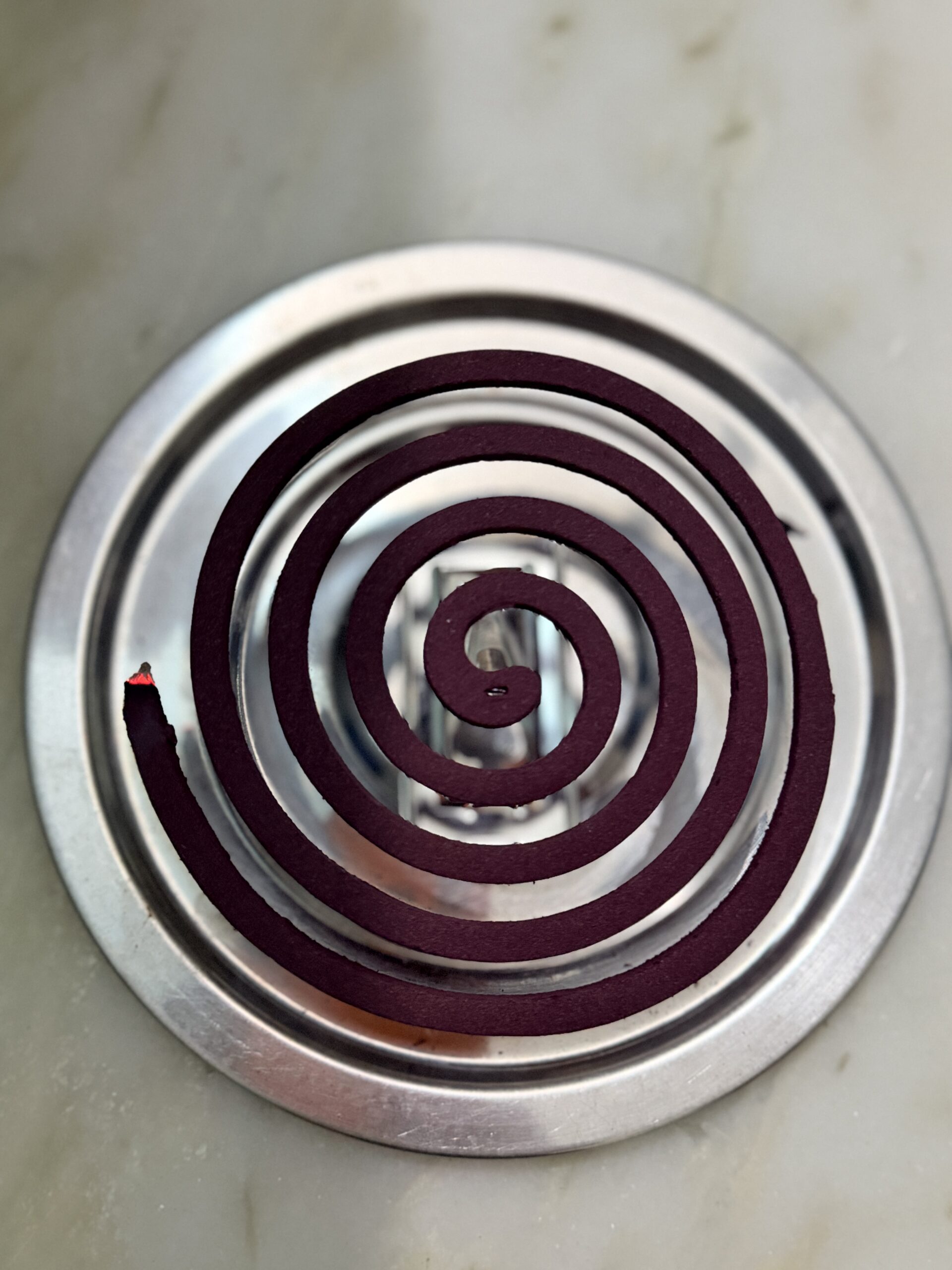
What The Coil Leaves Behind
A mosquito coil burning to ash on a monsoon night in Jammu and three photographs of a house in Kashmir taken decades apart, trace how quickly a home vanishes.
It had been raining since we landed in Jammu. The greens had come up thick and sudden. Although the roads had turned to mud and potholes deep enough to lose a wheel in, the rain made the heat bearable. What it did not do was keep away the mosquitoes, which arrived from some crevice I hadn’t known existed. I tried the Odomos first, out of habit, a soft white tube now, nothing like the hard yellow sticky paste from childhood followed by the sprays and then the fabric roll-ons people rubbed around the sleeves. None of it did anything. In the end I did what my mother had always done: I lit the tortoise green coil, though it came in brick red now and from a different brand too. I watched the smoke curl towards the ceiling fan.
In the morning there was nothing left of it but a curved grey line of ash, the shape still visible in outline while the coil itself was gone. I sat looking at it longer than I meant to, thinking of the photographs my nephew had shared with me a few days earlier.
Three Photographs
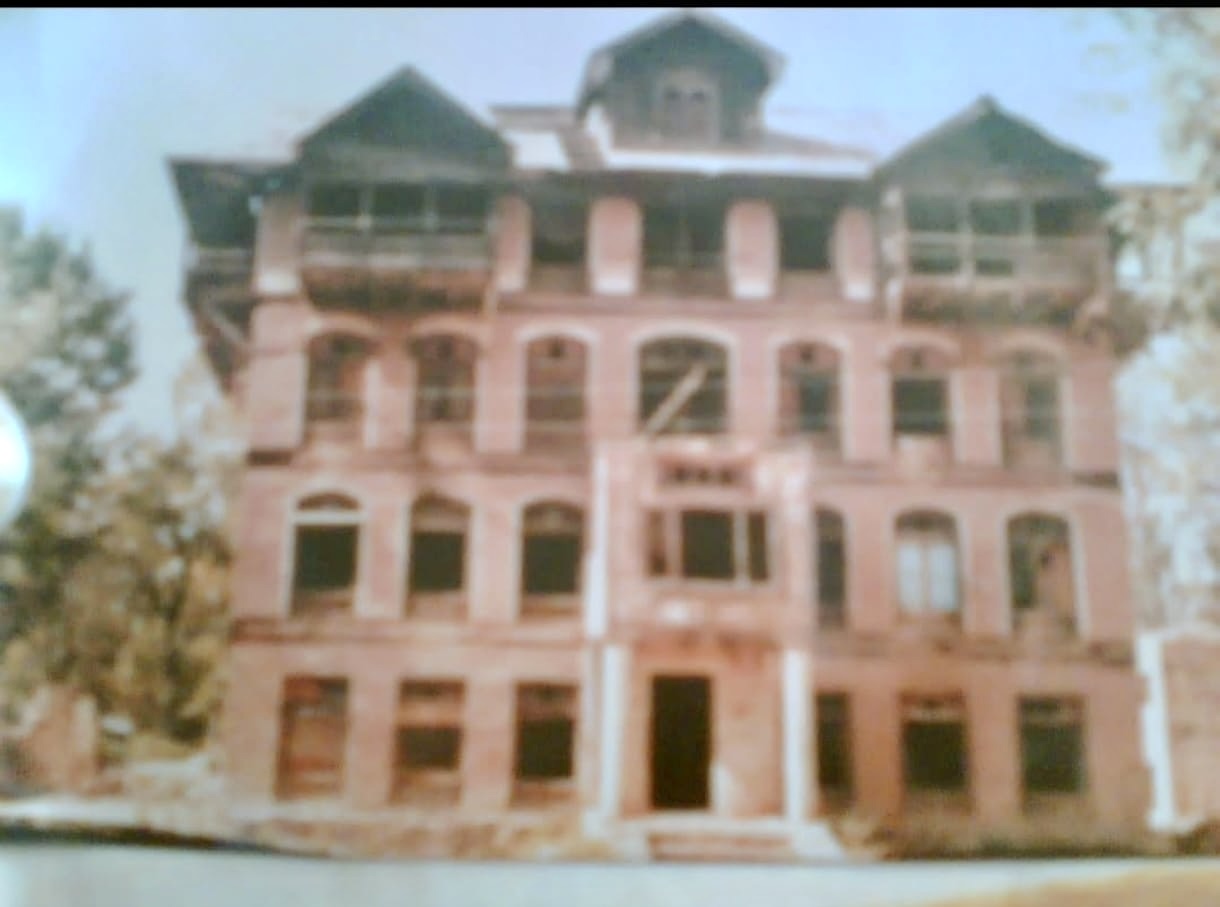
There were three of them and I want to describe them not only as a family matter but as something closer to a survey, a record taken at three widely spaced intervals, of what a single plot of land in the Kashmir Valley has and has not been allowed to keep. The first, taken by his grandfather in 1974 with him behind the camera on the lawns of his newly built house, with the carved wooden latticework in front of him announcing the confidence and happiness that assumes a future will arrive to match it. This was a house built, one has to assume, on the premise that it would still be standing when the grandchildren came of age.
That premise did not survive the decade. In 1990, along with the overwhelming majority of Kashmiri Pandit families, his grandparents left the Valley as part of a displacement whose exact numbers are still argued over, but whose basic shape is not: a community that had lived there for centuries departed within a few frightened months, most of them believing the departure was temporary. Nobody packs a house for a permanent absence. They pack it, at most, for a long one. It is that assumption, more than anything, that makes the photographs which follow so hard to look at.
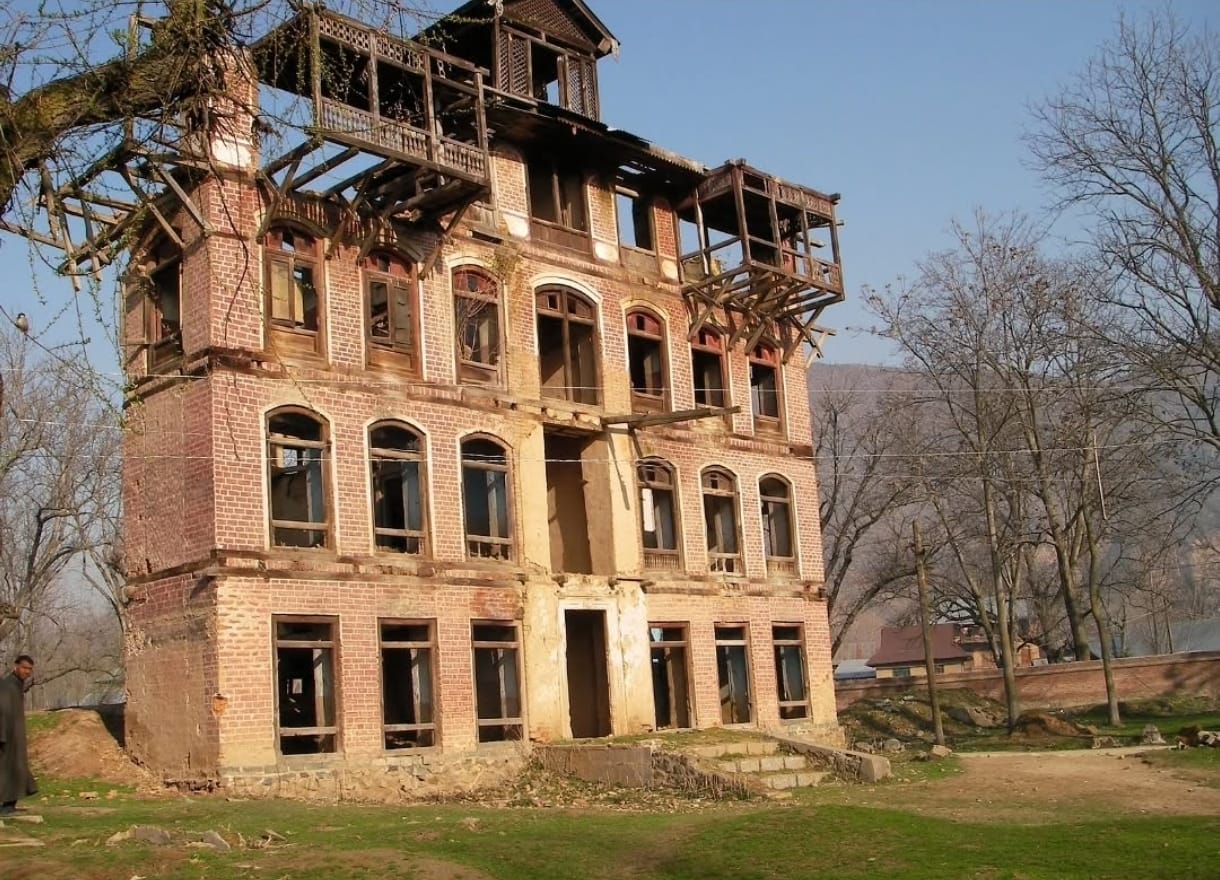
The second, from fifteen years ago, shows the house stripped of everything that could be carried off, the latticework, the doors, the window frames, the lawn gone to weed. This is not quite the damage of war. It is slower than that, more bureaucratic: a house left long enough stops being a home in the eyes of those still living around it and becomes, instead, a resource.
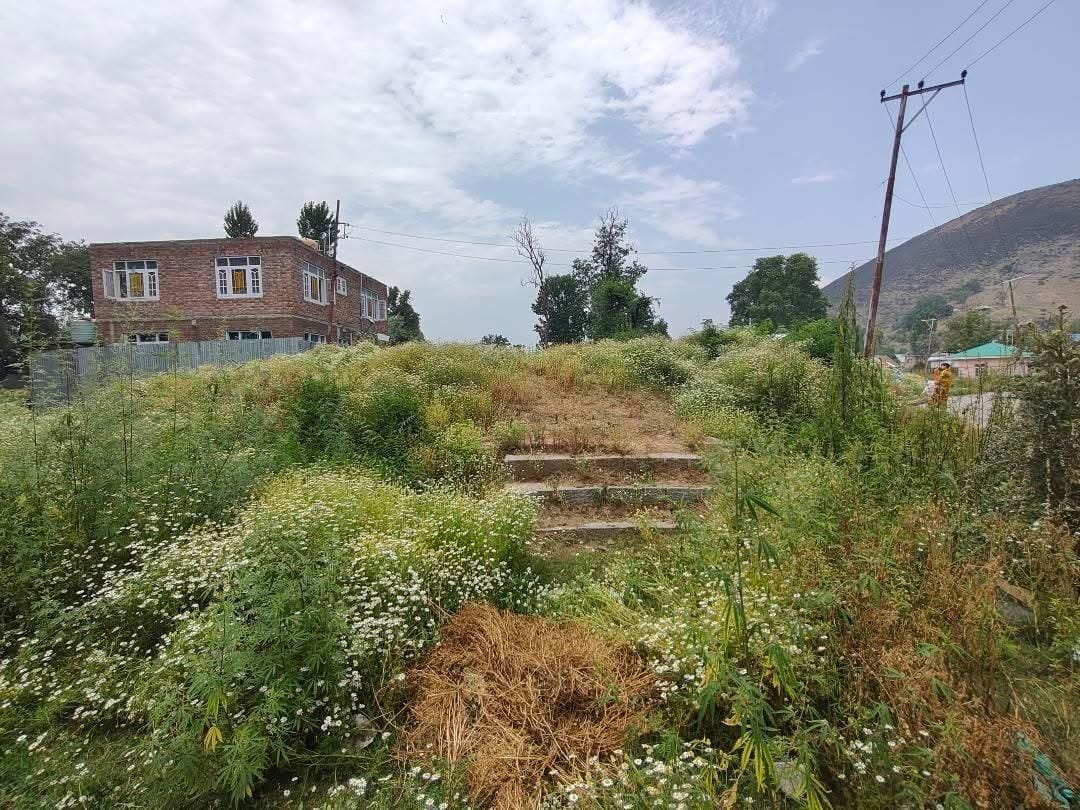
The third is from this year. There is no house. There are only steps leading up to a floor no longer there and around them the boundary of the plot has been quietly redrawn by the neighbouring properties, absorbed a few feet at a time until the original lines exist only in the photographs and the deed papers themselves.
My own grandmother's house went the same way, only faster. My cousin told me, when I called that evening, that it had burned sometime in the years just after we left. The land had since been folded into the plots on either side, which had themselves stood empty since 1990 and were only recently rebuilt, extended, absorbed into the ordinary business of people going on with their lives. He said this plainly, without much weight in his voice, the way you describe something you have already made your peace with, or have simply stopped expecting anyone else to be surprised by.
What strikes me, turning this over, is how little of the erasure required intention. No one needed to conspire to remove the Pandits from the Valley’s memory. Two or three generations left alone would do it on their own, provided no one troubled to keep the record open, a name not repeated, a house not pointed out to a child on a walk. This is not a story that requires villains at every stage. It requires only time and the ordinary human instinct to make use of what has been left unclaimed.
The Cable Car
We went to see the cable car in Jammu the next afternoon. There was no one else waiting; the rains were still making their way down. The operator must have caught a few words of Kashmiri beneath the broken Hindi my sister and I normally used, the kind that gives away a childhood spent somewhere else. He asked where we were from. "Delhi," I told him, as it now comes naturally when strangers ask us about our origin. He looked briefly uncertain, the way you look when a fact you’d already filed away turns out not to match what you’ve just heard. "I thought you were from Kashmir," he said.
"We are," I told him, firmer than how I had said Delhi a few moments ago. He had no obvious place to put that and neither of us said anything further. The cabin doors closed and we went up over the dense forest by the Tawi River in silence, the mist sitting low over the hills the way it had every day since we’d landed.
I keep returning to the ash on the plate the next morning, how completely a shape can hold itself together right up until the moment it doesn’t. The coil burns from the outside in, in a long unbroken spiral and what remains is for a moment still recognisable as what it was. Then you touch it and it isn't. I think this is also more or less an accurate description of what happens to a plot of land, or a community’s presence in a place, once the people who could have kept pointing at it, this was ours, this is where the lawn was, this is where the latticework used to catch the light in the evening, are no longer there to do the pointing. The steps remain a while longer than the rest.
Then, eventually, even those get folded into whatever comes next and a cable car operator, hearing a stray word of a language he didn’t expect, is left mildly confused for a moment before the doors close and the ordinary business of the day resumes.

Sheetal Raina
Dr. Sheetal Raina is the founder and editor of ISBUND, an immersive platform dedicated to preserving and celebrating Kashmiri culture. Deeply connected to the heritage and traditions of Kashmir, she brings a distinctive voice to cultural discourse - blending academic insight with heartfelt commitment to her roots.
Related Posts
Islands
Standing on a bridge that leads nowhere, a returning visitor regards t
The Accomplice
A wedding, a borrowed bicycle ride, ten rupees spent on gol gappas, an
Tulmul
For twenty years, my parents have made a pilgrimage to Tulmul, a small

Stop Scrolling: What 140 Characters Did to the Way We Think
You probably won't finish this, and that's precisely the problem. We'v
The Weight Of Gold
In Kashmir’s quiet valleys, Mohan Lal built a life anchored in money
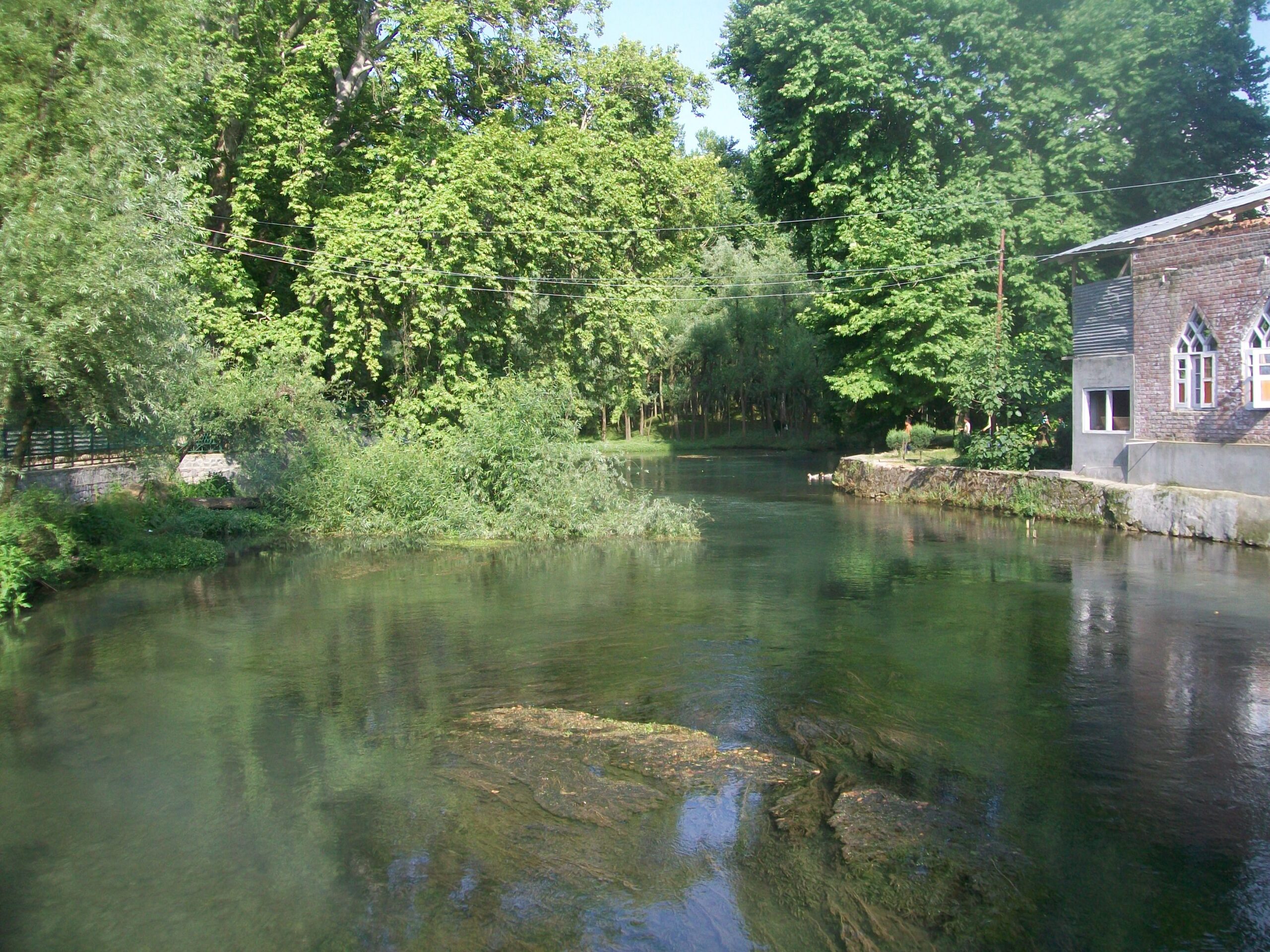
Panzath Spring, Village Panzath
Panzath Nag, a luminous spring in South Kashmir, blends natural wonder
POST COMMENT