



Spiced Memories, Shared Dreams: Kashmiri Pandits and the Art of Belonging
Somewhere in a small apartment in Delhi, Kishni smooths the creases on her son’s school uniform. The family photographs on the wall show a different world: snowy rooftops, kong (saffron) fields, Bobji in a woollen pheran reading a book by lantern. The Valley is far away now, but the lessons of home are woven into every day, every hope, every sacrifice.
For Kashmiri Pandits, exile is not only a story of loss. It is a story of holding on, sometimes fiercely, sometimes quietly to the things that matter most. For many, education is at the heart of that inheritance. It is the bridge between a vanished homeland and the uncertain promise of new beginnings.
A Tradition of Learning
The word “Pandit” itself speaks of scholarship and respect for knowledge. In the Valley, education was not a luxury but a legacy, passed down through generations. Even in the most difficult times, families found ways to send their children to school. Books were treasured, stories shared and debates encouraged around batte chaddar (equivalent of a table cloth in kashmir pandit household).
After the exodus, this commitment to learning became a lifeline. In crowded refugee camps and unfamiliar cities, parents reminded their children that education was the one thing no one could take away. This was not just about survival. It was about dignity and the hope of returning, if not to the Valley, then at least to a life of meaning and contribution.
Professional Paths: Medicine, Engineering and Beyond
The emphasis on education shaped the professional choices of many Kashmiri Pandits. Medicine and engineering became more than careers; they were symbols of stability, respect and the ability to serve. These fields offered a way to rebuild lives and support families scattered across India and the world.
But the story of achievement is not limited to traditional professions. Across continents, Kashmiri Pandits have left their mark in diplomacy, finance and even sports. Vikram Misri, who grew up in Srinagar, recently became a household name within the community. As India and Pakistan edged dangerously close to war, it was Misri, now India’s Foreign Secretary who stood before the nation and the world, chairing tense press briefings and outlining India’s response with clarity and resolve. Living rooms from Jammu to Toronto tuned in as he spoke of Operation Sindoor, ceasefire negotiations and the nation’s stance in the face of terror. For many Kashmiri Pandits, seeing one of their own at the helm during such a critical moment was more than a point of pride. It was a balm for old wounds, a reminder that even in exile, their voices and values could shape history.
Each story is different, but the thread is the same. Every accomplishment carries the weight of expectations, the pride of a community and the quiet ache of what was left behind.

Between Worlds: The Challenge of Identity
But what does it mean to succeed so far from home?
For many, the answer is complicated. The pressure to achieve can be overwhelming, especially when it is tied to the hopes of an entire family or community. There is pride in accomplishment, but also a longing for the familiar; the language, the festivals, the food, the songs.
Children born in the diaspora often grow up speaking English or Hindi, learning about the Valley from stories and photographs. Parents try to teach them Kashmiri, to celebrate festivals like Herath or Navreh, to explain why certain rituals matter. Sometimes the traditions take root; sometimes they fade, replaced by new customs and identities.
Yet, there is something about the taste of home that endures. Across continents and cities, Kashmiri Pandit families gather to cook the same dishes their ancestors once made; rogan josh, dum aloo, nadru yakhni, and the kehwa. The aroma of yange (hing/asafoetida) and kong (saffron) fills kitchens and for a moment, the Valley feels close again. Sharing a meal becomes an act of remembrance and resistance, a way to pass on not just recipes but memories.
The mere mention of Kashmir can stir a storm of emotions. Sometimes, it is a sharp sense of loss, of a place, a community, a way of life that seems forever out of reach. Other times, it is pride, pride in resilience, in achievements, in the ability to keep the culture alive against all odds. After all, what is home but a feeling? It is the warmth of a shared meal, the laughter during a festival, the comfort of a familiar story told in a mother tongue.
There is no single way to balance heritage and modernity. Some find comfort in community gatherings, cultural associations, or online forums. Others carve out their own paths, blending the old and the new in ways that feel authentic. What remains is a sense of responsibility to remember, to honour, to keep the story alive.
A Quiet Resilience
In the end, the Kashmiri Pandit diaspora is defined not just by what it has lost, but by what it has built. The pursuit of education and professional excellence is not only about personal success. It is an act of remembrance, a way of saying:
We are still here, we still matter and our story is not over.
Perhaps that is the greatest lesson of all. Heritage is not only about rituals or language. It is about values, curiosity, perseverance, compassion, that can survive even the harshest exile. And in every classroom, every hospital, every cricket field, every kitchen where the old recipes are kept alive, the children and grandchildren of the Valley carry those values forward, quietly shaping the world in ways both seen and unseen.
If you listen closely, you can still hear the echo of the Valley in their voices. Not in the words themselves, but in the questions they ask, the dreams they chase and the lives they choose to build, wherever they may be. Home, after all, is not just a place. It is a feeling carried in the heart, nourished by memory and kept alive in every act of remembrance.

Sheetal Raina
Dr. Sheetal Raina is the founder and editor of ISBUND, an immersive platform dedicated to preserving and celebrating Kashmiri culture. Deeply connected to the heritage and traditions of Kashmir, she brings a distinctive voice to cultural discourse - blending academic insight with heartfelt commitment to her roots.
Related Posts

How Small Habits Shape a Healthier Mind
Small, daily choices, not dramatic overhauls hold the key to a healthi
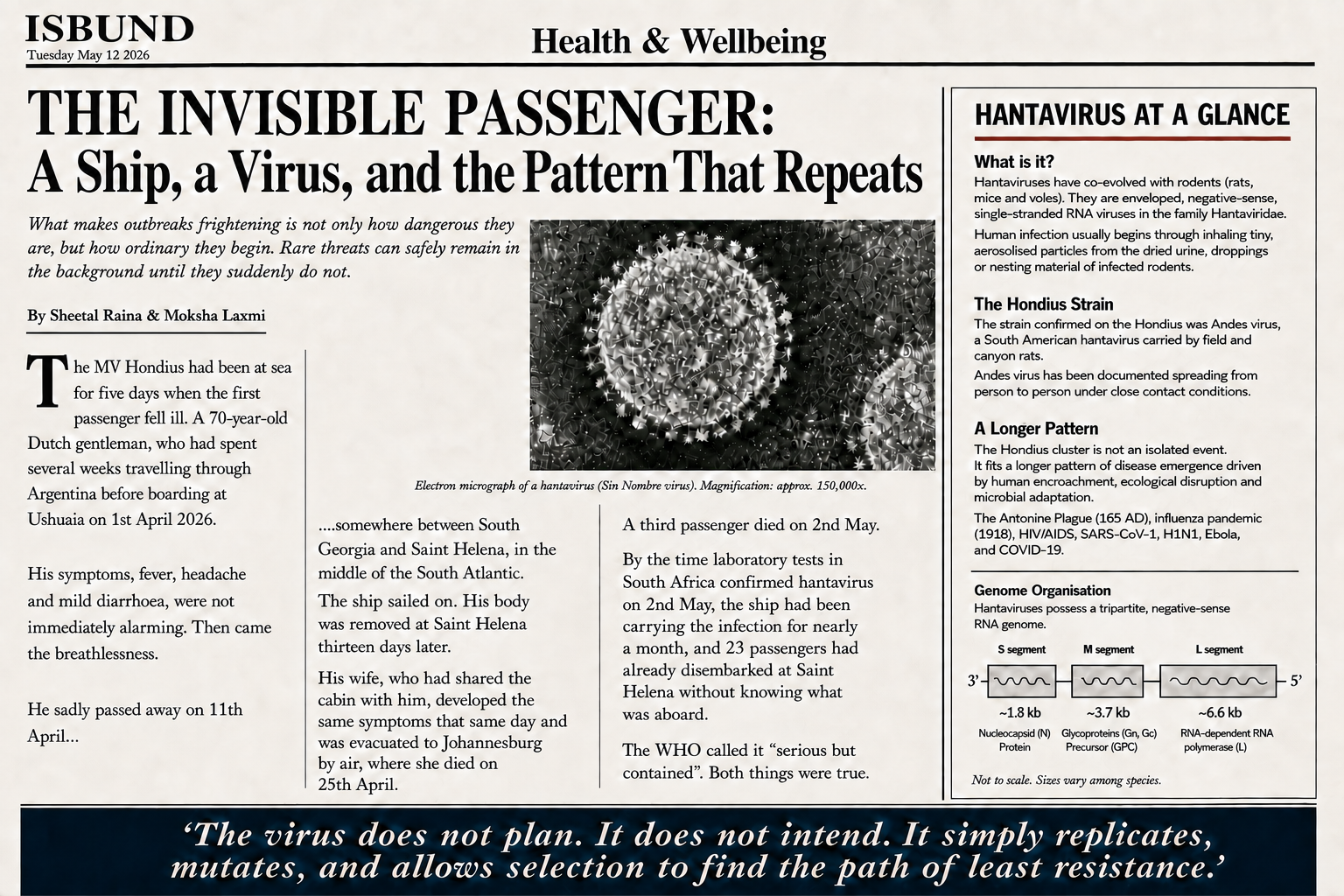
The Invisible Passenger
The April 2026 voyage of the MV Hondius turned tragic when passengers

The Weight of a Post: Reflections from the Guggenheim
In The Weight of a Post, Sheetal Raina invites readers into the contem

Strength for the Next Chapter
Navigating perimenopause often brings unexpected changes in body and m

Making Room for Absence: How We Get On, Somehow
Grief announces itself quietly, showing up in empty chairs and message

Rajma Gojj, Baramulla, 1988
For most North Indian families, rajma chawal sits at the very top of t
POST COMMENT