Understanding Evolution of Consciousness Through Yoga and Kailash Temple
A yoga enthusiast's International Yoga Day reflection maps the seven chakras onto the seven-layered architecture of the Kailash Temple, tracing one shared structure of ascent.
By Aruna Kotha
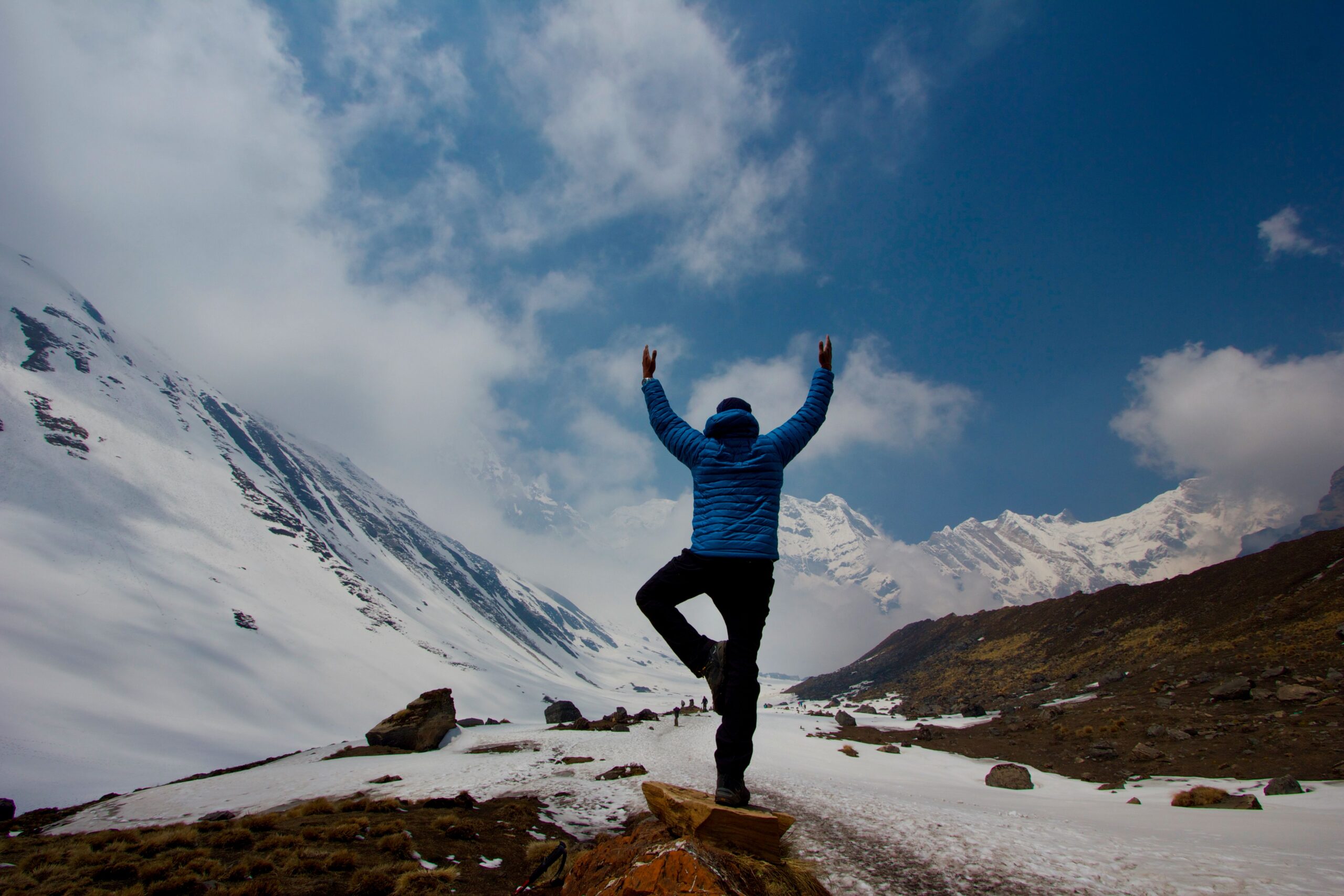
It was International Yoga Day a few weeks back. The social media was flooded with posts, messages and forwards. For someone who has been practicing Yoga for more than a decade now, it was definitely that time of year, where my extended yoga family engages in more than just the physical aspect of the yoga.
My yoga instructor had planned detailed session of Gyan Yoga (yoga of Knowledge) across few days to mark the International Yoga Day.
During these sessions, we emphasised more on knowledge-based yoga than just twisting and turning our bodies in deep yoga asanas. We started from the basic definition of Yoga which is, coordination of the mind, body and soul. This further led to dwelling on the seven Chakras, ultimately discussing about the divine Consciousness and the spiritual journey upwards.
After a vigorous yoga session, as I sat on my mat in Sukhasana (meditating pose), I was deliberating on how Yoga and spirituality are interconnected? A few days back I had read a piece on the Kailash Temple and I was baffled as I could find stark connection between the seven Chakras and the Kailash Temple. I was wondering if this is the link between Yoga, Self Realisation and our journey upwards.
This is my humble attempt to connect the Structural Intelligence of the Kailash Temple with the seven chakras of yoga and its relevance on our daily lives to further understand the evolution of consciousness.
The Base — Muladhara
Kailash has a seven-layered architecture. Gopuram is the base structure of the Kailash Temple. Structurally, its function is material foundation. In Yoga, it can be seen as the ‘ Muladhara Chakra’, loosely translated into the base chakra. This chakra is represented by a four-petal lotus flower of red colour. These four petals constitute four basic fundamental states of consciousness. These are
Manas (ordinary mind)
Budhi (Intelligence)
Chitt (Awareness)
Ahankara (Ego)
Every individual has to pass through this gate acknowledging their physical embodiment before ascending spiritually. Be it at the Kailash Temple or in one’s life.
Creative Flow — Svadhisthan
The next part of the Temple is the courtyard. The structural function is creative flow. In yogic chakra, it is referred to as the ‘Svadhisthan’, which is just below the navel. This chakra is represented by a six-petalled lotus flower rendered in orange colour. In Kailash Temple, the abode of Lord Shiva, it signifies creative flow regulation in our life. This is associated with water representing adaptability and emotional fluidity.
Will and Fire — Manipura
Then is the flight of stairs leading to the upper floors (solar plexus). This is parallel to the third chakra known as the ‘Manipura Chakra’ represented by the stomach area. The principle element is will power and fire. The pictoral representation is a 10-petalled yellow lotus signifying radiance, illumination and intellect. This is seen from where one can elevate from the lower to the upward spiritual journey.
The Heart Centre — Anahata
The fourth part or the level of the Kailash Temple is the Central Sanctuary known as the ‘ Nandi mandapa’. This can be compared to the fourth yoga chakra called the ‘Anahata’ representing our heart centre. As it is the heart centre, the structural function is universal, unconditional love, devotion and emotional balance. Located at the geometric and energetic centre of the temple, it is symbolised by a 12-petal green lotus. ‘Om’ is the primordial sound associated with this chakra.
Communication and Truth — Vishudhi
Maha mandapa comes next in the Temple complex. It is a large assembly hall with 16 massive pillars. These 16 pillars form the pictoral representation of the ‘Vishudhi Chakra’ or the throat chakra. The 16-petal lotus rendered in white with purple flowers signify chanting, communication and expression of the sacred truth.
Inner Vision — Ajna
The next is the ‘Garbgriha’ (Sanctum Sanctorium) this is a dark room holding the main Shiva Lingam. This is referred to as the ‘Ajna Chakra’ or the Third Eye Centre in the yogic chakra chart. This is represented by a two-petal lotus in indigo. The two petals symbolise wisdom and spiritual perception. In our spiritual growth, this essentially translates into faculty of inner vision and higher consciousness.
Pure Consciousness — Sahasrara
Last comes the apex of the Temple known as the Shikhar. We know this as the ‘Sahasrara Chakra’. This is the supreme energy centre with 1000 petals in violet of white. Some traditions emphase violet as the colour of highest transcendence and white as the colour of pure universal light. This chakra represents absolute silence and transcending linguistic expression. This chakra is associated with pure consciousness, universal energy and transcendental dimensions beyond form and manifestation.
Kailash, carved out from a single rock is believed to be older than some religions.
The Temple displays 11 distinct forms of Lord Shiva representing the journey of evolution of consciousness from Adi to Anadi to Anant- from finite to infinite.
Aruna Kotha is an ex journalist from India who is now a homemaker living with her husband and two children in the UK. Her spectrum of interest varies- from politics and reading to cooking and gardening. She is also a yoga enthusiast.
We value your privacy. To improve your experience, we use cookies and similar technologies for the following purposes:
- Essential functions: These cookies make the site work properly and keep it secure.
- Analytics: These cookies help us understand how the site is used and improve performance.
- Personalisation and marketing: These cookies show relevant content and measure engagement.
You can choose which categories to allow. Your preferences will be saved for future visits, and you can change them at any time in Cookie Settings.
This website uses cookies
Websites store cookies to enhance functionality and personalise your experience. You can manage your preferences, but blocking some cookies may impact site performance and services.
Essential cookies enable basic functions and are necessary for the proper function of the website.
Name
Description
Duration
Cookie Preferences
This cookie is used to store the user's cookie consent preferences.
30 days
You can find more information in our Cookie Policy and .





Madan Kak
Well researched write up .