


The Weight Of Gold
A miser in a Kashmiri Pandit household hoards every coin against the fear of need — until exile strips him of everything and leaves him, at last, with the one thing he never thought to keep.
A childhood of poverty hardened into a lifelong worship of money, and a coldness toward everyone around him.
1990 forced the family from Kashmir, and overnight a lifetime of hoarded wealth lost all its meaning.
In the migrant camps of Jammu, a heart of stone finally broke open, and a miser became “Mohan Bub.”
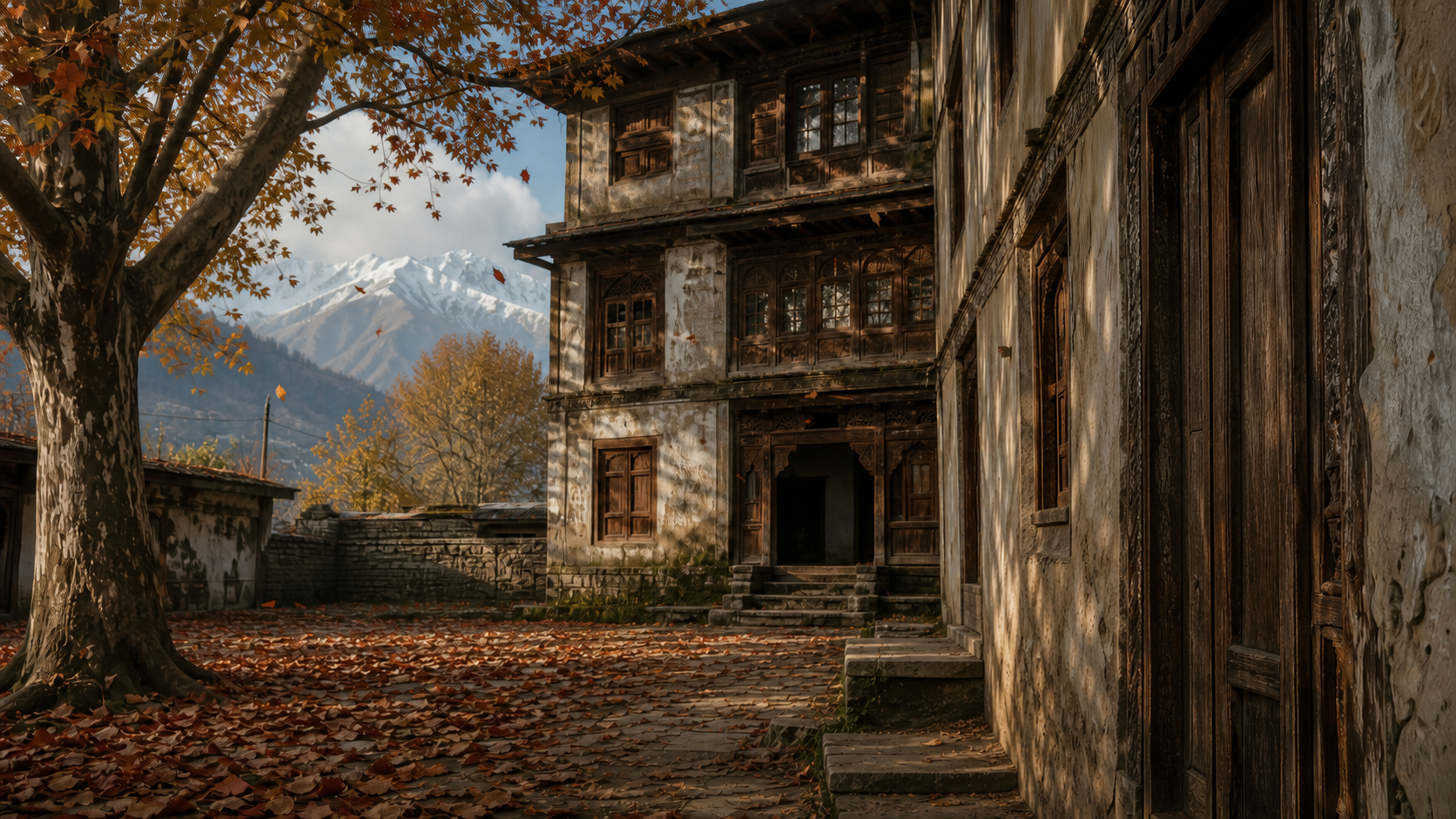
In the serene valleys, surrounded by whispering chinars and the flowing waters of the Jhelum, lay the small village of Raithan in district Budgam, Kashmir. The village was known for its fertile lands, almond and walnut orchards, and its close-knit Kashmiri Pandit families who lived simple yet dignified lives. Among them lived a man, well known, though not widely loved — Shri Mohan Lal.
From his youth, Mohan Lal had a strange obsession with money. Poverty during his childhood had planted a deep fear within him — the fear of becoming dependent on others. But instead of teaching him compassion, hardship made him miserly and emotionally distant. Villagers would often say, “Taking money out of Mohan Lal’s hands is like drawing water from stone.” Even as a boy, he lent small sums and demanded every paisa back with interest. He hid coins in rice drums, steel containers, beneath wooden floors, and even inside torn pherans hanging in storage rooms. To him, wealth was security, power, and respect.
Mohan Lal was not highly educated. In 1978, through a distant relative’s recommendation, he secured a mechanic’s job in the MES department at Sonawar, Srinagar. The salary was modest, but for Mohan Lal, it marked the beginning of a lifelong mission — to accumulate wealth at any cost. He rented a small room near the ancient Durga Nag Temple in Sonawar, and every Sunday before sunrise, he climbed the steep path to the Shankaracharya Temple. While others took over an hour, Mohan Lal would reach the top in forty minutes.
At the temple, he appeared deeply devout — hands folded, sandalwood tilak on his forehead, softly chanting “Om Namah Shivaya.” Priests and fellow devotees admired his discipline, yet beneath that exterior lived another man. He counted every rupee obsessively. He walked miles to avoid bus fares. During tea breaks at work, he avoided offering tea, and if guests visited, he would quietly reduce sugar consumption for the rest of the week to compensate.
Taking money out of Mohan Lal’s hands is like drawing water from stone.
Years later, his father sold part of their ancestral land, a store, and an orchard. With the proceeds, the family purchased a modest house at Nai Sadak, Srinagar, and after marriage, Mohan Lal moved there permanently. He married Kamla Rani, a graceful and soft-spoken woman from a respected Pandit family of Bhadarwah. Kamla was compassionate and deeply religious. Unlike Mohan Lal, she believed relationships mattered more than money.
In the early years, she tried to understand him, adjusting silently, cooking carefully, even mending old clothes rather than buying new ones. But gradually, she realized that his attachment to money had become pathological. Basic household needs became sources of conflict. If cooking oil ran out early, Mohan Lal would interrogate her for hours. “Where did it go? Do you feed the whole neighborhood?” Even illness became an expense to avoid. When Kamla fell sick, he delayed calling a doctor, relying instead on home remedies and expired medicines.
When their son Sunil was born, Mohan Lal celebrated grandly — for a day — distributing sweets across Nai Sadak, but he saw the child less as a son and more as an heir. Outwardly, he appeared a caring father, buying expensive clothes and toys when guests were present. Inside the home, affection was rationed. When Sunil developed asthma during the harsh winters, Kamla begged him to consult a specialist. “He hasn’t been breathing all night,” she cried. “Doctors only loot money,” Mohan Lal replied. “It’s just a cough.” Kamla secretly borrowed money and took Sunil for treatment.
Over time, Mohan Lal’s dual nature became evident. Socially he could appear generous and religious, yet privately he was frugal to the point of cruelty. During the late 1980s, Kashmir began to change. Fear and uncertainty spread across the valley, but Mohan Lal remained focused on money. He began side dealings — repairing parts privately, buying scrap cheaply, reselling it for profit, sometimes crossing ethical boundaries. “There is no honesty left in this world,” he would say.
Kamla, meanwhile, sat many nights by the window, listening to distant temple bells, wondering how a man who climbed Shankaracharya every Sunday could fail to see humanity within his own home. Years passed. Sunil grew up in a house where money was worshipped, but emotions were rationed.
Then came 1990. Like thousands of Kashmiri Pandit families, they were forced to leave behind their home, memories, and roots. In a single night, wealth lost its meaning. Standing in a refugee camp in Jammu, under the scorching sun, Mohan Lal experienced helplessness for the first time. The man who once counted coins now stood in ration lines, and Kamla watched silently.
I gathered wealth all my life, but could not save my home… my peace.
One evening, Mohan Lal whispered, “I gathered wealth all my life, but could not save my home… my peace.” She placed a cup of kehwa beside him. In that silence, he began to understand what he had ignored all his life. Exile became his turning point.
In the migrant camps of Jammu — Muthi, Purkhoo, Jagti — he witnessed suffering that shook him. One day, he saw his former acquaintance, Pandit Krishen Joo Mattu, a respected teacher, now sitting under a torn tarpaulin. “Mohan… yi chu na zindagi…” (Mohan, this is no life…) That night, something broke within him. For the first time, he opened his hidden savings without counting. The next morning, he bought medicines, groceries, and bedding for the old teacher. When Kamla asked, he said quietly, “Perhaps for the first time… I spent money correctly.”
That was the beginning of his transformation. Soon, he began visiting the Ashram of Bhagwan Gopinath Ji in Bohri. There, amidst bhajans, incense, and silence, he found a peace he had never known. He began with small acts — arranging shoes, cleaning utensils after langar. Then he started helping families quietly — paying fees, arranging medicines, supporting the elderly.
He never announced his charity, yet people began to notice. The man once feared for his stinginess became known for his compassion. They began calling him “Mohan Bub” — a name spoken with affection and respect. He moved through camps helping wherever needed — arranging funerals, distributing blankets, securing jobs for youth — and yet he remained humble. “I am only trying to become human,” he would say.
Years passed. His home in Jammu became a place of prayer and solace. The man who once counted currency now counted prayer beads. Visitors came seeking peace, and even those who knew his past saw only his transformation. One evening, a young boy asked him, “Bub, how did you become so peaceful?” He replied, “When life takes away everything you worship falsely, only truth remains.”
Kamla watched quietly as the man she once struggled to understand became someone others looked up to. During Shivratri, their home filled with devotees. Food flowed freely, no longer measured. Late that night, she said softly, “You have changed.” Mohan Bub looked toward the Shiva murti.
No… suffering changed me. Exile purified me. Grace saved me.
And so, the man once buried under the weight of gold discovered the lightness of the soul. In losing Kashmir, he found something deeper — a sacred homeland within.



POST COMMENT