

Ancient Wisdom, Modern Science

The world of nutrition just got a major shake-up. The newly released 2025–2030 Dietary Guidelines for Americans (DGA) has caused a stir by flipping the old “food pyramid” on its head. While the West is debating these “new” shifts, for those of us in India, the news feels like a familiar echo of what our grandparents, and the sages of Ayurveda, have been saying for millennia.

From the return of ghee to the push for intermittent fasting and whole foods, modern science is finally catching up to the traditional Indian kitchen.

Here is how the latest global trends align with our timeless Vedic wisdom and how you can use both to supercharge your health.

1. The Ghee Comeback: Saturated Fats Aren’t the Enemy

For decades, we were told to swap our traditional Danedar Ghee for refined “heart-healthy” vegetable oils. The new 2025 Guidelines are finally pivoting, now including butter and animal fats as part of a healthy diet and emphasising “real food” over processed substitutes.

The Ancestral Link: Ayurveda has always called Ghee Amrit (nectar). It is a “Rasayana” that aids digestion (Agni), boosts immunity, and nourishes the brain.

The Modern Twist: Science now recognises that ghee is rich in Butyrate(an anti-inflammatory fatty acid) and fat-soluble vitamins like A, D, and E.

The Healthy Habit: Don’t fear the dollop! A teaspoon of grass-fed cow ghee on your dal or rotis helps absorb nutrients and keeps your joints lubricated.

2. The Protein “Hype” vs. The Plant-Based Reality

The new guidelines recommend a significant jump in protein (up to 1.2 to 1.6g per kg of body weight). While the Western focus is leaning heavily toward steak, Indian experts highlight a potential “saturated fat trap.”

The Ancestral Link: The Indian diet is a masterclass in complementary proteins. By pairing Dal (legumes) with Chawal (rice) or Roti (wheat), our ancestors created a “complete protein” profile without the heavy saturated fat of red meat.

The Healthy Habit: To hit these higher protein targets, look beyond just plain dal. Incorporate Sattu, Paneer, Sprouted Moong, and Millets like Bajra and Jowar. These provide the protein “package”, fiber, minerals, and zero cholesterol.

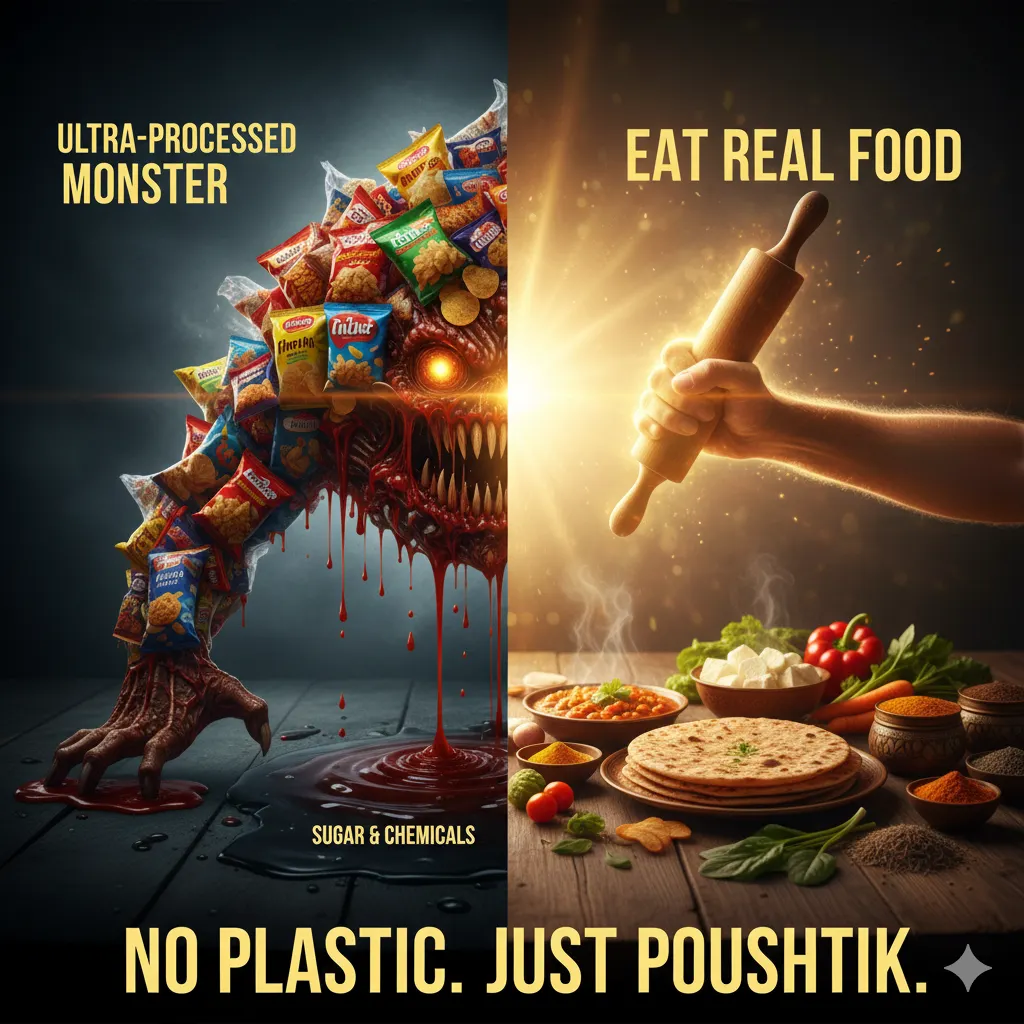
3. “Eat Real Food”: Killing the Ultra-Processed Monster

The 2025 Guidelines have taken their toughest stance yet against highly processed foods and added sugars, even advising children to avoid added sugar entirely until age 10.

The Ancestral Link: Our traditional diet was “farm-to-table” before it was a trend. Freshly cooked Sabzi, slow-cooked grains, and homemade chutneys are the ultimate “real foods.”

The Healthy Habit: If it comes in a colourful plastic packet with a long shelf life, it’s probably not “real.” Return to the Vedic principle of Mitahara — eating fresh, seasonal, and home-cooked meals in moderate portions.

4. Fasting: The Original Bio-Hack

While the West calls it “Intermittent Fasting,” India has called it Vrat or Upvas for centuries. The new guidelines hint at “eating the right amount for you,” but global health experts are increasingly backing time-restricted eating.

The Ancestral Link: Whether it’s Ekadashi or simply “eating before sunset,” fasting was designed to give the digestive system a rest.

The Healthy Habit: You don’t need a complex app. Try the 14:10 window— finish your dinner by 7:30 PM and have breakfast after 9:30 AM. It’s the easiest way to improve insulin sensitivity and manage weight.

5. Beyond the Plate: Yoga & Mindfulness

The DGA is a policy document, but health is more than just macros. Indian health experts emphasise that how you eat is as important as what you eat.

Morning Rituals: Start your day with Surya Namaskar and 10 minutes of Pranayama (meditation). Science shows this lowers cortisol (the stress hormone), which prevents emotional overeating.

Mindful Eating: Avoid the “screen-and-snack” habit. Sit cross-legged, use your hands (which stimulates digestion), and eat in silence.

The Bottom Line

The 2025 Guidelines are a wake-up call to return to basics. By blending modern protein requirements with the traditional Indian wisdom of plant-forward meals, healthy fats like ghee, and mindful fasting, we aren’t just following a trend, we are reclaiming our heritage.

Balancing high protein targets with traditional Indian flavours and modern heart-health guidelines is totally doable. The key is focusing on the “protein package”, getting your protein alongside fibre and healthy fats rather than saturated fats.

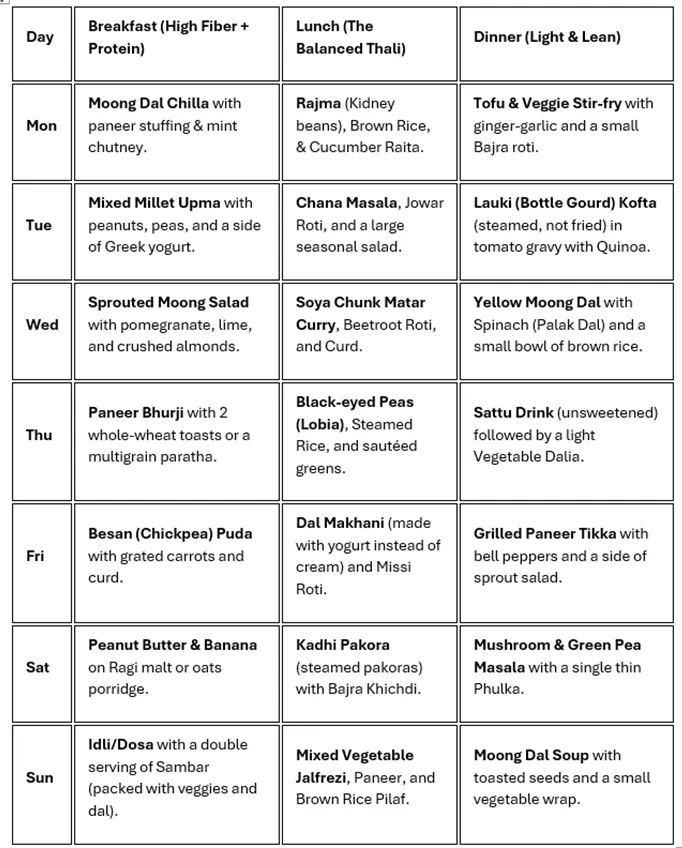
Here is a 7-day “Vedic-Modern” Meal Plan designed for the Indian palate, hitting that higher protein range (approx. 1.2g/kg) while keeping saturated fats in check.

The Foundation of the Plan

The “Ghee Rule”: Use 1 tsp of ghee per meal (max 3 tsp/day) to stay within the 10% saturated fat limit.

The Protein Boost: Every meal includes a “Primary Protein” (lentils, paneer, or soy) and a “Supporting Protein” (millets or nuts).

The Hydration: Traditional Chaash (buttermilk) with roasted cumin to aid digestion.

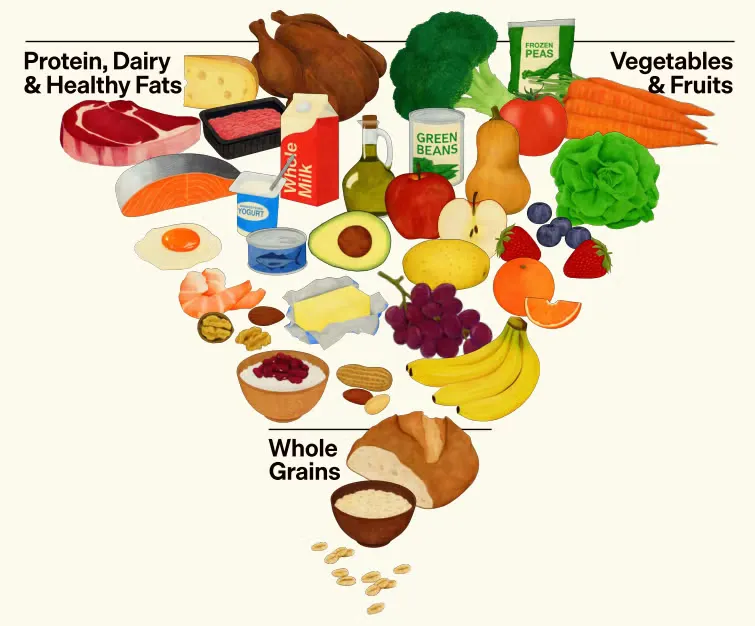
Visualizing the Healthy Plate

To ensure you are following the “New Food Pyramid” while keeping the Harvard Healthy Eating Plate in mind, use this visual guide for your lunch and dinner:

3 Tips to Succeed This Week:

Prep Your Sprouts: Keep a bowl of sprouted moong or kala chana in the fridge. Toss them into salads or poha to instantly add 7–10g of protein.

Sattu is Your Secret Weapon: If you feel you haven’t hit your protein goal by evening, a glass of roasted chana flour (Sattu) in water is a “superfood” protein shake.

The “Sunset” Finish: Try to finish the Dinner column by 7:30 PM to align with the ancestral practice of Intermittent Fasting.

What’s your one “ancestral health habit” that you still follow today? Share it in the comments!

Dr Manish Barman, MD, FRCP Edin., known online as @Lyfe_Medix, is a physician, longevity researcher and author of “Jug Jug Jeeyo – The Longevity Playbook”, a modern-day guide to healthy ageing. With years of experience bridging the worlds of evidence-based medicine and real-life lifestyle change, Dr Barman brings humour, heart and hard science to everything he writes. When he’s not helping people reverse chronic illness or rethink their dinner plates, he’s probably sipping ginger tea, avoiding late-night snacks, or telling his patients (and his readers) that it's never too late to start again — one small habit at a time.

POST COMMENT

Your email address will not be published. Required fields are marked *