


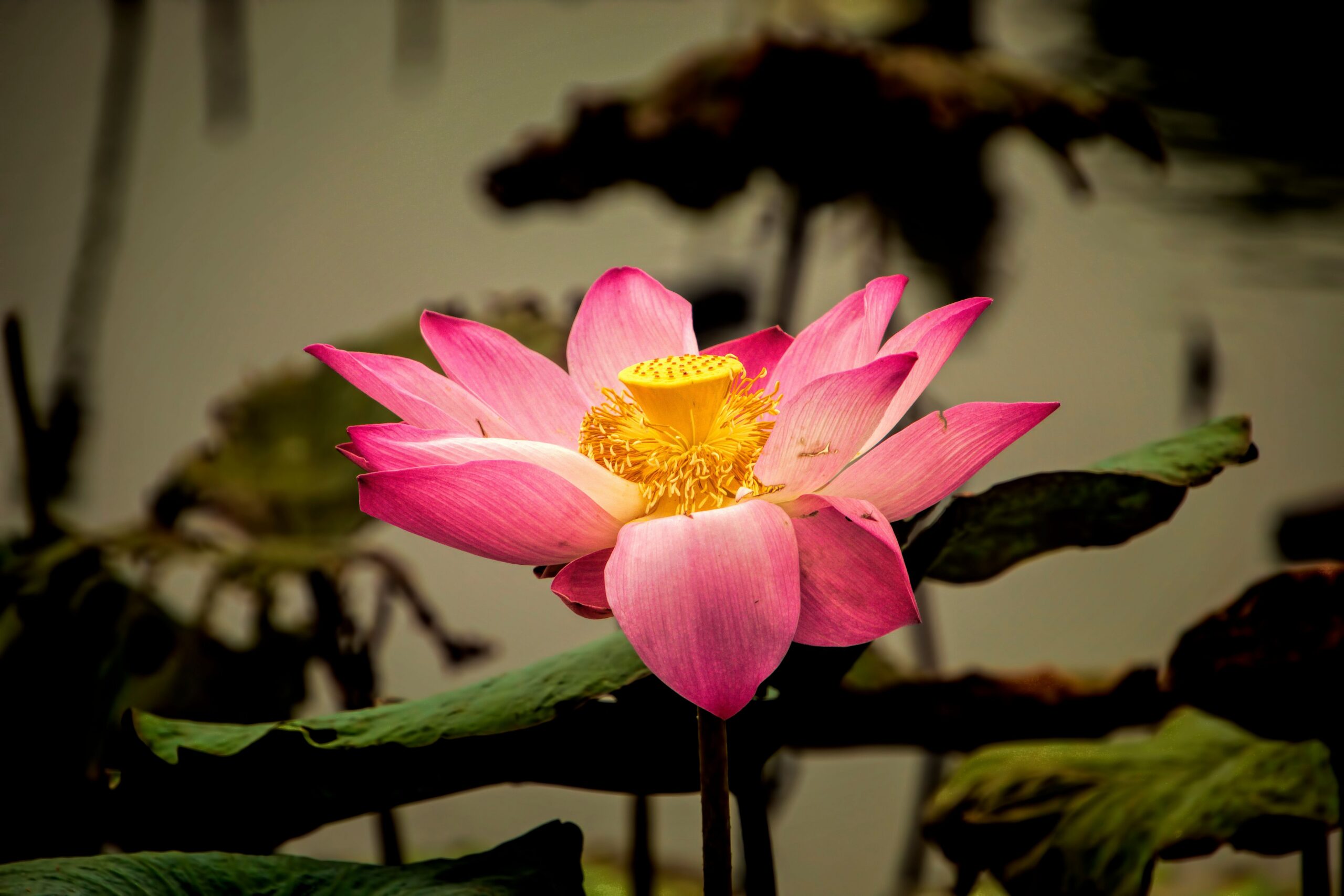
At The Lotus Feet
An ordinary Kashmiri Pandit couple, one Guru, and three generations of a family discovering that remembrance, duty and service are not separate paths, but a single one.
By Rajender Koul
There are devotees who go to temples, who undertake pilgrimages, who sit before the image of their chosen deity and pray. And then there are those rare people for whom devotion gradually ceases to be an activity and becomes a way of life.
For them, the Guru is not confined to a photograph, a shrine, a temple or a particular hour of prayer. The Guru is present in happiness and sorrow, in success and failure, in abundance and deprivation, in the laughter of children and in the tears of the helpless. For them, the lotus feet of the Guru are not somewhere outside themselves. They become the very ground upon which life is lived.
Roop Kishen and Rupa were such people.
They were an ordinary Kashmiri Pandit couple who had entered marriage with ordinary dreams and responsibilities. Neither claimed to be a saint, nor did either imagine that their name would ever be associated with spiritual life.
Roop Kishen worked, worried about the future, made plans, sometimes became anxious and sometimes even lost his temper. Rupa managed the home, cared for the family, remembered everything that everybody else forgot, and carried within herself the quiet anxieties of a mother. They were not perfect people. They were simply two human beings trying to become better through the circumstances of life.
And somewhere along that journey, the presence of Jagatguru Bhagwan Gopinath Ji Maharaj became the invisible centre around which their lives began to revolve.
God Knows. We Remember.
It happened gradually. Their devotion did not arrive with thunder or revelation. It entered through small things: the lighting of a lamp, the folding of hands, the remembrance of the Guru before beginning an important task, a silent prayer during difficulty, and gratitude after something went well.
There was a small sacred corner in their home. Nothing about it was ostentatious. A photograph of Bhagwan Gopinath Ji Maharaj occupied the central place. A lamp was lit, flowers were offered whenever they were available, and sometimes the couple sat before it in prayer.
But there were also days when the household was too busy for long prayers: children to attend to, bills to be paid, work to be completed, and other responsibilities that could not wait. The photograph remained there nevertheless.
Rupa would sometimes stand before it while preparing to leave the house and say quietly, “Bhagwan Ji, look after the children.”
Roop Kishen would smile. “Do you think He doesn't know?”
Rupa would answer, “Knowing is His work. Remembering is ours.”
That simple thought slowly became one of the unwritten principles of their household. God knows. We remember.
Their devotion was never tested by living away from the world. It was tested in the middle of ordinary life: in the kitchen, in financial difficulties, in family disagreements, in the illnesses of loved ones, in disappointments and in the unpredictable circumstances that visit every household.
Roop Kishen gradually understood that bhakti did not mean asking Bhagwan Gopinath Ji to remove every difficulty. It meant asking for the strength to pass through difficulty without losing faith.
Rupa understood it in her own simple way. “Why should we ask Bhagwan Ji to change everything according to us?” she would say. “Perhaps He knows something we do not.”
They did not always understand the logical meaning of every event that came into their lives, but they slowly learnt to trust the One whom they believed understood.
Raising Ashutosh and Shahtosh
Their first great responsibility was their children. Their son, Ashutosh, was intelligent, disciplined and ambitious. Like every parent, Roop Kishen wanted him to receive a good education and establish himself in life. But Rupa wanted something even more important. She wanted him to become a good human being.
“Degrees will tell the world what he studied,” she would say. “His conduct will tell the world who he is.”
Ashutosh studied hard. There were examinations, uncertainties, competition and the anxieties that accompany a young person's attempt to find his place in the world. His parents prayed for him, but their prayers were never merely for worldly success. They did not ask Bhagwan Gopinath Ji to make Ashutosh successful at any cost. Their prayer was simpler: “Give him what is right for him, and give him the wisdom to accept it.”
Eventually Ashutosh entered government service and rose to become an officer in the Ministry of External Affairs in Delhi. His parents were immensely proud. Relatives congratulated them, friends celebrated his success, and for a while the household was filled with happiness.
But after the celebrations were over, Rupa went before the photograph of Bhagwan Gopinath Ji Maharaj, folded her hands and whispered, “Bhagwan Ji, You have taken him this far. Now teach him how to remain humble.”
Roop Kishen heard her. “That's your prayer?”
Rupa looked at him. “What else is needed?”
Their daughter Shahtosh grew up with the same values but with her own personality and aspirations, affectionate, determined and quietly strong. Roop Kishen sometimes worried about the world she would have to face. Rupa did not.
“Why are you worried?” she asked. “She has Bhagwan Ji.”
Roop Kishen laughed. “You say that about everything.”
“And am I wrong?”
He had no answer.
Shahtosh too pursued her education and eventually entered government service like her brother, becoming an officer in the Ministry of External Affairs in Delhi. Once again, her parents experienced the joy of watching their child establish herself in life. Yet they understood that the greatest success of their children was not their official designation. It was their character.
The house that was once filled with schoolbooks, examinations, arguments and laughter slowly grew quiet.
The Turning Inward
The years passed. Ashutosh and Shahtosh established their own homes, careers, responsibilities and families. There comes a strange moment in every parent's journey when the children who once depended upon them begin to live independently. For some parents, the quietness that follows becomes loneliness. For Roop Kishen and Rupa, it gradually became an invitation to go inward.
The responsibilities that had once occupied almost every hour of their lives began to diminish. The time that had previously belonged to their children slowly became available for prayer, contemplation and remembrance. Their bhakti deepened, not because they had suddenly discovered something new, but because they finally had the time to understand something that had always been there: everything belongs to Him. Even children, relationships, success, separation and time.
Ashutosh and Shahtosh had everything that responsible parents could wish for their children. Both were well established in government service in Delhi, their families were settled, and their own children were receiving a good education. But something more precious had travelled with them from the home of Roop Kishen and Rupa. The Guru had travelled with them.
Whenever Ashutosh visited his parents, he would still stand before the photograph of Bhagwan Gopinath Ji Maharaj. Sometimes he prayed. Sometimes he merely folded his hands. Sometimes he stood silently for a few moments. Shahtosh did the same. Their parents noticed it, and for Roop Kishen and Rupa, this was a greater source of satisfaction than their children's professional achievements.
One evening Roop Kishen said to Rupa, “We gave them education.”
“Yes,” she replied.
“We gave them whatever we could.”
“Yes.”
“But who gave them this?”
Rupa looked towards the photograph. Neither spoke. There was no need.
A Small Hand at the Frame
Then came the grandchildren. This was where Roop Kishen and Rupa became especially careful. They did not want to impose devotion upon the third generation. They knew that a new generation grows in a different world. The grandchildren were born into an India of smartphones, global communication, modern education and rapidly changing social values. They asked questions their grandparents had never thought to ask at the same age, and the grandparents welcomed those questions.
One day, a grandchild asked Roop Kishen, “Dadu, where is Bhagwan Gopinath Ji?”
Roop Kishen pointed towards the photograph.
The child shook his head. “No, Dadu. I mean, where is He really?”
Roop Kishen smiled and thought for a moment. “Wherever you remember Him.”
The child remained puzzled. Rupa explained, “Dadu means that Bhagwan Ji is not only in the photograph. The photograph helps us remember.”
“Then why do you pray?”
Rupa smiled. “Because remembering someone you love is also a kind of love.”
The child said nothing. But the next morning, while passing the sacred corner, the little hand instinctively went up and touched the frame. Roop Kishen saw it. His eyes became moist. He said nothing, for he knew that bhakti cannot be imposed upon the next generation. It has to be awakened.
From Prayer to Action
And something even more beautiful happened as the grandchildren grew older. They began to understand that devotion was not merely about folding hands before a photograph. They began to understand that if Bhagwan Gopinath Ji was present in every human being, then the suffering human being could not be ignored. The lessons of the grandparents slowly travelled from prayer to action.
The grandchildren began organising social service camps with their friends and fellow students. They took part in blood donation drives, knowing that a few moments of their own comfort could become someone's chance to live. They organised assistance for the poor and vulnerable, becoming associated with initiatives inspired by the spirit of helping the destitute. They visited children who had been deprived of parental care, bringing books, educational materials and useful articles, playing with them, listening to them, and, perhaps most importantly, making them feel that they had not been forgotten by society.
They called their effort something simple and profound: “Love to All.” It was not merely a slogan. For them, it meant that service should not begin by asking who deserved help. It should begin by asking: “Who needs us?”
Do not merely give to the hand. See the person behind the hand.
Another group of grandchildren became particularly concerned about people begging on the streets. Their discussions were thoughtful. They did not want to encourage a system that could exploit helpless people, nor did they want to turn away from genuine suffering. They began asking a more meaningful question: “If we help a beggar, are we merely giving a coin, or are we helping a human being?”
They started approaching the matter with dignity. Where they could, they offered food rather than money. Where they encountered people who appeared genuinely helpless, elderly or abandoned, they tried to connect them with appropriate support. They learnt to distinguish between casual giving and compassionate intervention. This was the beginning of something Roop Kishen and Rupa had hoped for but never demanded. The grandchildren were discovering seva.
One day, Roop Kishen heard about a blood-donation camp organised by the grandchildren. He smiled.
Rupa asked, “Why are you smiling?”
He replied, “We taught them to fold their hands.”
“And?”
“They have learnt to open them. We taught them to pray before Bhagwan Ji. Now they are learning to serve Bhagwan Ji outside the prayer room.”
Rupa's eyes filled with tears. Perhaps this was the moment when the spiritual inheritance of three generations became visible. The grandparents had worshipped the Divine. Their children had carried the remembrance into their professional and family lives. The grandchildren were discovering the same Divine in service to humanity.
The form had changed. The essence had not.
This was the true meaning of bhakti. It was no longer merely “Bhagwan Ji, bless me.” It had become “Bhagwan Ji, make me useful to someone.”
The grandchildren went on to collect clothes for people in need, support the educational needs of children from poor families, arrange food and essential supplies for those struggling to survive, take part in cleanliness and awareness campaigns, and visit homes where neglected children were being cared for. Sometimes their efforts were modest. Sometimes they reached more people. But Roop Kishen reminded them never to measure seva by numbers.
“If you help one person sincerely,” he told them, “do not think it is small. For that one person, your help may have been everything.”
Rupa added another lesson. “And never make the person you help feel smaller than yourself.”
That became another principle: seva without dignity is charity; seva with dignity becomes compassion. The grandchildren slowly understood that they were not rescuers, and not superior. They were simply fortunate enough to have something, be it food, blood, education, companionship, or simply a willingness to listen, that another person needed at a particular moment. The distinction mattered.
Roop Kishen would often say, “Do not serve another human being as though you are doing him a favour. Serve him because you are grateful that life has given you the opportunity.” This was the language of the Guru entering the third generation.
Two Worlds, One Faith
While Ashutosh and Shahtosh continued their responsibilities as government officers in Delhi, their own children were developing a different kind of public service. The parents served the nation through duty. The grandparents served the Divine through bhakti and seva. And the grandchildren were beginning to discover that these two worlds were not separate at all.
One serves the nation through duty. One serves society through compassion. One serves the Guru through remembrance. And ultimately, all three may become expressions of the same principle: do your duty without arrogance, help without humiliation, give without expecting recognition, remember the Divine without bargaining.
Growing Old Together
As Roop Kishen and Rupa grew older, their physical strength began to diminish. They walked more slowly. They tired sooner. Medical appointments became part of life. Their conversations changed. Once they had discussed school fees, examinations, careers and household responsibilities; now they spoke more of grandchildren, memories, health, and the strange speed with which four decades had disappeared. Yet the Guru remained.
One evening Roop Kishen sat before the photograph of Bhagwan Gopinath Ji Maharaj. “Bhagwan Ji,” he said quietly, “forty years have gone.”
Rupa, sitting nearby, asked, “Forty years for whom?”
“For us.”
She smiled. “Perhaps forty years for us. But not a moment for Him.”
Roop Kishen laughed softly. Then both became silent. Age had taught them what youth could not. They had stopped reacting to every disturbance. They no longer felt the need to prove themselves. They had learnt that every disagreement did not require an argument, every criticism did not require a response, and every opinion of the world did not deserve entry into the mind. They had learnt to observe without absorbing.
The world continued its race around them, people competing, accumulating, seeking recognition, but Roop Kishen and Rupa had gradually entered another state of consciousness. They watched. They prayed. They remembered. They served where they could. And they were grateful. Their circle of physical activity had become smaller, but their circle of compassion had become larger. Their bodies were becoming weaker, but their understanding was becoming stronger. The prayers that once might have begun with “Give me” had gradually become prayers that simply said, “Thank You.”
Remember the Feet From Which You Came
One evening Ashutosh came to see his father, and found him sitting quietly.
“Papa, what are you thinking?”
“Nothing.”
“You cannot be thinking nothing.”
Roop Kishen pointed towards Bhagwan Gopinath Ji Maharaj. “I was thinking how strange life is. When you were young, I thought my responsibility was to make you successful.”
“And now?”
“Now I understand that my responsibility was only to give you values. The rest was never mine. Your position in government is important. Your work matters. Your responsibilities matter. But none of these makes you greater than another human being. Remember the feet from which you came.”
Ashutosh folded his hands. He understood. His father's words were not about humility merely as a social virtue. They were about remembering the spiritual foundation upon which everything else rested.
A few days later Shahtosh came with her family. Rupa watched her daughter managing her children, speaking about her work, attending to family responsibilities, and still finding time to sit with her parents. She saw herself in her daughter. But she also saw something new: a new generation, a new India, a different world, and yet the same thread.
Before leaving, Shahtosh stood before Bhagwan Gopinath Ji Maharaj. Her daughter stood beside her.
“Mummy, who is he?”
“He is Bhagwan Gopinath Ji.”
“Is he God?”
Shahtosh paused, remembering her own childhood. Then she said, “He is the one who taught your grandparents how to remember God.”
The little girl looked towards Rupa. “Dadi, is that true?”
Rupa smiled. “No, child. He did not teach us only to remember God.”
“Then?”
“He taught us to see God in everything. And if you see Him in everything, you cannot remain indifferent when someone is hungry, abandoned, helpless or alone.”
The little girl looked at her grandmother. “Like the children you help?”
“Yes.”
“And the people who beg?”
“Yes.”
“And when you donate blood?”
Rupa smiled. “That is also remembering.”
The girl thought for a while. Then she asked, “Then helping someone is also praying?”
Rupa looked towards Bhagwan Gopinath Ji Maharaj. “Yes,” she said softly. “Sometimes it is the best kind of prayer.”
Roop Kishen, listening, closed his eyes. Perhaps he had just witnessed the continuation of something that had begun forty years earlier. The Guru had moved from the prayer room into the life of the third generation.
That evening, after everyone left, Roop Kishen and Rupa sat together in the quiet house.
“Our children have everything,” Roop Kishen said.
Rupa nodded. “Almost everything.”
“What is missing?”
Rupa smiled. “Nothing is missing, if they remember.”
“Remember what?”
She pointed towards Bhagwan Gopinath Ji Maharaj. “Where everything came from.”
Roop Kishen looked at the photograph for a long time. Perhaps this was the real inheritance they had given their children. Not property. Not wealth. Not social standing. Not even education. Something more subtle: a centre. A spiritual centre to which they could return regardless of how far life carried them.
Ashutosh could sit in a government office in Delhi. Shahtosh could travel anywhere her official responsibilities required. Their children could grow up in a technologically advanced world. The grandchildren could build lives unimaginable to their grandparents. Yet somewhere within each of them would remain a small sacred room, and in that room would be the presence of Bhagwan Gopinath Ji Maharaj.
But the sacred room was no longer confined to a physical corner. It had expanded. It had entered the blood-donation camp. It had entered the home of the poor. It had entered the life of the parentless child. It had entered the food offered to a hungry person. It had entered the hand extended towards someone who had fallen. It had entered the compassionate gaze offered to the person standing at the roadside with a begging bowl.
The Guru was no longer merely being remembered. The Guru was being lived. That was the real flowering of bhakti.
An Unbroken Thread
Four decades had passed. Roop Kishen and Rupa had not become saints. They had become something perhaps more difficult: ordinary people who tried to live an extraordinary faith. They had quarrelled. They had worried. They had made mistakes. They had experienced disappointments. They had known sorrow, and they had celebrated success. They had raised children, watched them become responsible officers of the nation, welcomed grandchildren, and grown old. Yet through all circumstances, they returned to the same place: the lotus feet of their Guru.
Their bhakti survived because it was never dependent upon circumstances. They did not say, “Bhagwan Ji is with us when life is good.” They had learnt something deeper: “Because Bhagwan Ji is with us, we can face life whether it is good or difficult.” And now their grandchildren were discovering another truth: “Because Bhagwan Ji is in everyone, we cannot remain indifferent to the suffering of another.”
Thus the family's spiritual journey had completed a circle. The grandparents had found the Guru in remembrance. Their children had found the Guru in duty. Their grandchildren were finding the Guru in seva. Remembrance, duty, service: three expressions, one faith, one Guru, one unbroken spiritual inheritance.
Years from now, when Roop Kishen and Rupa are no longer physically present, their children will remain. Ashutosh will continue his duties. Shahtosh will continue hers. Their families will move forward. The grandchildren will grow. There will be new careers, new cities, new technologies, new challenges and new dreams. Life will continue its restless movement.
But perhaps one day, one of the grandchildren will stop before the old photograph of Bhagwan Gopinath Ji Maharaj. Perhaps that child will remember Dadu, or Dadi, or the small sacred corner. Perhaps the blood-donation camp. Perhaps the child without parents whom they once helped, or the poor family whose hunger they tried to relieve, or the elderly person standing by the roadside. Perhaps the lesson that a human being must never be made to feel small because he needs help. And perhaps a small hand will fold itself before the photograph. No one will have commanded it. No one will have forced it. It will simply happen.
And in that moment, something will become clear: bhakti has survived. Not as a ritual. Not as a family tradition imposed upon children. Not as an inheritance of objects. But as an inner remembrance that has become conduct, from Roop Kishen and Rupa, to Ashutosh and Shahtosh, to their children, and perhaps to generations yet unborn.
The world will change. The family will change. The language may change. The cities may change. The circumstances may change. But the thread will remain: the Guru, the remembrance, the duty, the compassion, the seva, the surrender, the lotus feet.
And perhaps this is what Roop Kishen finally understood. He once thought that he had spent forty years walking towards Bhagwan Gopinath Ji Maharaj. But one evening, sitting beside Rupa, he realised something else.
“Rupa,” he said, “do you remember when we first began this journey?”
“It feels like yesterday,” she replied.
“Forty years.”
“Forty years.”
He looked towards the photograph. “Did we ever really walk?”
Rupa looked at him. “What do you mean?”
“I feel as though we were carried.”
Rupa's eyes filled with tears. She folded her hands. “Perhaps that is what bhakti is.”
“What?”
To discover, at the end, that the feet you thought you were walking towards were the feet that had been carrying you all along.
The room became silent. The lamp continued to burn. And somewhere in Delhi, perhaps one of their grandchildren was preparing another social-service camp. Perhaps another young hand was preparing to donate blood. Perhaps another was arranging food for the hungry, or visiting a home where parentless children waited for affection, or wondering how best to help a beggar without humiliating him.
The grandparents were sitting quietly before the Guru. The children were serving the nation. The grandchildren were serving humanity. And the invisible presence of Bhagwan Gopinath Ji Maharaj seemed to connect them all.
The family had discovered that the path from bhakti to seva is not a departure from devotion. It is its flowering. For what is the use of seeing the Divine in a sacred photograph if we cannot recognise Him in the helpless? What is the value of prayer if it does not make the heart more compassionate? What is the meaning of remembering the Guru if that remembrance does not make us kinder? And what greater offering can a devotee make than to place at the Guru's lotus feet not merely flowers and incense, but a life that has become useful to others?
Roop Kishen and Rupa had spent forty years learning this. Their children had inherited it. Their grandchildren had begun living it. And perhaps that is how a Guru's grace travels through generations: not through inheritance of property, not through command, not through compulsion, but through the silent transformation of one human heart after another.
At the lotus feet of Bhagwan Gopinath Ji Maharaj, they had arrived.
And perhaps, all along, they had never really left.

Rajender Koul
Rajender Koul, a resident of Talab Tillo, Jammu, is a retired officer from the State Bank of India. After decades of his first innings and very dedicated service in the banking sector, he now enjoys his second innings in the quiet rhythms of retired life. A keen observer of people and the world around him, Rajender Koul, has turned to writing as a way to reflect, create and reconnect with life’s deeper meanings. He spends his leisure time crafting short stories and capturing memories, experiences and moments that often go unnoticed in the everyday hustle. Through his thoughtful storytelling, he seeks to preserve personal and collective journeys of spiritual growth, humane love, loss, resilience and hope. Prayers and blessings a support to the world of ours we live. Jai Bhagwan ji
Related Posts
Chalo Bulaava Aaya Hai, Mata Ne Bulaya Hai
For those of a certain vintage, Narendra Chanchal's fervent "Chalo bul

Islands
Standing on a bridge that leads nowhere, a returning visitor regards t
Tulmul
For twenty years, my parents have made a pilgrimage to Tulmul, a small

The Chinar Still Remembers
In a small Kashmiri village, Veena’s life once flowed with rivers, c

Stop Scrolling: What 140 Characters Did to the Way We Think
You probably won't finish this, and that's precisely the problem. We'v

Panzath Spring, Village Panzath
Panzath Nag, a luminous spring in South Kashmir, blends natural wonder
POST COMMENT