There is something quietly profound about the way certain foods anchor us to ourselves. Not the grand meals or celebrated feasts, but the simple, unassuming things. Like a pear pulled from a branch, a mango eaten over a sink, its juice running down your wrists like a secret you can’t quite keep.
My grandfather inherited an apple orchard in Kashmir, and as a child, late summer meant pilgrimage. We would make our way up a gentle incline, past the main road of the Wagura village, past a flour mill powered entirely by water, a detail that seems almost miraculous to me even now. The image of water rushing through that mill still draws a smile from me. Our share of the orchard sat mid-slope, unremarkable to anyone else, but to me it felt like the very centre of the universe.
The apples we grew were known locally as Red Delicious and to a little girl, they were quite aptly named too. Alongside them grew pear trees, the Nakh, whose fruit tasted just like childhood: divine. Watching those apples being packed into wooden crates, nestled on carefully chosen hay, was perhaps my early lesson on care and patience. You learned, without being told, that good things require tending.
The Orchards We Wander Into
We lived next door to a plum orchard, not ours, which made it infinitely more appealing. Cousins and I would wander through it with the convenient amnesia that children deploy so naturally, returning home with pockets full of fruit that turned out to be not quite ripe. Our digestive systems registered their objections loudly. We were unrepentant.
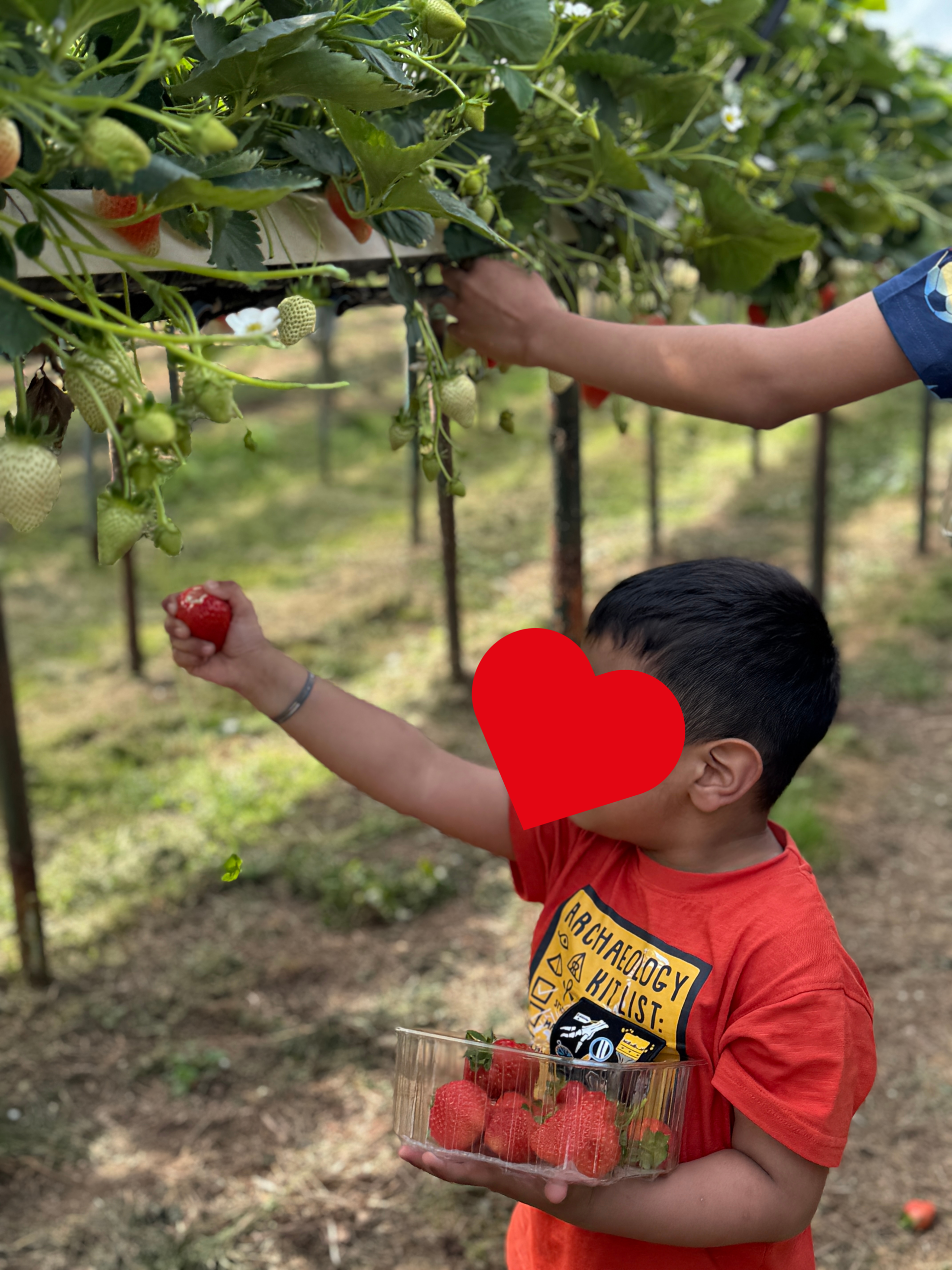
I now live beside a soft fruit farm in England. Each year, I look forward to the open day, the rows of fruit stretching out in the soft morning light, the quiet pleasure of choosing your own strawberry and the small satisfaction of dropping it into a punnet you’ll carry home yourself. There is something in that unhurried choosing that my younger self, pocket-deep in stolen plums, would not have recognised. But there is a thread, maybe a little stretched, connecting those plums to these strawberries. I am, I think, meant to live beside orchards.
Then Comes The Mango
Somewhere along the journey, the person who had been perfectly happy with red apples and soaked walnuts was claimed by mangoes. Perhaps the urge was always there, dormant, waiting for the right moment to assert itself.
My earliest memory involving a mango is hilariously vivid. I was around four years old, travelling with my Nani to her sister’s village called Tikker for a family wedding. Just before boarding the bus, her brother made the well-intentioned but catastrophic error of asking whether we needed anything. I had spotted a vendor selling mangoes. I asked with considerable conviction, for one.
He decided it would be too messy for a bus journey and brought me a loquat instead, an Indian fruit that bears absolutely no resemblance to a mango except, loosely, in colour. I was not fooled. I was, in fact, upset. I made the journey as uncomfortable as a four-year-old reasonably can and remained unhappy for days. Nani, bless her, eventually tracked down a mango in that village and peace was restored.
The Sweetness That Travels
The summers in Jammu were relentless, and mango season was their only redemption. Langda, Kesar, Chausa, Dasheri, Safeda. I could never reliably tell them apart and it didn’t matter in the least. What I remember though, is that they all tasted delicious, smelled gorgeous and somehow always elevated your mood. And the best part of any mango eating session was squeezing to draw the last of the pulp directly from the stone, juice on your chin, elbows out over a newspaper. Deeply satisfying and pretty rebellious at times. No one ever wanted to stop, but the mango season always felt short. I was grateful for all of them, for something that made the heat feel almost purposeful.
Then Bombay introduced me to the Alphonso. The apoos. The king, as it is rightly known. Its fragrance arrives before it does, sweet and insistent, the kind of smell that stops you mid-step. I have watched children born thousands of miles from that coastline encounter it for the first time and be utterly undone by it. That, I think, is the mark of something genuine. It needs no context, no explanation. It simply is.
Today, I wipe clean a plate of mango slices and sit for a moment with all of it, the orchard on the slope, the stolen plums, the Nakh tang, the vindicated four-year-old on a bus, the strawberries I now pick by invitation only. A life, it turns out, can be mapped quite usefully in fruit.
We carry our orchards with us. I am still, in some essential way, walking up that incline in Kashmir, reaching for something ripe.







Moksha
It’s yummy memory ❣️