A child may develop an allergy to food, medicine, insect sting, pollen, dust mites, animal allergens, or another substance. Anything and everything under the sun, including the sun, can potentially be an allergen.
Some reactions are mild and temporary, while others can become life-threatening within minutes. Awareness among parents, teachers, carers, and the wider community is therefore an important part of keeping children safe.
01
What are the common types of allergy?
Childhood allergies can take several forms. Food allergies are particularly important because they can occasionally cause anaphylaxis. Common triggers include cow's milk, eggs, peanuts, tree nuts, sesame, soya, wheat, fish, and shellfish, although almost any food can cause an allergy.
Children may also have hay fever, triggered by pollen; allergies to house dust mites or animals; reactions to insect stings; drug allergies; or skin conditions such as contact dermatitis. Eczema, asthma, and hay fever are also closely associated with allergic disease, and children with significant eczema have an increased likelihood of food allergy.
Food allergies can be immediate, with symptoms developing within minutes and usually within two hours, or delayed, where symptoms may take considerably longer to appear. This is one reason why recognising patterns and discussing them with a healthcare professional is important.
02
How can I recognise an allergic reaction?
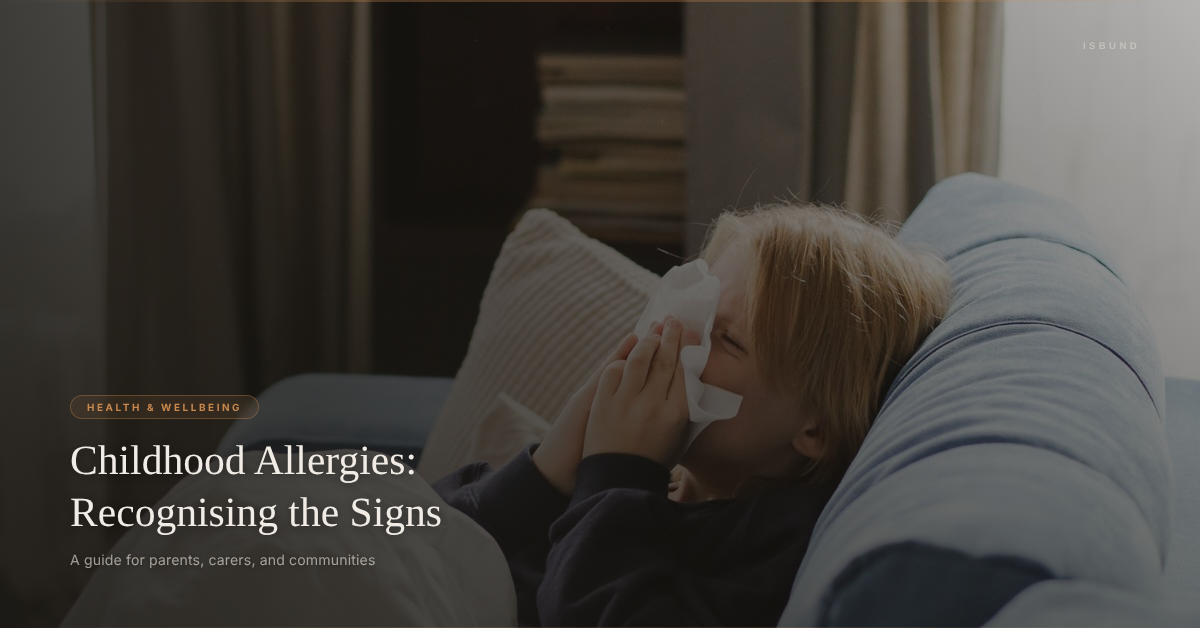
Possible signs include hives or an itchy rash, swelling of the lips or face, itching or tingling of the mouth, vomiting, tummy pain or diarrhoea, sneezing, a runny nose, coughing, difficulty breathing, or wheezing. Symptoms may occur alone or in combination.
A useful rule for parents and carers is to consider “what happened, what the child was exposed to, and how quickly symptoms appeared.” Keeping a simple record of foods, exposures, symptoms, and timing can help a doctor assess whether an allergy is likely.
It is often recommended to take pictures or make videos on your mobile, if safe to do so, to show the rash, swelling, or other visible symptoms. Allergy tests can include blood tests or skin-prick testing, but test results need to be interpreted by a specialist alongside the child's clinical history. Alternative hair and nail testing to establish allergies is not standardised, and therefore the results are not reliable.
Consider what happened, what the child was exposed to, and how quickly symptoms appeared.
03
When should I wait and watch – and when should I seek help?
A child who has mild, isolated symptoms, such as a limited rash, but is otherwise completely well may sometimes be monitored while parents seek appropriate medical advice. However, a new or repeated reaction should be discussed with a doctor, particularly when food is suspected. Parents should not unnecessarily remove major foods such as milk from their child’s diet without professional advice, because nutritional deficiencies can result.
Signs of Anaphylaxis — Act Immediately
Do not wait and watch if there are signs of anaphylaxis. These include sudden difficulty breathing or wheezing, persistent coughing, throat tightness, difficulty swallowing, a swollen tongue, a sudden change in voice, dizziness, collapse, or particularly in babies and young children becoming pale, floppy, or unusually unresponsive. Anaphylaxis can progress rapidly and is a medical emergency!
If a child with a known severe allergy has been prescribed emergency adrenaline, it should be used promptly according to their allergy action plan, and emergency medical help should be called. Antihistamines are not a substitute for adrenaline during anaphylaxis.
04
Who is at higher risk?
Children who have previously experienced a severe allergic reaction require particular vigilance. Asthma especially if poorly controlled can also increase concern during an allergic reaction. A history of significant eczema, multiple allergies, or a strong family history of allergic disease may also prompt closer assessment.
05
How can the community protect children with severe allergies?
Allergy safety is everyone’s responsibility. Parents should make sure that schools, nurseries, relatives, babysitters, sports coaches, and other carers know the child’s allergy, recognise the warning signs, and understand the child’s emergency plan. Children who have been prescribed emergency medication should have it readily accessible according to their medical plan.
When travelling on a flight and there is an announcement about a fellow passenger having severe allergies, one should be considerate and follow the instructions provided by the airline.
For food allergies, checking ingredients and preventing accidental exposure are important. Good handwashing and cleaning shared surfaces and utensils can also reduce accidental transfer of allergens. Most importantly, never assume that a child with a known allergy is “being difficult” or that a tiny amount will be harmless. Ask the child’s parent or carer before offering food.
A Note on Testing
Allergy tests can include blood tests or skin-prick testing, but test results need to be interpreted by a specialist alongside the child’s clinical history. Alternative hair and nail testing to establish allergies is not standardised, and therefore the results are not reliable.
06
Looking towards the future
The future of allergy care is encouraging. Studies encourage the safe and early introduction of potential allergens in an otherwise well infant, in consultation with their paediatrician. For those affected, earlier recognition, better allergy action plans, and improved education are already helping families manage severe allergies more confidently.
Specialist treatments such as immunotherapy/desensitisation are also developing. These treatments aim to reduce sensitivity to particular allergens and, in selected children, may reduce the risk from accidental exposure, but they are specialist treatments and are not a cure or something to try at home.
In Summary
The most powerful protection today remains awareness, accurate diagnosis, sensible avoidance, and rapid treatment when a severe reaction occurs. A community that knows what an allergy looks like and knows when to act can help make childhood safer for everyone.









POST COMMENT