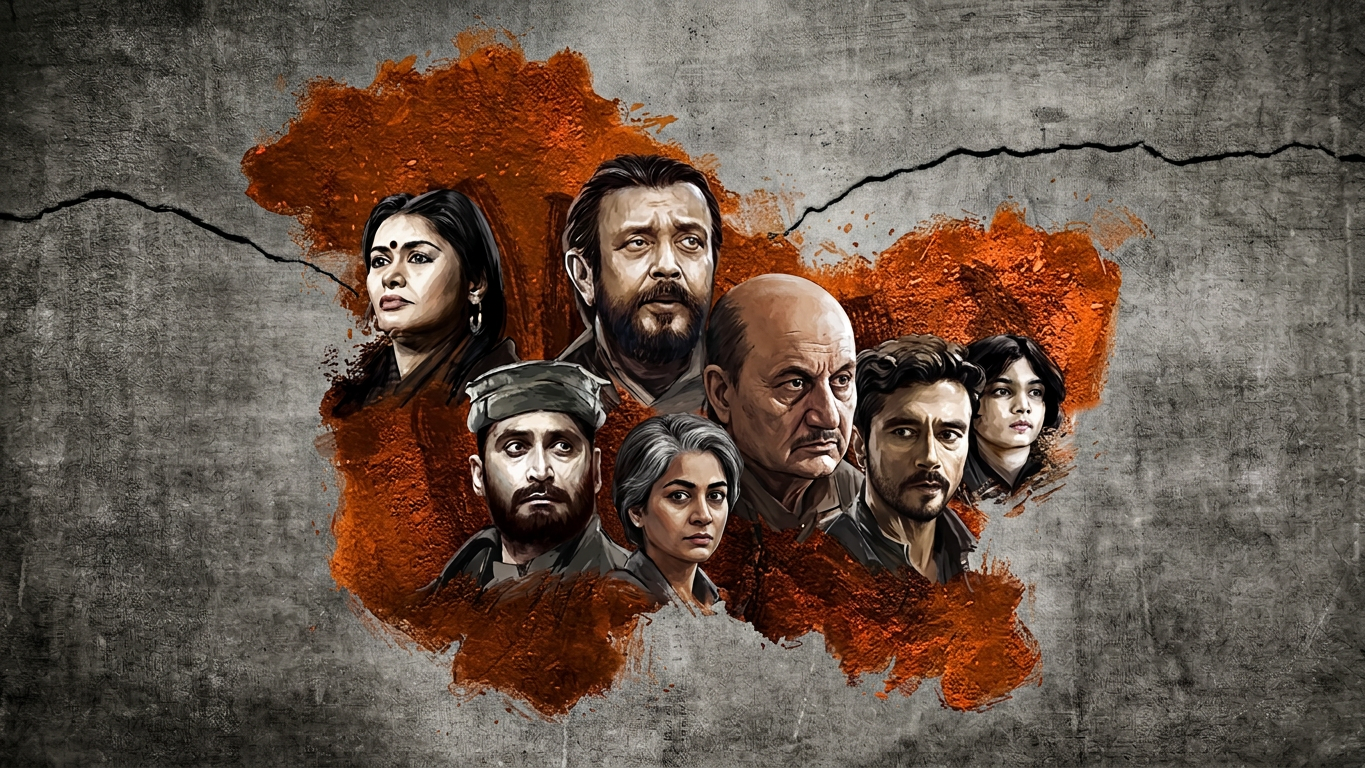
The recent release of the ‘Dhurandhar’ movie has reignited the propaganda debate. While I am not here to delve into that film, I find it surprising how often these ‘P’ discussions inevitably lead back to one particular movie: ‘The Kashmir Files’. No matter what movie starts the discussion, it always returns to ‘The Kashmir Files’.
A few years ago, when the film was first released, such claims seemed more like a tactic to attract attention, or for some, a way to appear more intellectual or cool. Now, however, I feel it has reached a point where people feel obligated to share their opinions on the film. It is almost at a – ‘have a mic, will call it propaganda’ – stage. Many people, some with little prior engagement with the history of the region, now feel compelled to weigh in with confident opinions, as though labelling the film is itself a statement of sophistication.
Many Kashmiris have been passionately sharing their views, earnestly trying to communicate to the world that it is not a propaganda film. Yet despite the sincerity of their voices and even sharing their real-life experiences, some continue to label it propaganda, seemingly unmoved even by first-hand testimonies.
I thought, why not lay out the documented events of the movie for those who remain unconvinced, and let the historical record speak for itself? If this piece can prompt even one person to pause and reconsider their stance with greater empathy, it will have served its purpose. After all, it’s important that people understand that we did not leave Kashmir because of the weather.
Here is a list of some of the major tragic events depicted in the movie, along with a short brief and their actual dates:
(Documented event: all events officially recorded in police documentation)
1) Mass Exodus – January 19, 1990 – Documented Event
A documented event -Loud calls emanated from the mosques, urging Kashmiri Hindus to vacate the valley. This marked the beginning of the Exodus. If it adds any weight to this account, I can share that I was present on that fateful day, and even now, just thinking about it sends chills down my spine.
2) Three Air Force pilots shot down – January 25, 1990 – Documented Event
3) B.K. Ganjoo, March 1990 – Documented Event
A man hiding inside a rice drum was killed when he was shot multiple times by terrorists. His wife was forced to eat rice soaked in his blood. Initially, the attackers, unable to find him at his home, were about to leave when a neighbour revealed his location.
4) Kashmiri Pandits staying in tents in Jammu – Documented Event
A quick search online will yield plenty of heart-wrenching photographs and stories that offer a sobering visual record of the displacement. Accustomed to a climate where 30 degrees Celsius felt like peak heat, Kashmiri Pandits endured a harrowing ordeal in the sweltering 45-degree heat in Jammu. Forced to live in makeshift tents under the merciless sun, many lost their lives not only due to the extreme heat but also from dangers in their surroundings, such as snake bites and scorpion stings.
5) Girja Ticku — June 25, 1990 — Documented Event
A young woman horrifically sawed by terrorists who raped her before the barbaric killing.
6) Sarwanand Premi and his son Virendra — May 1, 1990 — Documented Event
A teacher and poet of repute and his twenty-seven-year-old, recently married son were killed, and their bodies were hung on a tree. He was taken away by his own students.
7) The Bitta Karate Interview
In a widely circulated television interview, a former militant openly admitted to the killings of Kashmiri Pandits — a confession that speaks for itself. It is available to watch on YouTube.
8) The Nadimarg massacre— March 23, 2003 — Documented Event
Twenty-four Kashmiri Pandits, among them women and children, were brutally murdered by armed terrorists who had donned army uniforms to carry out this heinous act.
The events described above are solely those depicted in the film. Due to the limitations of showcasing the experiences of various families, the filmmakers crafted a story centered on a single family, weaving together the above tragedies to illustrate the genocide. That one family represents all the victims mentioned above, embodying their collective grief and tragedies.
I have not even begun to touch upon the countless other instances of brutal killings that were not even captured in the movie. It has merely scratched the surface. Let that sink in first.
The names, dates, and documented evidence have been laid out before you. With all of this on record, it is difficult to justify continuing to label this film as propaganda. You may dislike the filmmaking, cinematic preferences are entirely personal, but documented historical facts are not subject to taste.
Lastly, a thought for those who are quick to deploy the word ‘propaganda’ as a mark of intellectual sophistication: everything is propaganda untill it knocks at your doorstep. In the decades ahead, I wouldn’t be surprised to see similar tragedies in this very country dismissed in the same way. I truly hope and pray I’m proven wrong, but unless some drastic steps are taken, no amount of ‘art and culture’ or ‘highest’ literacy will be able to delay the inevitable.









राजेश खेर
I belong to Kashmir and was affected by the events of 80s and 90s.
There are many movies made on the two World Wars with true events in the backdrop of a fictionalised story. Imagine a movie on the true events of holocaust has an imaginary underlying theme of holocaust being carried out at the behest of some middle Eastern groups…..
Politico-religious treatments given to true events pictured for a commercial movie trivialise the true unfortunate events of those times. For me KF was a documentary of true events exploited for political reasons to create a commercial movie (just imagine reference to JNU in the movie 😡)
We all who went through those unforgettably tough times are reminisced of those events, and may hence refuse to see the underlying political messaging (propaganda) in the movie KF.